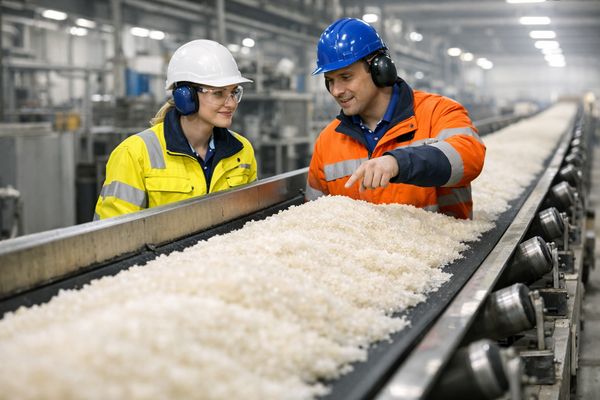
EU refined sugar prices for Lithuania remain broadly stable around recent levels, even as global raw sugar futures touch a five‑year low on ample supplies and softer energy markets. Lithuanian FCA offers stay competitive within the EU range, supported by steady regional demand and only modest tightening risks ahead.
The European sugar market is currently in a two‑speed mode: world futures are under pressure from strong cane harvests and record physical deliveries into expiring contracts, while EU refined prices hold roughly in the mid‑€400s per tonne. For buyers in Lithuania, this translates into a relatively calm spot environment with limited week‑on‑week price moves and healthy availability from neighbouring EU and Ukrainian origins. However, signals from beet processors and trade policy debates point to a gradual tightening bias into the next marketing year, keeping downside for domestic refined prices limited despite the global bearish tone.
[cmb_offer ids=996,997,995]
📈 Prices & Spreads
Local Lithuanian FCA offers for standard refined white sugar sit in the low‑to‑mid €400s per tonne equivalent, unchanged compared with last week, and broadly in line with the wider EU range signalled by recent industry commentary and processor guidance.
Globally, raw sugar futures on ICE have fallen to a five‑year low, driven by ample supplies and lower oil prices, which reduce the incentive to divert cane to ethanol. The front‑month white sugar contract recently expired with a record physical delivery close to half a million tonnes, underscoring abundant availability and pressuring futures curves, though this has not yet translated into a significant discount in EU refined spot prices.
| Market | Product | Approx. Spot Level (EUR/t) | Trend vs. 1 week ago |
|---|---|---|---|
| Lithuania (FCA, refined) | White sugar ICUMSA 45 | ≈ €430–440/t | Stable |
| EU benchmark (industry est.) | Refined/white sugar | ≈ €430–460/t | Slightly softer from early April highs |
| World market | Raw sugar No.11 (ICE) | ≈ €360–380/t equiv. | Down to 5‑year low |
🌍 Supply, Trade & Policy Drivers
Internationally, the latest sell‑off in raw sugar futures is tied to plentiful cane output and weaker energy prices, which curb ethanol demand and increase sugar availability. The record delivery against the expiring white sugar futures contract reinforces the perception of a well‑supplied world market in the near term.
Within the EU, refined sugar prices remain supported by structurally tighter beet area and ongoing concerns about factory closures and reduced processing capacity across several member states. Recent analysis highlights that while current spot values are not spiking, price risks for European refined sugar are skewed modestly to the upside over the next 6–12 months, particularly if weather risks emerge during beet establishment or if energy markets rebound from current lows.
Trade policy remains another medium‑term wildcard. The European Commission has already proposed tightening duty‑free import mechanisms to shield domestic producers from heavy third‑country inflows amid a serious market downturn. Any further restrictions on low‑duty or duty‑free imports—especially from Eastern Europe and ACP origins—would tend to support regional prices in Lithuania by narrowing the arbitrage to world market sugar.
🌦 Weather Outlook – Lithuania Focus
For Lithuania over the coming days, weather forecasts indicate generally cool spring conditions with scattered showers rather than severe anomalies. Daytime temperatures are expected to remain in a moderate range, with sufficient soil moisture for early beet growth and no acute drought or flood risks flagged in the short term.
This relatively benign pattern supports stable yield expectations for the moment and does not provide a strong bullish or bearish shock for local sugar fundamentals. However, with European beet acreage already under structural pressure, any shift towards sustained dryness or excessive rainfall later in the season would quickly feed into risk premia for 2026/27 refined prices.
📊 Market Fundamentals & Demand Signals
European demand for refined sugar remains broadly steady, with some manufacturers monitoring regulatory changes around sugar‑free labelling that may gradually influence sweetener mixes in processed foods. New EU rules taking effect this month require clearer labelling of sugar‑free products and their sweeteners, which could marginally affect substitution patterns over time but are unlikely to shift bulk sugar demand in the next few months.
On the supply side, recent company guidance from major EU players underlines the pressure from low spot prices and weak starch margins, but also points to potential price normalisation later in the year as supply tightens. For Lithuania, access to nearby EU and Ukrainian refined sugar remains good in the very short run, keeping distribution pipelines comfortable despite the more cautious medium‑term tone from processors.
📆 Trading Outlook (Next 1–2 Weeks)
- Buyers (food & beverage, retail packers): Use the current stability in Lithuanian FCA prices to cover near‑term needs; consider slightly extending coverage into early summer while global futures stay under pressure and local offers remain in the low‑€400s/t.
- Sellers (producers, traders): With world futures at multi‑year lows and EU fundamentals tighter, resist aggressive discounting in the Baltic market; focus on maintaining premiums versus raw sugar rather than chasing volume.
- Risk management: Monitor ICE raw and white spreads closely; further downside in No.11 may have limited pass‑through to Lithuanian spot levels if EU policy tightens imports or if beet weather turns less favourable.
📉 3‑Day Regional Price Direction (Lithuania)
- Lithuania FCA refined sugar (Mirijampolė region): Prices expected to remain broadly stable over the next three days, with only minor intra‑week adjustments possible on logistics or basis but no clear directional impulse from futures or weather.
- EU nearby refined benchmarks: Bias is sideways to slightly softer short term, following the global futures correction, but structural EU tightness limits any significant downside for delivered Baltic values.
[cmb_chart ids=996,997,995]