
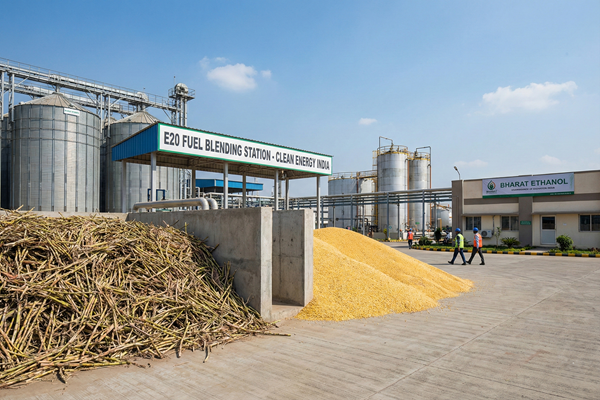
India’s Biofuel Strategy Enters a New Phase
India has rapidly transformed its biofuels sector, achieving its E20 (20 percent ethanol blending) target in June 2025—five months ahead of schedule
The country blended over 10.4 billion liters of ethanol into petrol and is expected to exceed a 23 percent blending rate by the end of 2026.
This milestone marks a significant step toward reducing oil imports, strengthening rural incomes, and advancing clean energy goals. However, the speed of expansion has also exposed structural challenges across agriculture and energy markets.
Grain-Based Ethanol Surpasses Molasses for First Time
India’s ethanol ecosystem has diversified beyond sugarcane.
Nearly half of grain-based ethanol feedstock now comes from:
-
Corn (46%)
-
Food Corporation of India (FCI) rice (15%)
In the 2024/25 cycle:
-
5.2 billion liters were contracted from corn
-
1.68 billion liters from FCI rice
Grain-based ethanol production surpassed traditional molasses-based ethanol for the first time due to drought-related sugarcane shortages.
Corn Incentives Trigger Market Glut
To accelerate ethanol production, the government raised ethanol pricing incentives for corn to INR 71.86 per liter, maintaining it for the current ethanol supply year.
The policy worked — corn acreage rose 12 percent in 2024 and 2025. However, the resulting production surge created a glut.
Corn prices fell sharply — in some regions to less than half the Minimum Support Price (MSP). Meanwhile, ethanol producers maintained strong profit margins.
The price collapse has sparked farmer protests in major producing states including Madhya Pradesh, Uttar Pradesh, and Maharashtra.
The animal feed industry, which typically consumes 70 percent of India’s corn crop, now faces tighter supplies as ethanol producers divert more grain toward fuel.
Feedstock Conversion Efficiency Drives Preferences
Conversion rates play a major role in feedstock decisions.
According to data in the report:
-
1 MT corn yields 380 liters ethanol
-
1 MT broken rice yields 440 liters
-
1 MT B-heavy molasses yields 300 liters
Because rice provides higher conversion efficiency, ethanol producers increasingly prefer FCI rice over corn when available.
Sugarcane remains the most stable feedstock due to established supply chains and consistent availability.
Capacity Utilization Falls to 40–45%
Despite aggressive distillery expansion across Rajasthan, Bihar, Punjab, and Maharashtra, India’s ethanol plants are operating at only 40–45 percent capacity
Feedstock volatility and regulatory uncertainty have left nearly half of installed capacity idle.
Without clear blending targets beyond E20, the sector risks underutilizing infrastructure investments.
Sugar Sector: Surplus Emerging
India’s sugar industry now has ethanol production capacity exceeding 9 billion liters annually — roughly half of national petrol blending needs.
Ethanol suppliers have offered 17.76 billion liters for the 2025/26 supply year, enough for a 32 percent blend. However, government demand stands at approximately 10.48 billion liters.
To manage oversupply:
-
Sugar diversion to ethanol reduced to 2.89 billion liters
-
1.5 million metric tons of sugar authorized for export
-
Additional 1 million metric tons under consideration
The weakening rupee has made Indian sugar more competitive globally.
Advanced Biofuels: Aviation and Maritime Targets
India’s clean energy goals extend beyond road transport.
The government has mandated Sustainable Aviation Fuel (SAF) blending for international flights:
-
1% by 2027
-
2% by 2028
-
5% by 2030
Companies are investing in ethanol-to-jet technology. An 80,000 MT-per-year SAF facility is under development using advanced conversion technology.
India is also exploring marine fuels, including green hydrogen, ammonia, methanol, and biofuels under Maritime India Vision 2030 and Amrit Kaal Vision 2047.
Trade Implications and U.S. Opportunities
India’s evolving ethanol ecosystem presents multiple opportunities:
-
Industrial ethanol exports
-
Distillers dried grains with solubles (DDGS)
-
Advanced biofuel technologies
-
Enzymes and processing equipment
DDGS production reached 4.15 million metric tons in 2024/25. However, as corn shifts from feed to fuel, potential feed gaps may open for imports.
Additionally, crop shifts toward sugarcane and corn may reduce acreage for oilseeds and pulses, increasing import dependence.
🔎 CMB Outlook
India’s ethanol expansion has been transformative — achieving E20 blending ahead of schedule and reshaping agricultural markets nationwide.
However, three structural tensions are emerging:
-
Corn price volatility and farmer protests
-
Idle ethanol production capacity
-
Sugar surplus pressures
If India establishes post-E20 blending targets and stabilizes feedstock policy, the sector could enter a new growth phase.
Advanced biofuels for aviation and marine sectors represent the next frontier.
For global exporters — particularly in ethanol, DDGS, enzymes, and renewable fuel technologies — India remains one of the most dynamic biofuel markets in the world.