
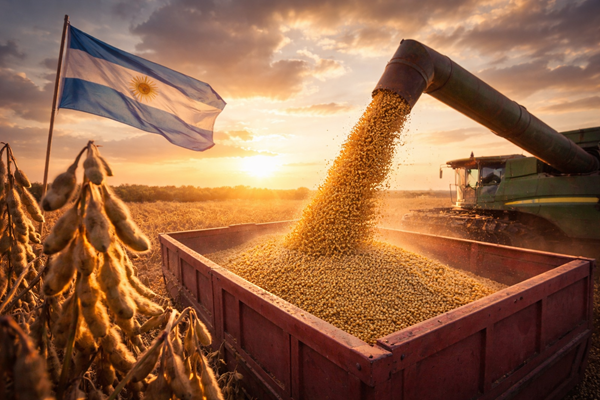
Argentina’s soybeans market stands at a crucial turning point as the 2025/26 crop outlook stabilizes, but the underlying trade flows create new risks and opportunities for traders worldwide. While the immediate threat from weather has receded thanks to timely February rains—securing most of the first crop and easing stress on the second—the real action is playing out beneath the surface. The old model of heavy raw bean exports is giving way to a future where Argentina emphatically prioritizes crush, consolidating its dominance in soybean meal and oil. This shift means global markets must now look past total crop size and focus on product spreads, processing margins, and shifting flows between Argentina, Brazil, and top importers like China and the EU. Policy risks, particularly surrounding EU regulations and China’s import strategies, layer on further volatility. For traders, this year is less about how many beans are grown, and far more about where—and in what form—they flow. Crush margins, meal and oil price behavior, and evolving regulatory obstacles now drive the soy complex. The crop may be stable; the trade structure is anything but.
Exclusive Offers on CMBroker

Soybeans
yellow, organic
99.8%
FOB 0.82 €/kg
(from CN)

Soybeans
yellow
99.5%
FOB 0.74 €/kg
(from CN)

Soybeans
No. 2
FOB 0.59 €/kg
(from US)
📈 Prices
| Exchange/Origin | Product Type | Purity | Organic | Latest Price (EUR/kg) | Weekly Change | Date | Market Sentiment |
|---|---|---|---|---|---|---|---|
| CN (Beijing, FOB) | Yellow, Organic | 99.8% | Yes | 0.78 | +0.01 | 2026-02-26 | Stable/Bullish |
| CN (Beijing, FOB) | Yellow | 99.5% | No | 0.68 | -0.01 | 2026-02-26 | Stable |
| US (Washington D.C., FOB) | No. 2 | – | No | 0.52 | 0.00 | 2026-02-21 | Stable |
🌍 Supply & Demand Drivers
- Production: Argentina’s 2025/26 crop forecast held at 48 MMT due to stabilizing rains, planting area at 16.5 million hectares, and average yields around 3.38 MT/ha. Most of the first crop is secure; second crop risk has eased.
- Crush Prioritization: Crush forecast rises to 43 MMT for 2025/26. More soybeans remain in Argentina for crushing versus raw export, tightening global bean availability but boosting meal and oil flows.
- Trade Flows: Whole bean exports drop to 6 MMT (vs. prior year’s 12.7 MMT). Soy meal and oil exports take center stage. This restructuring will affect global pricing and arbitrage opportunities.
- Regulatory Risks: EU and Indian demand remain strong, but EU pesticide rules threaten volatility for Argentine peanut/sunflower/soy export flows.
- Argentina vs. Brazil: Brazil remains the raw bean export powerhouse, while Argentina dominates added-value product trade. Watch this dynamic for global spreads.
📊 Fundamentals
- Inventory: Argentina retains significant beans for buffer—crush margins and product exports will set the global tone.
- Crush Margins: High and rising, making meal and oil markets potentially more volatile than flat beans.
- Global Arbitrage: Traders focus on spreads between raw beans and processed products, especially given regulatory shifts and changing import patterns in China and the EU.
📉 Weather & Crop Outlook
- Recent rains have secured the Argentine crop’s near-term prospects. No major weather panic on the horizon, but traders should monitor late-season precipitation and dryness in second-crop zones for local disruptions.
- Brazil and the US face broadly normal conditions this cycle, further supporting overall global supply stability.
🌏 Global Production & Stocks Comparison
- Argentina: 2025/26 crop at 48 MMT, crush 43 MMT, exports 6 MMT (↓ raw, ↑ meal/oil).
- Brazil: Continues to dominate the raw bean export market.
- US: Stable production, typical export profile; prices flat at 0.52 EUR/kg.
- India/EU: Import demand steady, but EU regulatory developments could cause additional volatility and price distortion for Argentina-origin beans and protein products.
📆 Trading Outlook & Recommendations
- Prioritize product spreads: Focus on soybean meal and oil relative to flat price beans.
- Monitor Argentina crush pace and margins: These are the swing factors for global supply and price volatility.
- Track Chinese buying: Any renewed appetite for Argentine beans could rapidly shift trade flows and support raw bean prices.
- Watch EU regulatory developments for signs of policy-driven price spikes or basis disruptions.
- Expect basis and product premium volatility as trade structures evolve and margins tighten.
| Origin/Exchange | Current | Day 1 | Day 2 | Day 3 | Sentiment |
|---|---|---|---|---|---|
| CN (Beijing) Organic | 0.78 | 0.78 | 0.79 | 0.79 | Slightly Bullish |
| CN (Beijing) Conventional | 0.68 | 0.68 | 0.69 | 0.69 | Stable |
| US (Washington D.C.) | 0.52 | 0.52 | 0.52 | 0.53 | Stable/Neutral |
Product offers and chart links for live price insight: