
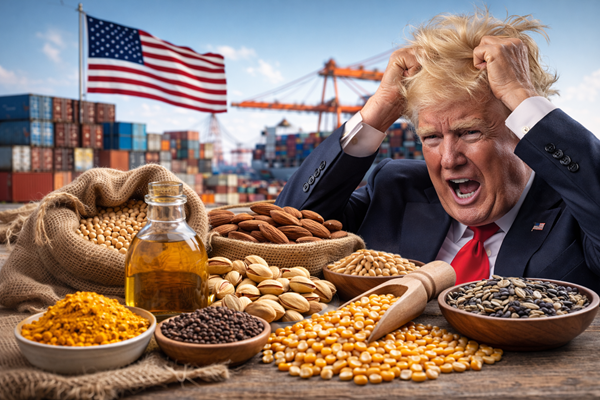
Billions in Tariff Refunds Ahead: Food and Feed Importers Could Be Major Beneficiaries
CMB News | Trade & Commodity Markets | March 2026
A U.S. trade court ruling ordering the refund of tariffs imposed during the Trump administration could trigger one of the largest reimbursement programs in U.S. trade history. Importers who paid duties that were later ruled illegal may now receive refunds with interest — potentially totaling tens of billions of dollars.
While tariffs targeted a broad range of industrial goods, a significant portion of affected imports came from the food, feed and agricultural commodity sector, which represents a large share of global trade flows into the United States. Food, feed and beverage imports alone represent more than $150 billion annually in U.S. trade.
For agricultural traders and importers, the ruling could unlock substantial repayments.
The 15 Most Relevant Agricultural Commodities Potentially Affected
Based on U.S. import structures and tariff lists, the following food and feed commodities are among the most relevant products that could qualify for refunds.
Oilseeds and vegetable products
- Sesame seeds
- Sunflower seeds and kernels
- Flaxseed (linseed)
- Vegetable oils (sunflower, soybean, rapeseed)
Nuts and dried fruits
- Almonds
- Pistachios
- Raisins
- Dates
- Walnuts
Spices and specialty crops
- Cumin
- Coriander
- Turmeric
- Black pepper
Feed ingredients
- Soybean meal
- Feed corn and grain by-products
Many of these commodities are essential ingredients for the U.S. food industry, animal feed sector, bakery production and snack manufacturing.
Tariffs introduced during the trade conflict often ranged between 7.5% and 25% of import value.
How Much Money Could Food and Feed Importers Recover?
The U.S. government collected over $130 billion in tariffs under the disputed measures.
Estimating the share attributable to food and feed imports requires several assumptions:
Step 1 – Share of agricultural goods
Agricultural and food products typically account for 10–15% of the affected import categories.
Step 2 – Estimated tariff payments
That implies:
- $13–20 billion in tariffs likely paid by food and feed importers.
Step 3 – Refund with interest
Because the court ordered refunds with interest, total repayments could reach:
Estimated refunds for food & feed sector
| Scenario | Tariffs Paid | Estimated Refund (with interest) |
|---|---|---|
| Low estimate | $13 billion | ~$15–17 billion |
| Mid estimate | $16 billion | ~$18–21 billion |
| High estimate | $20 billion | ~$23–26 billion |
Which Supply Chains Could Benefit Most?
The biggest beneficiaries are likely to be importers dealing in:
Food manufacturing inputs
- cocoa products
- vegetable oils
- nuts and dried fruit
- spices
Feed sector inputs
- soybean meal
- corn derivatives
- oilseed by-products
These commodities are heavily used by:
- bakery and snack producers
- confectionery manufacturers
- dairy processors
- poultry and livestock feed mills
Implications for Commodity Markets
If large refunds are paid quickly, the decision could affect agricultural supply chains in several ways:
Improved liquidity
Importers recovering millions of dollars in duties will gain significant working capital.
Lower effective import costs
Retrospective tariff removal reduces real import prices over the past trade period.
Potential increase in imports
Reduced trade friction may strengthen demand for foreign agricultural commodities.
Outlook
The next challenge lies in the implementation.
More than 70 million import entries may need to be reviewed by U.S. Customs before refunds are issued. If the process moves forward smoothly, repayments to importers could begin later this year.
For global food and feed traders, the ruling signals that a large portion of past trade barriers may now unwind financially — potentially reshaping import economics in the U.S. agricultural market.