
U.S. Exempts Rosneft Germany from Sanctions in Move to Protect Transatlantic Energy Cooperation
CMB News | Energy & Geopolitics | March 2026
The United States has formally exempted the German subsidiary of Russia’s state oil company Rosneft from sanctions, a decision widely viewed as a strategic step to protect energy security in Germany and preserve stability in transatlantic relations.
The announcement from the U.S. Treasury Department confirms that Rosneft Deutschland, currently under German government trusteeship, will not be targeted by U.S. energy sanctions.
Strategic Importance for Germany’s Fuel Supply
Germany placed Rosneft Deutschland under state trusteeship in 2022 following Russia’s invasion of Ukraine.
The company holds key assets in the German energy system, most notably a stake in the PCK refinery in Schwedt, one of the most important fuel suppliers for eastern Germany and the Berlin metropolitan region.
The refinery plays a critical role in supplying:
- gasoline
- diesel
- aviation fuel
to the capital area and surrounding regions.
Without the exemption, sanctions could have complicated refinery operations, financing and international supply chains.
A Signal of Transatlantic Coordination
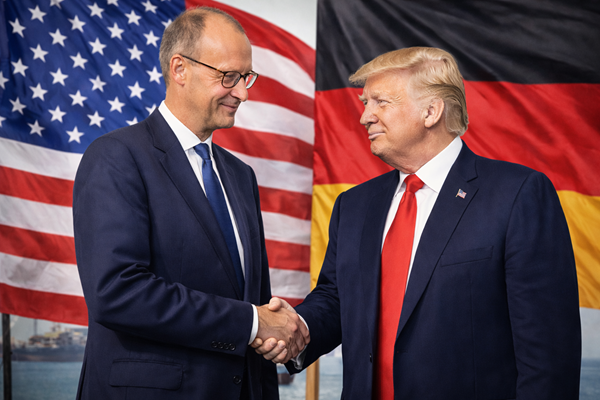
The U.S. decision is being interpreted as an important signal of close coordination between Washington and Berlin.
Although Western governments have imposed extensive sanctions on Russia’s energy sector, the exemption demonstrates that sanctions policy is being calibrated to avoid unintended consequences for European energy security.
Officials in Germany emphasized that Rosneft’s German subsidiaries have effectively been separated from the Russian parent company through the trusteeship arrangement.
On this basis, the U.S. Treasury’s Office of Foreign Assets Control (OFAC) issued a general license ensuring the German entities would not be affected by new sanctions.
Protecting Energy Stability During a Sensitive Period
The decision comes at a time when global energy markets are already under pressure due to geopolitical tensions and supply uncertainties.
Maintaining stable refinery operations in Germany is therefore seen as essential for avoiding further disruptions in European fuel markets.
The German Ministry for Economic Affairs said it remains in close and constructive dialogue with U.S. authorities to ensure that the exemption continues to apply.
Broader Implications for Transatlantic Relations
Beyond the immediate energy implications, the move highlights the importance of transatlantic coordination in sanctions policy.
Washington’s decision illustrates a balancing act between maintaining pressure on Russia and protecting the economic stability of key European allies.
For Germany, the exemption ensures that sanctions enforcement does not undermine domestic fuel supply chains.
For the United States, it reinforces the message that cooperation with European partners remains central to Western energy and security policy.
Outlook
The exemption does not change the broader Western sanctions framework against Russia’s energy sector.
However, it demonstrates that sanctions policies can be adjusted to reflect practical realities in energy markets.
As geopolitical tensions continue to shape global commodity markets, the close coordination between the United States and Europe will remain a key factor in maintaining energy stability.