
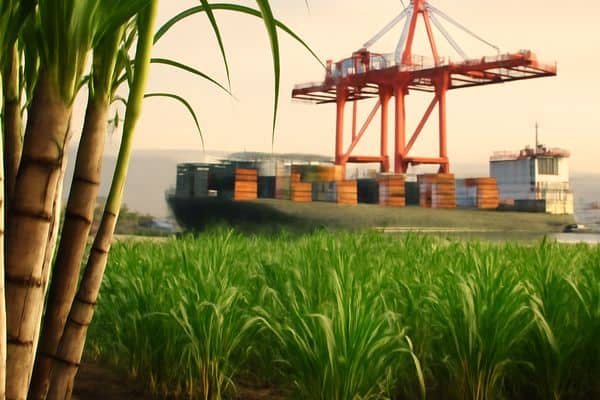


Global sugar markets are navigating a complex mix of ample near‑term supply, logistical bottlenecks, and heightened geopolitical risk. While ICE No. 11 futures for May 2026 are trading in the mid‑teens (around 14.4 US¢/lb) and Brazilian refined sugar FOB offers remain firm near USD 0.53/kg, traders face new route disruptions in the Strait of Hormuz and ongoing spillovers from the Red Sea crisis, alongside structural bottlenecks at Brazilian ports. These factors are inflating freight costs and transit times, reshaping regional trade flows, and could quickly translate into higher delivered prices and bouts of volatility despite a broadly comfortable global balance.
Introduction
The current environment is defined less by a single identifiable “special event” and more by an overlay of concurrent disruptions affecting agricultural commodity logistics and trade. The blockage and militarization of the Strait of Hormuz since late February 2026, affecting one of the world’s critical maritime chokepoints, has already triggered widespread rerouting of vessels and higher freight and insurance costs for cargoes moving to and from the Gulf region. In parallel, the earlier Red Sea crisis forced many carriers to avoid Suez and sail around the Cape of Good Hope, a pattern that has kept global freight rates elevated versus pre‑crisis levels.
These geopolitical shocks are hitting a sugar market that, on paper, is shifting back into surplus after tightness in 2023–24. Global sugar supply rebounded in 2024–25, led by higher output from Brazil and stronger beet crops in Europe and other key producers. However, logistics remain a core constraint: Brazil’s export machine – central to raw sugar availability – has repeatedly tested its port and rail capacity, with queues and storage bottlenecks already documented in earlier seasons. Against this backdrop, even “unknown” or emerging disruptions in shipping lanes, port operations, or trade policy can rapidly alter physical flows, differentials and basis levels, even if flat futures prices appear stable.
🌍 Immediate Market Impact
The closure and militarization of the Strait of Hormuz has frozen much container and bulk traffic to Gulf ports and forced carriers either to suspend bookings or divert via secondary ports outside the strait, such as Salalah (Oman) and Khor Fakkan (UAE), followed by inland trucking. Although most bulk sugar exports do not transit Hormuz directly, the shock removes capacity from the global fleet, tightens vessel availability, and supports higher freight and insurance premia on many long‑haul routes.
These new constraints layer onto the lingering effects of Red Sea rerouting, which cut container flows through Suez by roughly three‑quarters and lengthened Asia–Europe voyages by around 4,500 nautical miles and about 12 days around the Cape. For sugar, this translates into higher CIF costs for importers in the Middle East, North Africa, and parts of Europe that source raws from Brazil, Central America or Asia, and whites from refiners in the EU, Middle East and India. Traders now face more volatile freight spreads, wider regional price differentials, and greater basis risk between ICE No. 11 futures and delivered values.
📦 Supply Chain Disruptions
On the origin side, Brazil remains the pivotal supplier, and its logistics system has repeatedly been stretched. Reports from recent seasons highlight congested export corridors, with sugar piling up in Brazilian ports and queues of dozens of vessels waiting to load, as rail and terminal capacity struggled to keep pace with record export programs. Even as investments expand capacity, the system is running near its operational limits during peak months, increasing the sensitivity to any disruption – from labor actions to localized infrastructure failures.
Globally, ports have also faced intermittent disruptions from extreme weather and capacity constraints, with major European, Asian and North American gateways experiencing closures or slowdowns during late 2025 peak season. Combined with the diversion around Red Sea and now Hormuz, this raises the risk of container shortages in some regions, rollovers, and delays for bagged or refined sugar shipments. For Middle East and Gulf importers, suspended bookings to ports such as Jebel Ali, Dammam or Doha, and the need to route via alternative hubs, create not just higher freight bills but also longer lead times and inventory management challenges.
📊 Commodities Potentially Affected
- Raw sugar (ICE No. 11): Benchmarks are currently around the mid‑teens cents per pound for 2026 contracts, reflecting a move back toward surplus. However, any sustained logistics disruption at Brazilian ports or renewed export controls elsewhere could quickly tighten nearby spreads and widen freight‑adjusted regional premiums.
- Refined sugar (white/ICUMSA 45): Brazilian refined FOB São Paulo offers have been edging higher (recently around USD 0.53/kg, up from 0.51–0.52/kg in late 2024), indicating firm demand and cost pass‑through from freight and risk premia into refined values. Gulf and African buyers reliant on containerized whites are particularly exposed to freight volatility.
- Fertilizer feedstocks (ammonia, phosphates, sulfur): The Gulf region accounts for roughly 27% of global ammonia exports, 22% of phosphates and 45% of sulfur, all key to fertilizer production. Disruptions to these flows can indirectly affect sugarcane and beet costs and yields via fertilizer availability and prices.
- Competing caloric sweeteners and ethanol: Elevated energy prices and freight costs due to Hormuz tensions increase the opportunity cost of diverting cane between sugar and ethanol and may influence industrial demand for alternative sweeteners, feeding back into sugar balance and pricing decisions.
🌎 Regional Trade Implications
Middle Eastern and Gulf importers of sugar and other agri‑food products face near‑term procurement challenges. With major container lines suspending bookings to Bahrain, Kuwait, Qatar, the UAE and Saudi Arabia, and traffic in the Gulf disrupted, importers are increasingly reliant on secondary ports outside the Strait of Hormuz and longer overland legs. This will likely raise landed costs and may encourage some buyers to diversify origins toward suppliers that can load into alternative routings (e.g., EU/Mediterranean refiners, Black Sea beet sugar exporters where available).
Brazil remains structurally dominant in raw sugar exports, but its flows have also been reshaped by evolving trade policy, including higher US tariffs on Brazilian products that sharply reduced sugar exports to the US between 2024 and 2025. This has encouraged Brazilian exporters to deepen ties with Asian, African and Middle Eastern buyers, with some cargoes increasingly priced off alternative delivery points or routed via new transshipment hubs. Meanwhile, stronger output from India, Thailand and the EU over 2025–26 provides alternative export supplies that could partially offset any localized disruption in Brazilian logistics, though policy risk – especially export restrictions – remains a known swing factor.
🧭 Market Outlook
In the short term, futures curves reflect a market that is fundamentally more comfortable than in 2023–24, with expectations of a global surplus in 2025/26 supported by good cane and beet conditions in several major producers. However, the transport layer is fragile. Any additional “unknown” event affecting key Brazilian ports, rail links, Gulf or Red Sea shipping could rapidly tighten nearby spreads, strengthen regional basis levels, and drive spikes in delivered prices even if global production forecasts are unchanged.
Traders will closely monitor: (1) the duration and intensity of Hormuz‑related disruptions; (2) vessel and container availability on Brazil–MENA, Brazil–Asia and EU–MENA lanes; (3) signals of export policy shifts in India, Thailand and the EU; and (4) any new port, labor or infrastructure incidents that could constrain loading programs. Risk management will likely continue to emphasize freight and basis hedging alongside traditional futures and options strategies.
CMB Market Insight
The current phase of the sugar market underscores a key lesson for commodity participants: logistics and geopolitics can be as price‑relevant as fields and mills. Even in a year that looks fundamentally well supplied, disruptions to chokepoints such as the Red Sea and Strait of Hormuz, combined with structurally tight capacity at core origins like Brazil, can reorder trade flows, inflate CIF values and drive bouts of volatility in regional markets.
For importers, the strategic response is diversification of origin, port of discharge and shipping partners, with greater emphasis on inventory buffers in logistically exposed regions. For exporters and producers, sustained investment in port, rail and storage capacity – and proactive hedging of both price and freight – will be essential to defend market share and margins. In this environment, continuous monitoring of “unknown” or emerging events in maritime security, port operations and trade policy is no longer optional; it is a core component of sugar supply chain risk management.
Related posts:
 Sugar beet 2026: Tightening EU beet area while ICE prices stabilise
 India’s Traditional Sweeteners Rally While Refined Sugar Softens Amid Global Oversupply
 Indian Grain and Pulse Markets Firm as Basmati Export Routes Face Middle East Disruptions
 Sugar Beet Market: Firm Prices & Upward Outlook Amid Tight Global Supply
 Sugar Market Faces Seismic Shift as Rare Sweeteners Go Mainstream
 Sugar Beet Market Faces Steady Correction: EU Prices Ease on Oil Reserve Release
 Global Sugar Market in Turmoil: War Disruptions Stop Indian Exports
 Sugar Cane Market Faces Supply Surge, Price Pressure, and Policy Paralysis – What’s Next?