
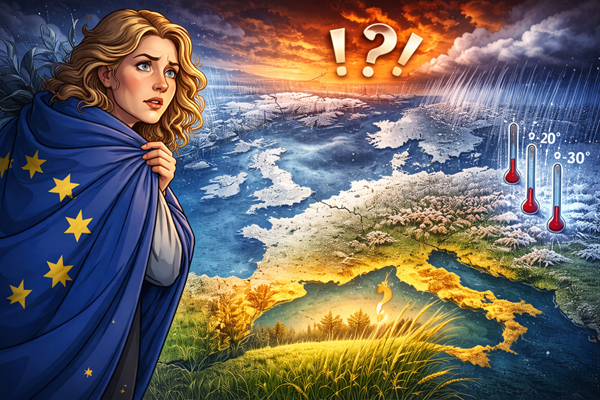
❄️ Frost Shock in Eastern Europe – Rain Revival in North Africa: Is Europe’s Wheat Market Heading for Its Next Surprise?
CMB News | Grain Markets | March 2026
Europe’s crop outlook has entered a volatile weather-driven phase.
While severe frost in parts of Eastern Europe threatens winter crops, abundant rainfall across the Maghreb is dramatically improving cereal prospects. The latest JRC MARS Bulletin (February 2026)
JRC145577_01
confirms that contrasting weather extremes could reshape grain trade flows in the months ahead.
🌨️ Eastern Europe: Temperatures Down to –30°C Raise Crop Risk
At the end of January and into early February, minimum temperatures in:
-
Poland
-
The Baltic states
-
Finland
-
Parts of Ukraine
fell below –20°C, locally even approaching –30°C
JRC145577_01
.
Critically, snow cover was insufficient in some regions at the onset of the cold spell.
Winter wheat is relatively frost-hardy. More vulnerable crops include:
-
Winter barley
-
Rapeseed
The JRC reports potential “frost-kill events” in southern Finland, the Baltics, eastern and north-western Poland and parts of Ukraine
JRC145577_01
. However, the full extent of damage will only become clear once snow fully melts.
Market implication:
If significant damage is confirmed, export expectations from Eastern Europe could tighten — potentially supporting EU wheat futures.
🌧️ Maghreb: Rain Ends Multi-Year Drought
In sharp contrast, North Africa has seen a strong rainfall rebound.
Since late December, above-average precipitation has:
-
Replenished soil moisture
-
Refilled reservoirs (Morocco ~70% capacity)
JRC145577_01
-
Accelerated biomass growth
Yield forecasts for 2026 suggest:
-
Algeria: Slightly above the 5-year average
-
Tunisia: Recovery toward above-average levels
-
Morocco: Clear improvement versus last season
JRC145577_01
Trade implication:
A stronger Maghreb crop could reduce import demand from one of the EU’s key wheat destinations.
⚖️ A Market Caught Between Two Forces
| Bullish Drivers | Bearish Drivers |
|---|---|
| Frost risk in Eastern Europe | Improved Maghreb crop outlook |
| Export uncertainty | Potentially lower North African imports |
| Rising risk premium | Refilled water reserves |
The result: growing volatility without confirmed supply loss — yet.
📈 What Traders Should Watch
The coming weeks will be decisive:
-
Will frost damage materialize at scale?
-
Can crops recover with milder March temperatures?
-
Will rainfall continue in North Africa through flowering?
Until clarity emerges, markets are likely to trade weather risk — not fundamentals alone.
Conclusion
Europe’s grain market is entering a critical weather window.
There is no confirmed supply shock — but uncertainty is rising.
And in agricultural markets, uncertainty is often the precursor to price movement.