
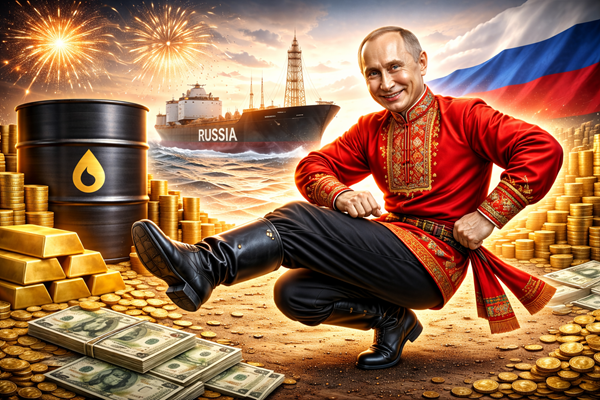
Russia Becomes the Financial Winner of the Iran War as Oil Prices Surge
The sharp rise in global oil prices following the Iran conflict is rapidly transforming Russia into one of the largest financial beneficiaries of the current energy crisis.
After months of falling exports and declining oil prices that had put Russia’s state budget under pressure, the sudden disruption of global supply routes—particularly the blockade of the Strait of Hormuz—is now generating billions in additional revenue for the Kremlin.
According to calculations cited by the Financial Times, every day that the conflict between the United States, Israel and Iran continues could bring Russia up to $150 million in additional oil revenues.
By the end of March alone, the newspaper estimates Russia’s additional income could reach $3.3 billion to $4.9 billion.
Hormuz Blockade Redirects Demand Toward Russian Oil
The main driver behind the surge in Russian oil revenues is the disruption of exports from major Middle Eastern producers.
With the Strait of Hormuz partially blocked due to escalating military tensions, several Gulf producers have been effectively cut off from global markets. The strait normally handles around 20% of global oil shipments, making it one of the most critical energy chokepoints in the world.
As supplies from the Gulf decline, large Asian importers—including India and China—have increasingly turned back to Russian crude.
This sudden shift in demand has sharply increased Russia’s export volumes.
Russia’s Export Discount Disappears
For years, Russia had been forced to sell its sanctioned oil at a significant discount.
In many cases, Russian crude traded $20 to $30 below Brent, the global benchmark price.
However, the current supply shock has effectively eliminated that discount.
In some Asian markets, buyers are now reportedly paying a premium for Russian oil as a replacement for missing Middle Eastern shipments.
This development dramatically improves Russia’s export revenues.
Oil Price Shock Relieves Pressure on Russian Budget
The rebound in oil prices comes at a crucial moment for Moscow.
In the months leading up to the conflict, Russia’s oil exports had fallen to their lowest level in years, largely due to declining purchases by India under pressure from the United States.
At the same time, global oil prices had weakened, creating a severe strain on the Russian state budget.
The combination of rising prices and recovering exports now provides the Kremlin with a major financial lifeline.
However, analysts note that the current price levels would need to remain elevated for several months to fully offset the revenue losses Russia suffered earlier this year.
Strategic Consequences for the West
Some analysts warn that the financial windfall could significantly alter the geopolitical dynamics of the conflict.
Thomas Altmann of investment firm QC Partners argues that Russia is emerging as the “financial main beneficiary” of the Iran war.
He also warned that the partial easing of sanctions on Russian oil by the United States could have long-term political consequences.
“The suspension of sanctions on Russian oil could drive a deeper wedge into transatlantic relations between the United States and the European Union,” Altmann said.
Risk of Prolonged Conflict
Another concern among analysts is that rising oil revenues may reduce Russia’s incentive to support diplomatic efforts aimed at stabilizing the region.
As long as the Strait of Hormuz remains disrupted and global oil markets stay tight, the Kremlin continues to benefit from higher prices.
Without a significant escalation—such as large-scale military intervention in the region—the current conflict could potentially drag on for years.
Such a scenario would represent a severe economic and strategic challenge for Western economies while simultaneously strengthening Russia’s financial position.
Source: NTV