
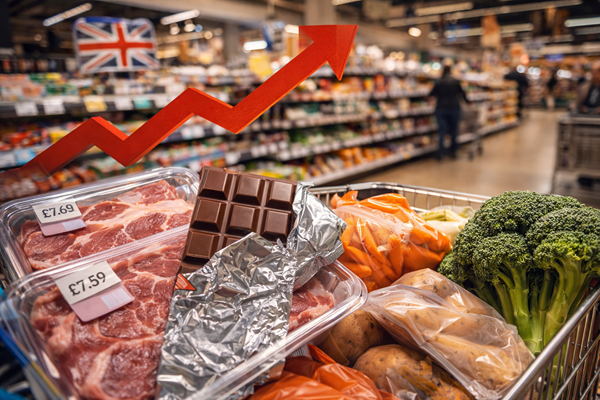
UK Food Inflation Ticks Higher: Meat, Cocoa and Wheat Drive Grocery Price Pressure
CMB News | Food & Commodity Markets | March 2026
Grocery inflation in the United Kingdom has edged higher again, signalling renewed pressure on household food budgets. Food prices rose by 4.3% in the four weeks to late February, reversing the decline seen earlier in the year.
While overall retail inflation remains moderate, several key food categories are experiencing faster price increases — highlighting the growing influence of global agricultural commodity markets on supermarket shelves.
Meat and Chocolate Lead Price Increases
Price growth has been strongest in categories such as:
-
fresh unprocessed meat
-
chocolate confectionery
-
certain personal care products
At the same time, some grocery segments are seeing price declines, particularly:
-
butter and chilled spreads
-
household paper products
-
sugar confectionery
This uneven pattern shows that food inflation is increasingly being driven by specific commodity markets rather than broad price increases across all food products.
The Commodity Drivers Behind Food Inflation
Behind rising supermarket prices lie several key agricultural commodities whose supply dynamics are shaping global food markets.
Cocoa: The Biggest Inflation Driver
Chocolate prices are rising rapidly due to tight cocoa supplies.
Poor harvests in West Africa — particularly in Ivory Coast and Ghana — have sharply reduced global cocoa availability over the past year. Because cocoa represents the largest share of production costs for chocolate manufacturers, retail prices for chocolate products respond quickly to changes in cocoa markets.
As long as supply shortages persist, chocolate prices are likely to remain elevated.
Meat: Feed Costs and Livestock Supply
Meat prices are being driven by both supply constraints and feed costs.
Livestock production across Europe has been affected by:
-
herd reductions in previous years
-
higher energy costs
-
volatile feed prices
Feed ingredients such as corn and soybean meal remain crucial cost drivers for livestock producers. When feed costs increase, the impact eventually feeds through to consumer meat prices.
Wheat: The Bread Basket Effect
Wheat plays a central role in food price dynamics because it is used in a wide range of everyday products.
These include:
-
bread
-
pasta
-
breakfast cereals
-
biscuits and baked goods
Even relatively small changes in wheat prices can ripple through the entire food system because of its widespread use in processed foods.
Dairy Markets Remain Sensitive
Dairy prices are heavily influenced by weather conditions, feed costs and farm profitability.
Although some dairy categories have recently seen price declines, milk supply across Europe remains vulnerable to production fluctuations caused by environmental regulations and farm cost pressures.
As a result, dairy markets remain structurally sensitive to supply disruptions.
What This Means for Consumers
Food inflation is increasingly shaped by a combination of commodity markets rather than a single supply shock.
Current pressure points include:
-
tight cocoa supply
-
livestock production constraints
-
feed grain volatility
-
energy and logistics costs
While competition among UK supermarkets continues to limit price increases in some categories, rising costs in key agricultural commodities mean grocery inflation is likely to remain sensitive to global market developments.
Market Outlook
Looking ahead, the trajectory of food prices will depend heavily on developments in global commodity markets.
If supply improves in key sectors such as cocoa or feed grains, price pressures could ease. However, continued volatility in agricultural markets means food inflation is likely to remain a central issue for consumers and policymakers alike.
For now, the connection between global commodity markets and supermarket prices is becoming increasingly visible.
Source: Reuters