
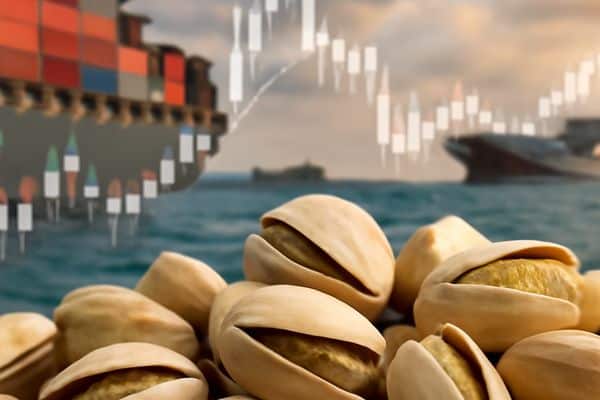
Global pistachio markets are entering a period of pronounced uncertainty as both longstanding supply cycles and sudden geopolitical risks converge. The United States, Iran, and Turkey remain the world’s dominant producers, generating nearly the entire global pistachio supply. In 2025, U.S. orchards led with a robust crop, but as the cycle pivots into 2026, off-year production in both the U.S. and Iran is set to reduce overall output. Most crucially, Iran’s exports—vital to many key importers—are squeezed by the effects of internal unrest, government crackdowns, and more recently, outright military escalation.
These disruptions are compounding logistical challenges and could further restrict pistachio flow, with ripple effects likely to be felt even by buyers not directly reliant on Iranian supply. U.S. producers are seen as the fallback; however, with tight stock commitments and their own cyclical downturn approaching, buyers face heightened competition and constrained alternatives. Meanwhile, Turkey, traditionally a swing supplier, is struggling with a small 2025 crop and faces its own shipping hurdles. As we look ahead, most market signals point toward sustained or firmer prices as global availability continues to tighten, reshaping international trading patterns and sharpening the focus on risk management for all market stakeholders.
📈 Prices
| Exchange | Product | Closing Price | Weekly Change | Market Sentiment |
|---|---|---|---|---|
| n/a | Pistachio (in-shell, bulk) | Data not available (see note) | n/a | Steady to Firm (supply-driven) |
Note: Pistachio futures are rarely listed on public exchanges; major price action is quoted OTC between grower cooperatives, processors, and global traders. Current EUR-denominated spot prices were not available.
🌍 Supply & Demand
- Leading Producers: US (~712k MT), Iran (~225k MT), Turkey (~135k MT) for 2025 (inshell basis).
- Total Global Output (2025): 1.1–1.2 million MT.
- Production Cycles: Two-year alternate bearing impacts all leading regions; US and Iran in on-year for 2025, off-year for 2026; Turkey inverse.
- Iran: Drought and dry weather cut 2025 crop; 2026 crop status uncertain, early in development phase.
- U.S.: Well-committed sales; sellers cautious about forward contracts as 2026 off-year nears.
- Turkey: 2025 off-year, output well below norm; 2026 on-year could boost supply, offsetting some global tightening.
📊 Fundamentals
- Iranian Supply: Export pipeline throttled by unrest, government restrictions, and new military escalation. Internal and external trade logistics strained. Sanctioned trade often routed via UAE and Turkey.
- U.S. Pipeline: With Iran constrained, increased demand on U.S. supplies; high levels of forward commitments reported as buyers seek security of supply.
- Turkey’s Role: Limited exports in 2025 due to crop cycle; some re-export of Iranian nuts possible, but hampered by regional shipping crises (Red Sea, Suez disruptions).
🛰️ Weather Outlook
- Iran: Drought conditions and dry weather were behind smaller 2025 crop; early indicators for 2026 suggest continued risks but no confirmation of direct orchard damage. Military conflict mostly affects western/southern regions; main orchards are in northeast, so direct crop loss appears minimal currently.
- U.S. & Turkey: Seasonal weather will remain critical, especially as both transition through their respective crop cycles in 2026. U.S. orchards have no widespread reported weather damage as of now, but water management remains a central issue in California’s Central Valley.
🌐 Global Production & Stock Comparison
| Country | 2025 Output (in-shell, MT) | 2026 Crop Cycle | Export Logistics |
|---|---|---|---|
| U.S. | ~712,000 | Off-year expected | Stable but highly committed |
| Iran | ~225,000 | Off-year expected, drought risk | Disrupted by unrest & conflict |
| Turkey | ~135,000 | On-year expected, bigger crop | Transit/Red Sea risks |
📌 Market Drivers
- Logistical Risks: Ongoing military escalation and sanctions are major threats for Iranian supply lines.
- Production Cycle: US and Iran shifting to off-year in 2026; global supply tightening expected.
- Crop Health: Drought in Iran and weather volatility remain watch points everywhere.
- Global Demand: New pressures as buyers seek to diversify and secure limited available supply.
- Geopolitical Factors: Military activities and sanctions amplifying market fears and causing speculative action.
📅 Trading Outlook & Key Recommendations
- Buyers: Secure forward contracts early with reliable U.S. and Turkish suppliers; expect fierce competition for any uncommitted volume.
- Traders/Importers: Diversify sourcing, monitor transit points (e.g., UAE, Turkey); be alert to possible rerouting requirements due to new disruptions.
- Exporters: U.S. sellers should capitalize on firm pricing, but caution is warranted due to future cycle downturn and supply limitation risks.
- Overall: Price outlook is steady to firm; upward pressure likely as supply contracts into 2026. Speculative buyers may find few arbitrage opportunities unless new supply emerges from Turkey’s 2026 crop.
⏩ 3-Day Regional Price Forecast
- U.S. (California, FOB): Steady to firm, mostly on committed contracts (no spot price weakening expected).
- Turkey (Izmir, FOB): Stable, low trading volume due to small 2025 crop; possible uptick as 2026 crop prospects improve.
- UAE/Europe (CIF): Firm to higher, especially for Iranian origin as availability shrinks and rerouting delays persist.