
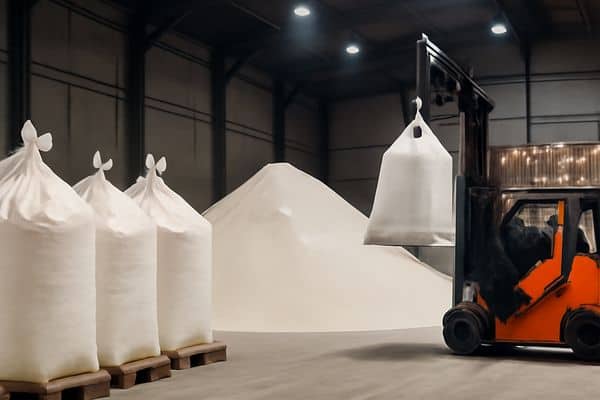
The Polish sugar industry stands at a pivotal crossroads in 2026. As the third-largest sugar producer in the European Union, Poland’s sugar sector continues to demonstrate its economic significance, resilience, and innovative spirit—especially in the context of mounting regulatory and import-driven competition. Despite notable headwinds from liberalized trade regimes and EU climate requirements, Polish producers have maintained stability: in the 2024/2025 campaign, 2.6 million tonnes of sugar were produced from over 18.4 million tonnes of sugar beets.
This level of output ensures both food security and supplies for downstream industries, supported by 17 processing plants across the country. The “Rynek cukru 360°” report emphasizes the growing importance of technological advancements, bioeconomy solutions, and value-added side streams in energy and biotechnological fields. Thus, while regulation and competition intensify, Poland’s sector counters with innovation, sustainability, and supply self-sufficiency. Market participants should be alert to shifting policy landscapes and the need for protective instruments to face imports that do not meet EU standards. Meanwhile, sugar prices across Europe remain stable, offering a tentative sense of security but also warning of potential volatility should regulatory or supply shocks emerge.
Exclusive Offers on CMBroker

Sugar granulated
ICUMSA 45, 0,2-1,2 mm
FCA 0.43 €/kg
(from LT)

Sugar granulated
ICUMSA 45, 0,2 - 1,2 mm
FCA 0.44 €/kg
(from LT)

Sugar granulated
ICUMSA 32, 0,300 - 0,600 mm
FCA 0.46 €/kg
(from GB)
📈 Prices
| Origin | ICUMSA Type | Location | Closing Price (EUR/kg) | Weekly Change | Market Sentiment |
|---|---|---|---|---|---|
| LT (Lithuania) | 45, 0.2–1.2 mm | Mirijampole | 0.42 | 0% | Stable |
| GB (U.K.) | 32, 0.30–0.60 mm | Norfolk | 0.42 | 0% | Stable |
| DE (Germany) | 45, 0.4–0.65 mm | Berlin | 0.47 | 0% | Stable |
Spot prices in key European locations reflect a relatively balanced market so far in 2026, without sharp weekly shifts, indicating a stable sentiment amid regulatory uncertainties.
🌍 Supply & Demand
- Production Stability: Poland’s sugar industry produced ~2.6 million tonnes in 2024/2025 from 18.4 million tonnes of beets, ensuring national self-sufficiency and feeding the food and processing sectors.
- Strategic Importance: 17 processing plants form the backbone of the sector, vital for food security, industrial continuity, and export competitiveness.
- By-product Utilization: Side products, especially beet pulp, are increasingly leveraged for renewable energy (biogas) and as feedstock for biochemical industry, aiding sector sustainability and energy transformation.
📊 Fundamentals
- Technological Progress: Adoption of precision agriculture, digital monitoring, and biotechnological advancements fosters operational efficiency and environmental gains.
- Emission Reduction: Sugar plant emissions down by nearly 60% since 1990; cogeneration units deliver high energy efficiency.
- Expanded Applications: Beyond food, Polish sugar and derivatives reach pharmaceutical, cosmetic, bio-plastic, and biochemical markets, boosting demand diversity.
📌 Regulatory & Market Drivers
- Regulatory Pressure: The sector faces rising cost and compliance challenges from EU climate and sustainability policies.
- Trade Liberalization: Competitive pressure from imports, often produced to less stringent standards, threatens domestic producers; calls for protective measures are increasing.
- EU Policy Developments: Ongoing policy evolution (e.g., CBAM, climate legislation) may alter the industry cost structure and trade flows throughout 2026.
🌦️ Weather Outlook (Web Supplement)
- Current Weather: Recent satellite and meteorological data (Feb 2026) indicate mild winter temperatures across Poland and central Europe, favorable for beet storage and field preparations for 2026 plantings.
- Medium-Term Risks: Watch for spring precipitation and temperature dynamics, which could impact sowing and early crop development.
- Potential Impact: Stable weather may support yield consistency, but excess wet or heat spells during sowing could pose risks for the upcoming campaign.
🌍 Global Positioning & Stocks
- EU Output: With Poland ranked 3rd in EU sugar output, national stocks remain robust, buffered against major shocks but exposed to policy shifts.
- Import Competition: Increased sugar imports into the EU from non-EU countries are exerting downward price pressure and could affect future domestic plantings.
📆 Trading Outlook & Recommendations
- Monitor regulatory developments—new EU directives can abruptly shift price expectations.
- Domestic producers well-positioned due to efficient plants and diversified product streams, but should hedge against import-related downside risk.
- Processors and food producers can be moderately confident in stable supply and prices for Q1 2026, but should remain alert to spring weather and macro-policy changes.
- Watch for supply chain volatility if imports increase or compliance costs escalate for EU producers.
🔮 3-Day Regional Price Forecast (Select Exchanges & Physical Markets)
| Region | Product | Current Price (EUR/kg) | 3D Forecast (EUR/kg) | Trend |
|---|---|---|---|---|
| Lithuania (FCA Mirijampole) | Granulated 45 | 0.42 | 0.42 | Stable |
| UK (FCA Norfolk) | Granulated 32 | 0.42 | 0.42 | Stable |
| Germany (FCA Berlin) | Granulated 45 | 0.47 | 0.47 | Stable |