

ICE white sugar futures along the No.5 curve rebounded on 20 April, with gains of around 1–1.3% after the recent sell-off, while the entire forward strip remains in modest contango. EU refined sugar prices in Central Europe are holding firm in EUR terms, keeping beet revenue attractive but with limited near‑term upside as global fundamentals still point to ample supply.
The sugar beet complex in Europe enters the spring period with futures signaling moderate, but not acute, tightness over the medium term. Nearby Aug‑26 ICE No.5 has moved back toward the upper end of the recent trading band, and deferred contracts out to 2029 continue to price a small premium. At the same time, Central European refined sugar offers around EUR 430–470/t equivalent and stable wholesale prices are supporting growers’ confidence ahead of 2026/27 beet campaigns.
[cmb_offer ids=1034,1095,1008]
📈 Prices & Futures Structure
The latest ICE White Sugar No.5 settlement data (20 April 2026) show a synchronized move higher across the curve:
- Aug 2026 closed at about USD 417.6/t, up 1.27% on the day.
- Oct 2026 settled near USD 415.4/t, +1.16%.
- Dec 2026 finished around USD 417.0/t, +1.10%.
- By Mar 2029, the contract is marked at roughly USD 449.4/t, reflecting a gradual contango.
This structure confirms the picture already visible since late March: the market is still digesting a global surplus and earlier price pressure, but is beginning to stabilize with a slight risk premium for later years. The small but consistent upward slope suggests expectations of higher costs and potential weather or policy risks rather than an imminent shortage.
In Central Europe, spot refined sugar prices converted to EUR remain historically firm even as ICE futures have corrected from previous highs. Wholesale offers for white sugar (beet-based, FCA Poland/Czech Republic/Lithuania) are broadly clustered in a narrow band:
| Product | Origin | Location | Price (EUR/kg) | Trend vs. mid‑March |
|---|---|---|---|---|
| Sugar granulated, EU Cat. II | CZ | Kalisz (PL) | 0.45 | Slightly firmer |
| Sugar granulated, white crystal Icumsa‑45 | PL | Warsaw (PL) | 0.47 | Stable to slightly up |
| Sugar granulated, Kat EU2 | PL | Kalisz (PL) | 0.43 | Stable |
Compared with late March, most of these offers have either remained flat or edged up by around EUR 0.01–0.03/kg, indicating that the recent futures weakness did not translate into a material softening of physical beet‑based sugar prices in the region.
🌍 Supply, Demand & Beet-Specific Drivers
Global fundamentals remain dominated by expectations of continued sugar surpluses in the 2025/26 and 2026/27 cycles, driven mainly by cane producers. This has pushed world sugar benchmarks to multi‑year lows in recent weeks and capped any more aggressive rally in white sugar futures. At the same time, European beet sugar is cushioned by regional demand, logistics and cost structures, which helps explain the resilience of EU refined sugar prices even as international indicators soften.
For sugar beet specifically, current price levels are high enough to maintain competitive returns against alternative crops in many EU regions. Recent corporate acreage decisions in Eastern Europe signal some rotation away from beet where margins were squeezed by volatility, yet these cuts are moderate and more about risk diversification than a structural exit. Overall, the forward ICE No.5 curve suggests only modest tightening risks into 2027–2029, meaning that substantial upside for beet prices would likely require either weather‑driven yield losses or a significant policy shock.
🌦️ Weather & Planting Outlook
As the 2026 beet planting window progresses across the EU beet belt, early‑season weather conditions will be the critical catalyst for the next move in prices. The current futures contango leaves room for either scenario: favorable moisture and temperatures would underpin expectations of solid yields, reinforcing the global surplus narrative and preserving the soft bias in international prices. Conversely, any pattern of sustained dryness or excessive rainfall during emergence could quickly turn attention back to yield risk and support white sugar premiums.
For producers and processors, this means that agronomic performance over the next 4–8 weeks will be at least as important as the current futures rally. Well‑timed rainfall and warm conditions would stabilize cost‑of‑production expectations and reduce the likelihood of aggressive price spikes into the 2026/27 campaign.
📊 Fundamentals & Margin Implications for Beet
The coexistence of relatively low world futures and firm regional refined prices is shaping a nuanced margin picture for beet growers. On the one hand, steady EU white sugar prices around the equivalent of EUR 430–470/t are supporting beet payment formulas and keeping contracted beet attractive versus grains and oilseeds. On the other hand, the global surplus backdrop and contangoed futures curve limit processors’ ability to pass through significantly higher prices to downstream buyers.
For industrial users, current conditions remain manageable: they benefit from an easing of long‑term price expectations on ICE while facing only modestly higher contract prices in EUR. For beet processors, risk management around hedge levels becomes more delicate, as locking in too aggressively on rallies might prove expensive if surplus conditions persist, but insufficient cover leaves them exposed to potential weather or policy shocks.
📆 Trading Outlook & 3‑Day Directional View
- Producers (beet growers): Use the recent rebound in ICE No.5 and still‑firm regional EUR prices to advance price discussions for a share of 2026 beet volumes, but keep flexibility for additional pricing in case weather risk lifts the curve later in the season.
- Processors: Maintain moderate hedge coverage along the Aug‑26 to Dec‑27 strip, taking advantage of the small contango while avoiding over‑hedging in light of persistent global surpluses.
- Industrial buyers: Gradually extend coverage into late‑2026 and 2027 at current EUR price levels, focusing on dips in ICE futures rather than chasing short‑term rallies.
- Speculative traders: Favour range‑trading strategies in ICE White Sugar No.5, with a bias to sell rallies unless clear weather or policy disruptions emerge in major beet or cane regions.
Over the next three trading days, ICE White Sugar No.5 is likely to consolidate the latest gains, with modest upside bias as long as broader commodity sentiment and currency moves remain supportive. In EUR terms, Central European refined sugar offers are expected to hold broadly stable, with only minor day‑to‑day adjustments driven by FX and freight rather than fundamentals.
[cmb_chart ids=1034,1095,1008]
Related posts:
 Central European Sugar Beet: Local Prices Hold Firm Despite Softer Futures
 ICE White Sugar Curve Firms, Supporting EU Sugar Beet Price Expectations
 Central European Sugar Beet: Beet Weather Favourable as Local Sugar Prices Firm
 Sugar Beet Market: ICE White Sugar Softens While EU Beet Signals Tightness Ahead
 Sugar beet market: ICE white sugar correction but EU prices stay firm
 Sugar Beet Market: ICE Correction but Central Europe Prices Hold Firm
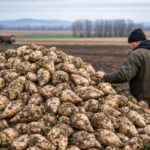 CZ–PL Sugar Beet/Sugar: Flat Spot Prices, Weather Still Chilly