

South African apples are entering 2025 with a strong crop and sharply higher exports to India, thanks to a pivotal cold‑chain protocol change that cuts costs and improves sea-freight competitiveness. Logistical risks in the Middle East and late-season rains temper the upside, but the India channel has clearly shifted from niche to strategic for high‑colour Gala varieties.
South Africa’s 2025 apple harvest is described by growers as both voluminous and high quality, yet operationally challenging after unusually heavy March–April rainfall in key high‑altitude Free State orchards. At the same time, a revised cold-chain protocol agreed between Hortgro and the national agriculture department has unlocked cost‑effective sea-based cooling for exports to India, immediately lifting volumes of well-coloured Gala strains. Exporters now face a mixed environment: weather-related quality downgrades, disrupted Middle East shipping, a supportive weak rand, and a structurally more accessible Indian market.
Exclusive Offers on CMBroker

Apricots dried
no: 7, sulphured (2000 ppm)
FOB 7.50 €/kg
(from TR)

Apple dried
Cubes 10-12 mm
FCA 4.37 €/kg
(from NL)

Apple dried
Cubes 5-7 mm
FCA 4.42 €/kg
(from NL)
📈 Prices & Trade Flows
The main price impulse for South African apples in early 2025 comes from trade flow rebalancing rather than a pure supply squeeze. The strong crop reported in the eastern Free State suggests no structural shortage, but the new India protocol is redirecting premium Gala volumes into a higher-return channel. This is tightening availability for some alternative destinations and supporting export parity values, particularly in Asia-facing programmes.
Uncertainty in Middle East shipping routes is simultaneously disrupting container flows and creating opportunistic pricing pockets. Some volumes initially destined for regional markets are being diverted, with a weaker South African rand cushioning exporters’ returns in euro terms. Processed apple references in Europe, such as Chinese-origin dried apple cubes delivered FCA Netherlands, are trading around EUR 4.32–4.42/kg, indicating a relatively stable baseline for industrial users but only indirectly linked to the fresh South African export segment.
🌍 Supply & Demand Dynamics
South Africa’s apple belt stretches across Free State, Mpumalanga, and Limpopo, with high-altitude eastern Free State growers harvesting first. The 2025 crop is assessed as strong in both volume and quality, led by late cultivars like Cripps Pink and Cripps Red. However, rainfall of 244 mm in March and 106 mm in April — more than double long-term averages — has complicated harvest logistics, potentially lifting on-farm losses and reducing the share of fruit that can meet top export specifications in the coming weeks.
On the demand side, India is emerging as one of the fastest-growing fresh fruit import markets globally, and South African exporters are now better placed to compete with other Southern Hemisphere suppliers. The protocol change enabling sea-based cooling has sharply reduced shipping complexity and costs, immediately improving South Africa’s price competitiveness at Indian destination ports. Growers shipping Gala varieties, particularly well-coloured strains, report meaningful volume gains into India, with this new outlet helping to balance the broader global demand picture.
📊 Fundamentals & Policy Drivers
The decisive driver behind the recent export surge to India is regulatory, not agronomic. Hortgro’s long-running engagement with government counterparts has yielded a revised cold-chain framework aligned with Indian import standards, allowing exporters to rely on sea freight instead of more restrictive alternatives. This structural shift lowers per-carton logistics costs and stabilises lead times, underpinning improved netback prices even in a year of strong production.
In parallel, new genetic Gala strains such as Bingo and BigBucks are reinforcing South Africa’s competitive edge. These varieties deliver stronger colour, better pack-out, and superior post-harvest handling, making them well suited to longer sea journeys into Asian markets. Yet grower margins remain under pressure from elevated fuel and fertiliser costs. Many producers have been pre-purchasing inputs to lock in prices, an approach that mitigates cost inflation but tightens cash flow at farm level and increases exposure to any downturn in export prices.
⛅ Weather & Logistics Outlook
The immediate concern for the next 30–90 days is the legacy impact of excessive late-season rainfall on fruit condition and storability. While the headline crop is strong, higher moisture during harvest raises risks of quality downgrades, more sorting, and higher cold-store management costs. This could trim the volume of export-grade apples available for premium Asian destinations, including India, particularly for the later cultivars.
Sea-route disruptions in the Middle East corridor are likely to persist at least into mid-2025, injecting ongoing volatility into transit times and freight costs. Containers bound for regional markets have already been affected, forcing some shippers to reroute or seek alternative markets. For agile exporters, these disruptions can create short-lived price spikes where supply tightens unexpectedly; for less flexible operators, they elevate commercial risk and working-capital requirements.
📆 Market Outlook & Trading Strategy
Near term, the combination of a strong South African crop and improved access to India points to ample global apple availability but with firmer pricing for high-colour Gala aimed at Asian programmes. Late-season weather damage and logistics bottlenecks should prevent any significant oversupply from fully depressing export returns. Over the medium term, the reformed India protocol appears structurally durable, provided policy continuity is maintained and phytosanitary performance remains robust.
Currency remains a key swing factor: a persistently weak rand would amplify euro-denominated returns and encourage continued investment in Gala genetics and orchard upgrades. Conversely, persistent input cost inflation without commensurate price gains could compress grower margins, particularly for smaller farms with limited hedging capacity. The broader strategic lesson is that protocol reform can unlock substantial value and may serve as a template for other South African fruit sectors seeking improved access to Asian growth markets.
📌 Focused Trading Recommendations
- Exporters: Prioritise India for well-coloured Gala and new genetic strains, locking in programmes while the revised protocol and favourable rand support netbacks. Build logistical flexibility to navigate ongoing Middle East sea-route disruptions.
- Importers in India and Asia: Use the current season to deepen relationships with South African suppliers of Bingo, BigBucks and other high-colour Gala lines, securing continuity ahead of potential future protocol or freight-cost shifts.
- Industrial buyers (juice, drying, ingredients): Monitor for increased availability of off-grade fruit from rain-affected lots, which may offer discounts versus export-class apples and help cap further upside in processed apple prices in EUR.
- Growers: Continue selective investment in high-colour Gala genetics and on-farm cold-chain efficiency, but manage cash flow prudently given the need to pre-purchase fuel and fertiliser.
📉 3-Day Indicative Market Direction (EUR)
| Market/Segment | Indicative Direction (next 3 days) | Comment (EUR context) |
|---|---|---|
| South African export-grade Gala to India | ➡️ to slightly 🔼 | Stable to mildly firmer as protocol benefits meet strong demand; weak rand supports EUR netbacks. |
| Alternative export markets (Middle East, regional) | 🔁 Volatile | Logistics disruptions drive mixed pricing; occasional short-term spikes in certain destinations. |
| Dried apple ingredients, Europe (Cubes ex CN) | ➡️ Stable | Recent offers around EUR 4.3–4.4/kg FCA NL suggest a broadly steady industrial market. |
Related posts:
 South African Apples Gain Ground in India Amid Logistics Shift
 Chinese Dried Apple Cubes: Flat-to-Firm Prices as Freight Costs Stabilise
 High‑Density New Zealand Orchard Signals Next Wave in Premium Apple Exports
 Polish Apple Exports Surge to Non‑EU Markets While Processors See Stable Prices
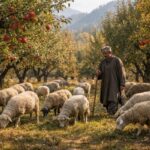 Apple Market in Jammu & Kashmir: Intermediaries, Infrastructure Gaps and Flat Processed Prices
 Chinese Dried Apple Cubes Hold Steady in Europe as Supply Remains Comfortable
 Iran Shock Reshapes India’s Apple Market and Lifts Global Prices
 Stable Dried Apple Prices as Turkish Weather Risk Stays Contained