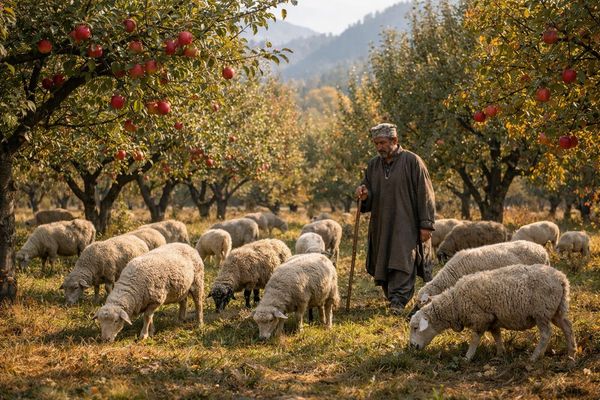
Apple markets are currently marked by structurally weak grower bargaining power in Jammu & Kashmir and broadly stable processed apple prices in Europe. Intermediary-dominated trade, storage gaps, and limited use of modern marketing platforms remain the key constraints on farm incomes.
India’s leading apple region, Jammu & Kashmir, continues to rely on traditional contractor- and commission-agent structures, with most fruit moving through these channels and only a minority sold directly into wholesale markets. This keeps farmgate prices under pressure and limits the benefits from growing production and improved transport links. In contrast, European prices for Chinese-origin dried apple cubes are stable, with no acute supply shock or weather threat in China. Overall, structural reforms in J&K matter more for farmer margins than short-term price moves in processed markets.
Exclusive Offers on CMBroker

Apple dried
Cubes 10-12 mm
FCA 4.35 €/kg
(from NL)

Apple dried
Cubes 8-10 mm
FCA 4.30 €/kg
(from NL)

Apple dried
Cubes 5-7 mm
FCA 4.40 €/kg
(from NL)
📈 Prices & Market Structure
In Jammu & Kashmir, 67–82% of fruit volumes still pass through contractors and commission agents, while only about 8–27% reach markets directly via wholesalers. This entrenched intermediary layer absorbs a significant share of value before apples reach wholesale markets, leaving growers with compressed margins. Despite the availability of digital platforms such as eNAM, on-the-ground adoption remains low as farmers continue to depend on traders for informal credit and immediate cash needs.
In the processed segment, Chinese-origin dried apple cubes offered FCA Dordrecht are trading around EUR 4.30–4.40/kg, with recent quotes flat since mid-April 2026. Market commentary confirms that supply from China into Europe is comfortable and that late‑April weather does not pose major risks to Chinese apple-growing regions, helping to stabilise these prices.
| Product | Origin | Spec | Location / Term | Latest Price (EUR/kg) | 1–3 Week Trend |
|---|---|---|---|---|---|
| Dried apple cubes | China | 5–7 mm | Dordrecht, FCA | 4.40 | Stable |
| Dried apple cubes | China | 8–10 mm | Dordrecht, FCA | 4.30 | Stable |
| Dried apple cubes | China | 10–12 mm | Dordrecht, FCA | 4.35 | Stable |
🌍 Supply, Demand & Infrastructure
Jammu & Kashmir’s horticulture sector has expanded strongly over recent decades, with total fruit production rising more than fivefold since 1980 and area under horticulture nearly tripling. Horticulture now underpins a large share of regional livelihoods, with apples the dominant crop and a key contributor to India’s overall apple output. Yet, marketing remains skewed towards fresh sales with limited diversification into value-added processing, leaving growers exposed to seasonal gluts and transport disruptions.
The new NITI Aayog roadmap for horticulture in J&K underscores that structural bottlenecks—intermediary dominance, inadequate cold storage, fragmented supply chains, and weak farmer collectivisation—are the main brakes on income growth. It proposes strengthening Farmer Producer Organisations, self-help groups and primary agricultural credit societies to aggregate produce, negotiate better prices and ease access to finance. It also highlights the role of improved logistics, including the fully operational rail link connecting the Kashmir Valley to the rest of India, which is already moving substantial apple volumes out of the region.
However, recent hailstorms in key districts like Shopian and Kulgam during the flowering stage have reminded the market of ongoing climate vulnerability. Local reports point to damage in orchards at a sensitive phenological phase, potentially trimming the 2026–27 crop in affected pockets, even if provincial totals remain resilient. For now, domestic demand and internal trade flows can absorb current volumes, but without stronger storage and marketing options, such shocks quickly translate into localised price pressure.
📊 Fundamentals & Policy Direction
The core fundamental issue in J&K’s apple economy is not a lack of production but a weak marketing architecture. Farmers’ bargaining power is constrained by dependence on intermediaries for credit, market information and immediate liquidity. Small and marginal growers in particular are often forced into early-season sales at discounted prices because they cannot afford to hold stocks or pay for storage. This dynamic keeps farmgate prices structurally below what would be achievable with better timing and coordinated marketing.
Policy blueprints now prioritise investment in cold storage, packhouses and integrated supply chains to reduce post-harvest losses and enable more flexible sales strategies. They also encourage alternative channels such as direct farmer markets, cooperatives, e-commerce and partnerships with organised retail. If implemented effectively, these measures could rebalance value distribution along the chain, allowing growers to capture a higher share of end-market prices while improving quality consistency for buyers at home and abroad.
On the processed side, Europe’s demand for dried apple ingredients remains steady, supported by stable consumption in bakery, cereal and snack applications. Comfortable Chinese supply and normal weather in China’s main apple regions reduce the likelihood of abrupt price spikes in the near term, though broader China–EU trade tensions and evolving carbon-related measures could gradually raise cost bases for energy‑intensive processing and long-distance freight.
📆 Short-Term Outlook & Trading Takeaways
In the short run, the key driver for fresh J&K apples will be how quickly institutional reforms and infrastructure projects move from plans to implementation. Until farmer groups, storage capacity and alternative market channels scale up, the majority of growers will remain price takers, with limited ability to benefit from incremental demand or logistics improvements. Weather shocks such as the recent hail in South Kashmir add volatility but do not yet change the overarching picture of ample regional supply weighed down by marketing constraints.
🎯 Trading & Procurement Outlook
- EU buyers of dried apple cubes: Expect stable short-term pricing around EUR 4.30–4.40/kg FCA Dordrecht for Chinese origin. Use current calm conditions to secure nearby coverage while keeping some flexibility for potential policy- or freight-driven cost increases later in 2026.
- Indian traders and processors sourcing from J&K: Monitor the roll-out of FPOs, new storage projects and use of rail logistics. As collective marketing and cold storage expand, anticipate more disciplined selling patterns and narrower seasonal discount windows at the farmgate.
- Grower organisations in J&K: Prioritise aggregation and collective negotiation with contractors and commission agents, and actively pilot direct-sale channels (cooperatives, e-commerce) where infrastructure already exists to capture better price realisation.
📉 3-Day Regional Price Indication (Processed Segment, Europe)
- Dordrecht, CN-origin dried apple cubes (all sizes): Prices are expected to remain broadly unchanged over the next three trading days, supported by comfortable Chinese supply, normal weather and the absence of major logistics shocks on the China–EU lane.
- Volatility drivers to watch: Any abrupt changes in freight rates, euro–renminbi FX, or new EU trade measures affecting agri‑food imports from China could start to nudge offers higher, but no such triggers are visible in the very near term.