
Global Grain Markets Face Supply Shifts as Production Patterns Change
CMB News | Grains & Oilseeds | March 2026
Global grain markets are entering a period of adjustment as production patterns shift across key exporting regions and demand continues to expand in emerging economies. Weather variability, geopolitical disruptions, and rising feed demand are reshaping supply chains for wheat, corn, and other major grains.
According to recent agricultural market assessments, global grain production is expected to remain broadly stable in the upcoming marketing year, though regional supply fluctuations may lead to increased trade flows and price volatility.
Global Grain Demand Continues to Expand
Demand for grains continues to rise globally due to three main structural drivers:
- population growth
- expanding livestock sectors
- rising food consumption in developing economies.
The livestock and poultry industries remain particularly important drivers of grain demand, as feed consumption accounts for a large share of global grain utilization.
Feed demand has grown steadily in recent years, especially in regions where poultry and aquaculture production are expanding.
Wheat Remains the Dominant Export Grain
Wheat continues to play a central role in global grain trade, with large export flows originating from the Black Sea region, the European Union, and North America.
Major wheat exporters include:
- Russia
- European Union
- United States
- Canada
- Australia
The Black Sea region has become particularly influential in recent years due to its competitive production costs and strong export infrastructure.
However, geopolitical developments in the region have increased market uncertainty and raised concerns about supply reliability.
Corn Demand Driven by Feed and Biofuels
Corn remains the most widely produced grain globally and plays a key role in both feed markets and biofuel production.
Corn demand is strongly influenced by:
- livestock production
- ethanol demand
- global feed markets.
Major corn exporters include the United States, Brazil, and Argentina.
South American production has grown rapidly over the past decade, increasingly shaping global trade flows.
Storage and Logistics Remain Critical
As global grain production grows, storage and transport infrastructure are becoming increasingly important.
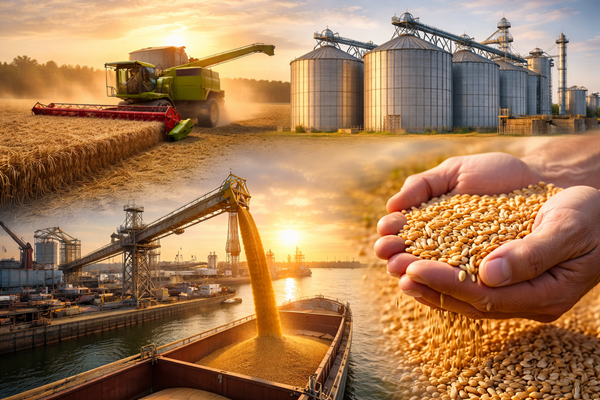
Large grain storage systems, export terminals, and bulk shipping networks play a crucial role in connecting major producing regions with import-dependent markets.
Countries in the Middle East, North Africa, and parts of Asia remain heavily dependent on imported grain supplies due to limited domestic production.
Weather Risks Continue to Influence Markets
Weather remains one of the most significant variables affecting grain markets.
Drought conditions in some regions and improved rainfall in others are expected to influence planting decisions and yields in the coming season.
Farmers are increasingly adjusting crop choices based on water availability, market prices, and government incentives.
In many regions, crops that require less irrigation are gaining popularity as climate variability increases.
Outlook
Global grain markets are expected to remain relatively balanced in the near term, though regional supply disruptions and shifting demand patterns could lead to short-term price fluctuations.
For traders and market participants, key factors to watch include:
- weather developments in major producing regions
- geopolitical risks affecting export routes
- changes in feed demand
- government policy interventions.
As global demand continues to grow, international grain trade will remain a critical component of global food security and agricultural markets.
Source: USDA