
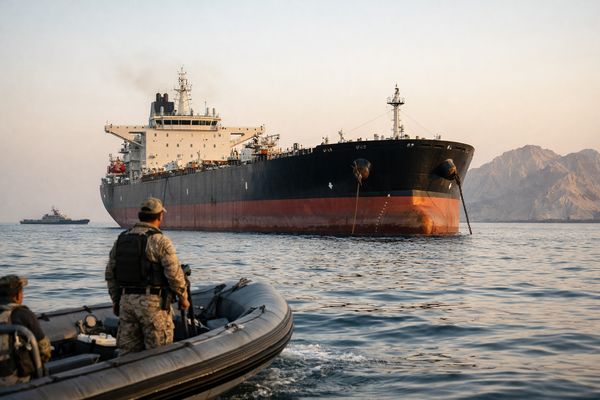
Fertiliser markets face a renewed risk premium as the threat of a US naval blockade of the Strait of Hormuz compounds already elevated prices and tight margins for producers and import-dependent buyers.
Concerns about disrupted flows from key Middle Eastern exporters come on top of a roughly 40% rise in fertiliser prices over the past year. With natural gas, diesel and shipping already more expensive, any additional interruption through Hormuz could quickly translate into higher costs for urea, ammonia and phosphate products across Asia, Europe and Africa. While the blockade is not yet fully implemented, traders and policymakers are moving into precautionary mode, including early tenders and stock-building, as they brace for further volatility.
📈 Prices & Market Sentiment
Fertiliser prices were already significantly higher year-on-year, with the report indicating an increase of about 40% before the latest Hormuz tensions. This prior rally was driven largely by elevated natural gas and fuel costs feeding through nitrogen and phosphate production economics.
The blockade threat has added a fresh geopolitical risk premium. Recent coverage highlights sharp rises in nitrogen values and localised spikes in benchmark indices, underlining how closely urea and ammonia prices react to disruptions in Gulf logistics. Market participants now expect short-term price swings to be driven less by agronomic demand and more by daily headlines on naval movements and ceasefire talks.
🌍 Supply & Demand Disruptions
The Strait of Hormuz is the critical outlet for Middle Eastern fertiliser producers serving Asia, Europe and Africa. The report underscores that a full naval blockade could halt the daily movement of fertiliser cargoes, particularly nitrogen-based products closely tied to Gulf gas flows.
India, which imported around 2.5 million tonnes of fertiliser last year, has already seen a government agency move with a precautionary tender. Similar concerns apply to South Asia and European buyers who rely on competitively priced Gulf urea, ammonia and phosphates. Broader analyses suggest that roughly one-third of global seaborne fertiliser trade and close to half of global urea exports are linked to this corridor, magnifying the systemic risk.
📊 Fundamentals & Policy Drivers
The immediate driver is an escalation in regional conflict, with Iranian–Israeli strikes followed by a US announcement of plans for a full naval blockade. The report describes this as an unprecedented crisis for the energy sector, with fertilisers caught in the same chokepoint.
Natural gas-based producers – especially urea and other LPG-linked fertilisers – are most exposed, as they depend on uninterrupted Hormuz transit for both feedstock and export routes. Independent analyses note that Gulf producers account for well over a third of global urea trade, so even partial interruptions can trigger outsized price spikes and rerouting via longer, more costly shipping paths.
🧭 Regional Impacts & Stakeholder Reactions
Traders in Indian mandis are watching the situation closely, anticipating tighter supplies into the upcoming application windows. South Asian importers face the dual challenge of higher outright prices and potential shipment delays if vessels must avoid Hormuz or accept higher insurance and freight costs.
In Europe, where many countries depend on imported nitrogen and phosphates, the Hormuz risk comes on top of previously high gas prices. International media and policy analysis warn that if the blockade or slowdown persists into mid-year, higher fertiliser costs could depress application rates and yields in the next growing season, with knock-on effects for food prices and food security.
📆 Market Outlook
In the near term (next 30–90 days), the report expects fertiliser prices to remain volatile, largely headline-driven as diplomatic efforts unfold. A confirmed, sustained naval blockade would likely push nitrogen and phosphate prices higher still, while any de-escalation or managed reopening of Hormuz could ease part of the risk premium, though not immediately reverse past increases.
Over the medium term (six to twelve months), persistent geopolitical pressure around Hormuz could accelerate a structural shift. Importers may diversify suppliers, increase buffer stocks, or negotiate conditional supply contracts to manage disruption risk. If natural gas prices rise further alongside any blockade or partial closure, nitrogen fertiliser costs could reach levels that force farmers to cut application rates, raising the risk of lower yields and tighter global grain balances.
💡 Trading & Procurement Outlook
- Importers (Asia & Europe): Prioritise early tendering and staggered procurement for urea and phosphates; consider diversifying origin where possible to reduce Hormuz exposure.
- Producers: Lock in gas feedstock where possible and review shipping and insurance coverage for Gulf-linked routes; use the current risk premium to hedge forward sales judiciously.
- Distributors & Retailers: Build strategic inventories ahead of key planting windows, but avoid overstocking highly volatile products; employ flexible pricing formulas linked to international benchmarks.
📍 Short-Term Price Direction (3-Day View, EUR-based)
Given limited transparent spot data in EUR, directional indications are more reliable than precise price points. Converting recent US price benchmarks into EUR suggests that nitrogen and phosphate prices are trading at multi-year highs.
| Market | Product | 3-Day Outlook (EUR) |
|---|---|---|
| Europe (CFR main ports) | Urea / Ammonia | Bias upward to sideways; risk premium tied to Hormuz headlines |
| South Asia (India CFR) | Urea / Phosphates | Upward bias; tenders and precautionary buying support higher EUR levels |
| Global benchmarks | Mixed fertiliser basket | Elevated and volatile; no near-term relief expected without diplomatic progress |