
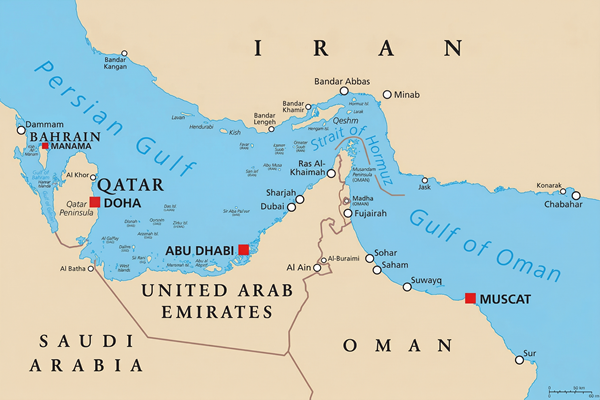
Iran has formally notified the United Nations that vessels from non-hostile countries may transit the Strait of Hormuz. However, ships linked to the United States or Israel are explicitly excluded from this passage. The Iranian Foreign Ministry delivered the notice to the UN Security Council, Secretary-General António Guterres, and members of the International Maritime Organization this week.
Strategic Importance of the Strait of Hormuz
The Strait of Hormuz is one of the world’s most critical maritime chokepoints. Consequently, any restriction on its use carries significant implications for global commodity flows. The strait links the Persian Gulf to the Gulf of Oman and the broader Indian Ocean, through which a substantial share of global oil and liquefied natural gas passes each day.
Iran’s Formal Notification to the United Nations
Iran’s Foreign Ministry issued a formal diplomatic note to the UN Security Council and Secretary-General Guterres on Sunday. Additionally, the ministry transmitted the document to International Maritime Organization members on Tuesday. The note stated that non-hostile vessels may transit the strait provided they do not participate in or support acts of aggression against Iran and fully comply with declared safety and security regulations, subject to coordination with competent Iranian authorities.
Iran stressed that it has taken necessary and proportionate measures to prevent the use of the strait by parties it describes as aggressors. Furthermore, the note explicitly excluded vessels, equipment, or assets belonging to the United States or Israel, as well as any other parties Iran identifies as participants in aggression.
Supply Chain and Trade Flow Impact
The exclusion of US and Israeli-linked vessels introduces a new layer of operational complexity for commodity shippers. Meanwhile, carriers operating under neutral flags or those registered in non-targeted jurisdictions may proceed, subject to Iranian clearance protocols. Shipping companies and commodity traders will need to verify vessel ownership and flag status carefully before routing cargoes through the strait.
Causes and Policy Drivers
Iran’s action reflects escalating regional tensions involving the country and what it characterises as hostile states. Therefore, this policy appears designed to assert sovereign control over the waterway while preserving commercial access for non-aligned trading partners. The timing coincides with broader geopolitical pressures affecting the wider Middle East region, though the specific triggers were not detailed in the UN communication.
Market Reactions and Stakeholder Views
Commodity traders and shipping operators are closely monitoring the implications of this restriction. Nevertheless, the short-term impact on commercially neutral shipping appears limited, as Iran has affirmed passage rights for compliant vessels. Analysts will watch whether enforcement mechanisms are put in place and whether any incidents occur involving vessels that fall into grey areas of the new classification.
Global Context
The Strait of Hormuz carries an estimated 20 percent of global oil trade. As a result, any sustained interference with transit rights could affect crude oil, liquefied natural gas, and refined product prices across European and Asian markets. European importers sourcing energy from Gulf producers will be tracking this development carefully.
Market Outlook
In the near term, the practical impact on commodity flows depends on how Iran defines and enforces its exclusion criteria. Additionally, it remains unclear whether Iranian naval or coast guard assets will actively intercept excluded vessels or whether the notice is primarily a diplomatic signal. Traders should monitor flag-state classifications, charter agreements, and vessel ownership structures for exposure.
Over a six to twelve month horizon, this policy could reshape routing decisions for some commodity cargoes if enforcement becomes active. Moreover, insurance premiums for vessels transiting the strait may rise in response to perceived risk, even for those not directly targeted. European commodity buyers dependent on Gulf energy and agricultural inputs should assess supply chain resilience and alternative routing options.
Related posts:
 Strait of Hormuz Crisis Tightens Sunflower Trade Margins for Chinese Exporters and Buyers
 Iran Plans Strait of Hormuz Transit Fees Amid War, Sparks Global Oil and Food Price Fears
 EU Proposes ‘Grain Deal’ Model to Reopen Strait of Hormuz Amid Global Supply Risks
 Strait of Hormuz Conflict Puts Indian Dill Exports and Herb Trade Routes Under Strain
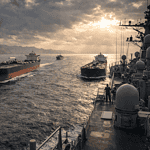 Iran Says It Will Not Close Strait of Hormuz but Reserves Right to Protect Security
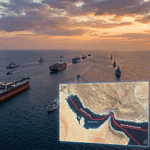 India Gets Safe Passage Through Strait of Hormuz After Diplomatic Talks with Iran
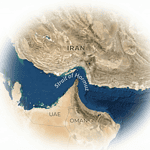 How a Strait of Hormuz Shutdown Could Disrupt Global Oil Supply
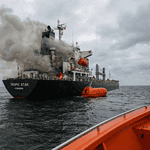 Six Ships Attacked in Gulf and Strait of Hormuz as Middle East War Threatens Global Shipping