
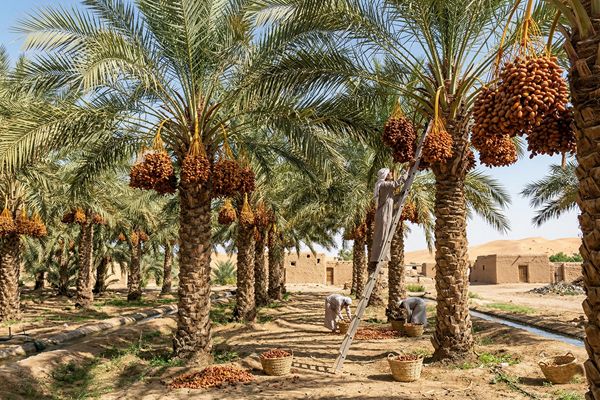
Global demand for dates continues to outpace supply, reinforcing a structural deficit that is unlikely to ease before the mid‑2030s and keeping prices on a firm to rising path. With new plantings far behind consumption growth and long biological lead times, the market remains decisively in sellers’ hands.
The current season underlines how deeply entrenched these imbalances have become. Commercial date palms need roughly a decade to reach full yield, so under‑planting in the mid‑2010s is now translating into chronic tightness. Strong health‑driven demand, expanding use in food manufacturing and the central role of dates during Ramadan are all pulling on limited exportable surpluses. Premium US Medjool supply from California’s Coachella Valley is additionally constrained by weather‑related timing issues, while Middle Eastern origins face their own structural and geopolitical risks. For buyers, this points to sustained price strength, tighter spot markets and the need for more proactive, diversified procurement.
Exclusive Offers on CMBroker

Dates dried
kabkab, premium
FOB 1.11 €/kg
(from IR)

Dates dried
Zahedi, premium
FOB 1.53 €/kg
(from IR)

Dates dried
Mazafati, premium
FOB 3.05 €/kg
(from IR)
📈 Prices & Current Market Tone
Global date prices are trending firm, reflecting a yearly structural shortage rather than a one‑off supply shock. Industry participants report that prices are “adjusting to reflect the structural shortage” and that this repricing is expected to continue through the 2025‑26 season and beyond.
In premium segments such as US Medjool dates from California, limited volume and strong brand positioning support notable price premiums compared with bulk Middle Eastern origins. At the same time, Middle Eastern exporters are also showing little willingness to discount, given that demand routinely absorbs available volumes despite higher offers.
| Product | Origin | Specification | Latest indicative price (EUR/kg, FOB) | 1W change |
|---|---|---|---|---|
| Dates dried | Iran | Kabkab, premium | ~€1.02 | Stable |
| Dates dried | Iran | Zahedi, premium | ~€1.41 | Stable |
| Dates dried | Iran | Mazafati, premium | ~€2.81 | +~4–5% |
These Iranian premium varieties illustrate the broader pattern: high‑quality dates are holding or posting moderate gains in EUR terms. The firm tone in origin prices aligns with reports from packers that they face a shortage “every year, regardless of crop size”, leaving little room for downside in export offers.
🌍 Supply & Demand Balance
The defining feature of the date market is a structural, not cyclical, supply deficit. Commercial date palms typically require 10–12 years from planting to reach full commercial production. Planting decisions a decade ago failed to match the acceleration in consumption, especially for higher‑value varieties such as Medjool, and this gap cannot be closed quickly.
On the demand side, growth is broad‑based. Muslim communities worldwide provide a stable, seasonal core of consumption, particularly around Ramadan, while health‑conscious consumers are embracing dates as a natural, minimally processed alternative to refined sugar. Food manufacturers and health brands are incorporating dates into snacks, bars, bakery and confectionery, turning what used to be a largely seasonal, ethnic product into a year‑round mainstream ingredient.
Crucially, no major origin appears able to offset this demand surge in the short to medium term. While Saudi Arabia, Egypt, Iran, the UAE and Pakistan account for the bulk of global production, even these producers face multi‑year biological lags before any recent planting expansion can materially increase exportable supply. The result is a global rather than regional shortage, with competition for premium grades particularly intense.
📊 Regional Focus: Coachella Valley & Global Origins
More than 90% of US commercial date production is concentrated in California’s Coachella Valley. This region specializes in high‑quality Medjool dates, which command strong premiums in international markets due to their size, softness and origin branding. For buyers targeting premium retail shelves, Coachella Medjool is often non‑substitutable, increasing vulnerability to regional shocks.
The 2025 Coachella Valley harvest arrived around two weeks later than expected, as cooler temperatures and elevated atmospheric moisture slowed ripening. Although the crop was ultimately harvested, the delay compressed shipping windows, complicating logistics for importers counting on specific pre‑Ramadan or seasonal delivery slots. With Southern California currently experiencing pronounced early‑season heat episodes and high temperature volatility, short‑term weather risks remain elevated for the coming months, even if most date groves are now post‑harvest.
Beyond the US, Middle Eastern producers remain the backbone of global supply. Saudi Arabia, for example, has significantly increased date output in recent years and achieved self‑sufficiency, yet much of this production is absorbed domestically or into regional markets. Combined with current geopolitical tensions and transport risks in the Gulf region, this constrains the flexibility of cross‑border flows and could contribute to sporadic freight and insurance cost spikes over 2026.
🌦 Weather & Risk Factors
Weather remains a key wild card for dates, despite the crop’s tolerance for arid conditions. In Coachella Valley, recent patterns include unusually sharp transitions between cooler, moist conditions and intense heat waves, both of which can disrupt flowering, pollination timing and ripening profiles. Recent forecasts highlight record‑breaking heat potential in the broader Southwest US, underscoring the risk of temperature extremes around critical phenological stages in coming seasons.
In the Middle East and North Africa, climate variability is adding to structural constraints. Higher temperatures, changing precipitation patterns and more frequent extreme events raise irrigation demands and can impact fruit quality, even where aggregate yields remain relatively stable. With supply already tight, any localized weather shock—whether in California, the Arabian Peninsula or Iran—has an outsized impact on export availability and price volatility.
📆 Market Outlook (30–90 Days & 6–12 Months)
Over the next 30–90 days, as buyers enter and refine positions for the 2025‑26 season, pricing is expected to remain firm with limited spot availability. The earlier delay in Coachella’s 2025 harvest implies that some new‑crop US Medjool inventory may reach distribution channels later than typical seasonal patterns, which could temporarily tighten near‑term European arrivals for premium grades.
For the coming 6–12 months, there is no credible path to resolving the structural deficit. New plantings in California, the Middle East and North Africa will not reach full productivity for many years. Demand from health‑oriented consumers and food manufacturers is still expanding, reinforcing a persistent sellers’ market. Buyers should assume further gradual price increases and possible episodic spikes around Ramadan and other demand peaks.
Given this backdrop, diversification across origins will be essential. Importers over‑reliant on a single premium source, such as Coachella Medjool, may need to blend more Middle Eastern varieties into their portfolios, balancing quality, price and availability. Nevertheless, even diversified positions will be operating in an overall tight market where long‑term contracts and close supplier relationships confer significant advantages.
🧭 Trading & Procurement Strategy
- Prioritise forward coverage: Lock in a higher share of 2025‑26 needs via forward contracts, especially for premium Medjool and key industrial grades, to mitigate both price risk and availability constraints.
- Diversify origin mix: Combine US Medjool with selected Middle Eastern and North African varieties to manage cost while maintaining product quality; consider origin‑based segmentation in retail and B2B channels.
- Budget for higher prices: Build mid‑single‑digit to low double‑digit EUR/kg price inflation assumptions into 12‑ to 24‑month procurement budgets, reflecting the structural shortage.
- Strengthen supplier relationships: Engage early with packers and exporters on volume commitments and shipment windows, especially around Ramadan, to secure allocation in a seller’s market.
- Monitor weather & geopolitics: Track heat waves and precipitation anomalies in California and key Middle Eastern origins, as well as shipping disruptions in the Gulf, for early warning of supply or freight shocks.
📍 3‑Day Regional Outlook (Price Direction)
- Middle East export hubs (e.g. Iran, Gulf ports): Underlying prices in EUR are expected to remain firm and broadly stable over the next three days, with a mild upward bias due to strong Ramadan‑related demand and ongoing regional tensions.
- US (Coachella‑linked premium Medjool, export parity to EU): No immediate price corrections are expected in the next three days; offers should remain steady at elevated levels, supported by tight inventories and strong global interest.
- EU import markets: Landed prices in EUR/kg are likely to stay firm, with any short‑term moves driven more by freight and FX than by origin price cuts; buyers should not wait for near‑term discounts.
Related posts:
 EU scrutiny tightens over Vietnamese red dragon fruit residues
 Flat Desiccated Coconut Prices as La Niña Keeps Supply Comfortable
 Raisin Prices Hold Firm as Chinese Supply Rebounds, India Tightens
 Mexico Tightens Tariff Policy on Rice While Extending Anti‑Inflation Food Decrees: Mixed Signals for Global Grain Trade