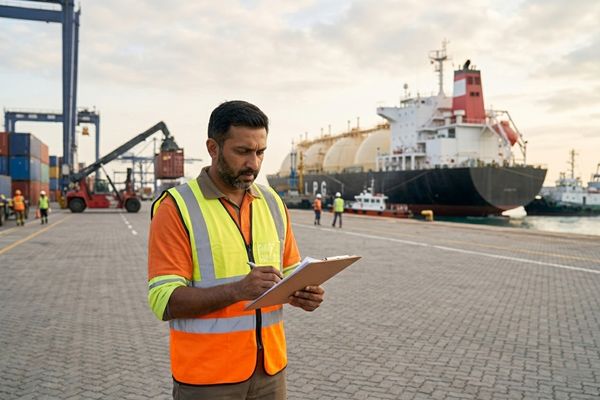
India has quietly secured its first liquefied petroleum gas (LPG) cargo from Iran in several years as the US–Israel–Iran conflict and the closure of the Strait of Hormuz trigger the worst gas supply crunch India has faced in decades. The sanctioned tanker Aurora, initially bound for China, has been rerouted to Mangalore, where three state-owned fuel retailers will share the shipment to shore up strained domestic supply. Payment will reportedly be settled in Indian rupees, taking advantage of Washington’s temporary relaxation of sanctions on Iranian oil and refined fuels.
The move comes against the backdrop of the 2026 Iran war, in which Iran closed the Strait of Hormuz to most foreign shipping following US–Israeli airstrikes, sharply reducing tanker traffic through a corridor that normally carries about 20% of global oil and significant LPG volumes. India, which relies on imports for around 60% of its LPG demand and sources roughly 90% of those imports from Gulf producers, has seen industrial LPG and piped gas supplies curtailed to protect household cooking fuel, prompting a wave of shutdowns and cost spikes across food and hospitality sectors.
🌍 Immediate Market Impact
The armed confrontation around Iran and the resulting Strait of Hormuz crisis have severely disrupted normal LPG flows from Qatar, the UAE and Saudi Arabia to India, pushing up regional spot prices and freight premia for vessels willing to transit the war-risk zone. With several Indian LPG carriers stranded or delayed in the Gulf earlier in March, India’s effective import capacity dropped sharply, tightening availability across the distribution chain.
The Iranian cargo to Mangalore marginally eases India’s near-term deficit but does not fully offset lost liftings from other Middle Eastern suppliers or delays in repositioning stranded tankers. Industry estimates indicate India still needs dozens of LPG cargoes each month even after boosting domestic output, underscoring that one or a few Iranian shipments will merely blunt, not resolve, the immediate shortfall. Price-wise, traders report elevated volatility in Middle East–India LPG differentials and growing premiums for prompt deliveries into the west coast, with downstream pass-through already visible in commercial cylinder rates and food-service pricing.
📦 Supply Chain Disruptions
The closure and partial militarisation of the Strait of Hormuz have led to a sharp decline in tanker transits, with many vessels anchoring outside the Gulf or diverting away from the region to avoid missile and drone attacks. India has had multiple LPG carriers stranded in or near the strait, forcing authorities to coordinate naval escorts under Operation Sankalp to bring key cargoes like SCI Shivalik and Nanda Devi safely through.
Onshore in India, these upstream disruptions are cascading through the logistics chain. State allocation changes have prioritised domestic cylinders over commercial and industrial demand, leading to rationing, halted refills and temporary shutdowns in sectors ranging from sweets and confectionery to hotels and institutional catering. Food-processing clusters that depend on bulk LPG are reporting supply gaps and rising input costs, particularly in western and southern states that are structurally more reliant on imported gas landing at west-coast ports.
📊 Commodities Potentially Affected
- LPG (cooking and industrial fuel) – Direct hit from constrained seaborne supply via Hormuz, stranded tankers and elevated war-risk costs; India’s stopgap Iranian purchases only partially offset lost Gulf volumes.
- Edible oils & snack foods – Many refineries and snack manufacturers use LPG-fired boilers and fryers; reduced industrial allocations raise processing costs and risk run cuts, especially for packaged snacks, sweets and bakery products.
- Dairy and bakery chains – High dependence on commercial LPG cylinders for pasteurisation and baking; reduced supply and higher prices may compress margins and trigger selective price hikes or product rationalisation.
- HORECA (hotels, restaurants, catering) – Suspension or rationing of commercial cylinders is directly curbing capacity utilisation, with potential knock-on impacts on demand for perishables, grains and spices used in out-of-home consumption.
- Petrochemical feedstocks – Regional LPG-tightness and attacks on Iranian gas and petrochemical infrastructure at South Pars and Asaluyeh are adding risk premia to NGL and LPG-based feedstock chains across the Gulf.
🌎 Regional Trade Implications
In the short term, India is attempting to diversify away from heavily disrupted Qatari and Emirati routes by drawing on Iranian LPG where sanctions waivers permit, while also lining up incremental cargoes from alternative suppliers such as the US and possibly Africa. However, any large-scale redirection of flows is constrained by voyage times, vessel availability and uncertainty over the duration of sanctions relief on Iran.
Gulf producers able to ship via non-Hormuz outlets, and exporters in the US and West Africa with spare LPG for long-haul Asia voyages, stand to benefit from firmer netbacks and widened arbitrage into India. Conversely, Indian importers and distributors are absorbing higher freight, insurance and financing costs, while price-sensitive consumers in South Asia face increased end-user prices. Over time, more Asian buyers may follow India in testing Iranian supply, but only if the risk of secondary sanctions is perceived as manageable.
🧭 Market Outlook
Over the next 30–90 days, LPG markets in India and the wider Indian Ocean basin are likely to remain tight and headline-driven. Spot price spikes could coincide with any further escalation in the Strait of Hormuz campaign, additional attacks on energy infrastructure, or disruptions to naval escort operations for tankers transiting to India. Prompt cargoes into west-coast Indian ports will likely retain a premium over term barrels as buyers seek security of supply.
For the 6–12 month horizon, much depends on three variables: the sustainability of US sanctions relief for Iranian refined fuels, the pace at which stranded tankers and backlogged cargoes are cleared from the Gulf, and India’s success in locking in diversified LPG contracts from outside the Hormuz chokepoint. Any durable shift toward Iranian LPG, settled in rupees and moved on sanctioned or opaque tonnage, would mark a structural realignment in regional LPG trade flows, but remains contingent on a volatile geopolitical backdrop and regulatory risk.
CMB Market Insight
The current conflict-driven disruption around Iran has exposed India’s structural vulnerability to concentrated LPG supply routes and sources. The emergency purchase of Iranian LPG is a tactical response to an acute shortfall, not yet a full-fledged strategy, but it signals how quickly Asian buyers may pivot when chokepoints like Hormuz seize up.
For commodity traders and downstream users, the key strategic takeaway is that LPG-linked value chains in India will operate under heightened supply risk and price volatility as long as the Gulf conflict and transit constraints persist. Positioning around alternative supply origins, flexible freight coverage, and hedging of Middle East–India LPG spreads will be central to managing exposure in the months ahead.