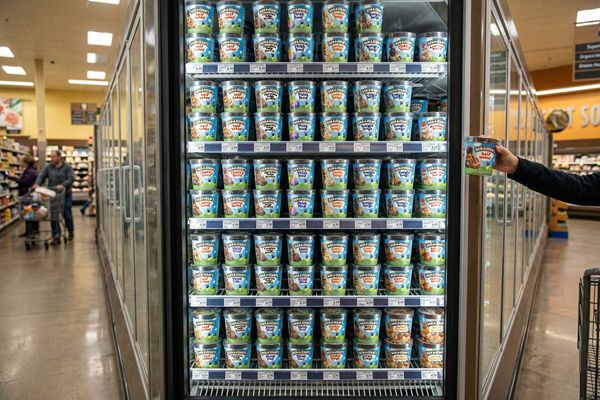
Anuradha Mittal’s new defamation lawsuit against Unilever and its spun‑off Magnum ice cream unit intensifies an already complex legal battle around Ben & Jerry’s independent governance structure. While the case does not directly alter farm‑gate dairy prices, it heightens brand, governance and reputational risk that could shape procurement strategies, contract terms and regional demand patterns for dairy‑based desserts, including in India.
For commodity market participants, the key watchpoints are potential adjustments in Unilever’s and Magnum’s sourcing, portfolio and capital allocation decisions in frozen desserts, and whether prolonged litigation disrupts volumes, marketing or expansion plans in high‑growth markets.
Introduction
Anuradha Mittal, former chair of Ben & Jerry’s independent board, has filed a federal defamation lawsuit in Oakland, California, against Unilever and Magnum, alleging a coordinated campaign to discredit her following disputes over the brand’s social activism and corporate governance. The complaint follows earlier litigation by Ben & Jerry’s and its foundation seeking to safeguard the brand’s independent social‑mission oversight and funding structure.
The legal actions come on top of Unilever’s late‑2025 spin‑off of Magnum into a separate frozen-dessert company in which Unilever retains a minority stake. This restructuring, coupled with ongoing courtroom disputes, introduces a new layer of uncertainty around decision‑making for two globally recognised ice cream portfolios that are important buyers of dairy ingredients and packaging materials.
🌍 Immediate Market Impact
In the near term, the Mittal lawsuit is unlikely to disrupt physical dairy supply or shipping flows, as production facilities and procurement contracts for Unilever and Magnum continue to operate normally. However, the growing legal overhang amplifies governance and reputational risk, which could influence the companies’ pricing strategies, promotional intensity and channel investments in premium ice cream.
For agricultural markets, the most relevant channels are potential shifts in demand for milk powders, cream, butterfat, sugar and cocoa used in ice cream formulations. If litigation leads to brand repositioning, portfolio pruning or delayed market rollouts in select regions, medium‑term demand growth for these inputs could be modestly affected at the margin rather than via abrupt volume shocks.
📦 Supply Chain Disruptions
No direct evidence has emerged of plant closures, cancelled contracts or logistics bottlenecks linked to the lawsuit. Core manufacturing networks for Unilever and Magnum ice cream products, including facilities serving Asia and India, continue to function under existing procurement frameworks.
The more immediate supply‑chain implication is contractual rather than physical: suppliers and co‑packers may seek tighter clauses on volume commitments, termination rights and dispute resolution, given the broader litigation landscape around Ben & Jerry’s governance and funding of its foundation. Over time, if legal costs climb, management could prioritise higher-margin SKUs and streamline product lines, indirectly affecting order patterns for specific ingredient grades and packaging formats.
📊 Commodities Potentially Affected
- Dairy fats (butterfat, cream, whole milk powder) – Core inputs for premium ice cream; any portfolio scaling or regional demand shifts by Ben & Jerry’s and Magnum would influence medium‑term off‑take from processors.
- Skim milk powder (SMP) – Used in various frozen desserts; changes in formulation strategies or product mix could alter SMP demand, particularly in cost‑sensitive emerging markets.
- Sugar – Key sweetener in ice cream; brand‑level volume growth or contraction feeds into refined sugar demand via industrial users.
- Cocoa and cocoa butter – Important for chocolate‑coated and inclusions‑heavy products such as Magnum bars; strategic adjustments to premium lines would impact cocoa derivatives usage.
- Edible oils and fats – Some value and novelty lines use vegetable fats; recipe or pricing changes may alter demand for specific specialty oils and fats.
- Packaging materials (cartons, plastics, laminates) – Any shift in SKU complexity or sustainability positioning could reconfigure procurement volumes and specifications.
🌎 Regional Trade Implications
From an India‑focused perspective, Unilever (through Hindustan Unilever and allied networks) and Magnum remain key players in the organised ice‑cream and frozen-dessert segment. While the Mittal litigation is centred in U.S. courts, investors and regulators in other jurisdictions, including India, will closely track governance outcomes at the group level.
Should Unilever and Magnum intensify their focus on risk management and margin protection, they may re‑evaluate country‑level capital deployment, marketing spends and innovation pipelines. High‑growth markets like India could still be prioritised, but with stricter hurdle rates and potentially more conservative expansion into socially or politically sensitive brand activism, which in turn could stabilise, rather than disrupt, medium‑term procurement of dairy and sweetener inputs from local and regional suppliers.
🧭 Market Outlook
Over the next 30–90 days, traders and processors are unlikely to see measurable changes in spot prices for dairy or sugar arising directly from the Mittal case. The more material developments to monitor will be any disclosures in court filings that shed light on Unilever’s and Magnum’s long‑term branding and portfolio strategy for Ben & Jerry’s and related ice cream assets, as well as potential settlement discussions.
On a 6–12 month horizon, if litigation outcomes constrain the autonomy of Ben & Jerry’s independent board or alter funding flows to its foundation, governance frameworks for other socially active food brands could be revisited. For commodity markets, the key risk is not physical scarcity but a gradual recalibration of demand growth assumptions for premium dairy‑based desserts, with implications for forward contracts, risk premiums and hedging activity, particularly for suppliers catering to multinational ice‑cream portfolios serving India and other emerging markets.
CMB Market Insight
The Mittal–Unilever–Magnum dispute underscores how governance and reputational conflicts at brand level can become a structural consideration for commodity participants, even when factories keep running and supply lines remain intact. For now, the case is a signalling event rather than a direct market shock: it highlights the need to factor legal and ESG‑driven brand risks into long‑term demand modelling for dairy, sugar, cocoa and related inputs.
Commodity traders, processors and logistics providers with exposure to ice‑cream and frozen-dessert value chains should track the evolving litigation closely for any evidence of portfolio restructuring, capex reprioritisation or regional strategy shifts by Unilever and Magnum. These decisions, rather than the lawsuit itself, will determine whether India‑linked and global dairy ingredient flows see only marginal adjustments—or a more pronounced re‑rating of premium ice‑cream demand trajectories.