
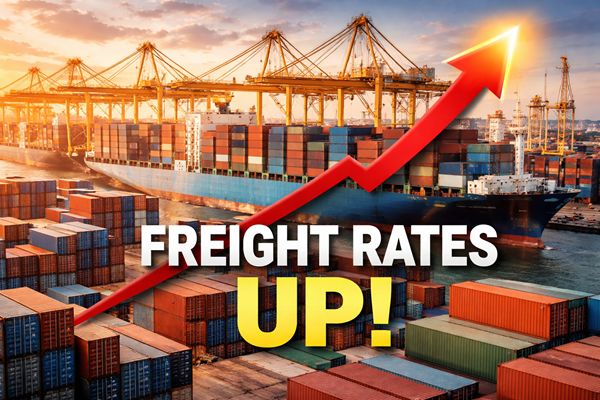
The abrupt closure of the Strait of Hormuz and renewed threats to Red Sea shipping have sharply increased freight costs and transit times on key Asia–Europe and Black Sea–Asia routes. For China’s sunflower seed and kernel import and export flows, the escalation is amplifying existing demand weakness, cargo delays and risk premia in Middle East–linked lanes.
Trade sources in China report a sluggish physical sunflower seed market, with sellers eager to liquidate stocks while downstream buyers stick to hand-to-mouth purchasing. External demand has softened as Middle East tensions disrupt ocean freight and reduce schedule reliability, leading to weaker export orders and slower cargo rotation.
Headline
Hormuz Closure and Red Sea Threats Disrupt China’s Sunflower Seed Trade as Freight Costs Surge
Introduction
Since early March 2026, Iran’s effective closure of the Strait of Hormuz has brought tanker and merchant shipping traffic through the chokepoint close to a standstill, after a series of attacks on commercial vessels and threats against transiting ships. Shipping data show tanker flows collapsing as owners avoid the area, with many vessels anchoring outside the Gulf amid sharply higher war risk and insurance costs.
On 19 March, the United States launched an ongoing air campaign to reopen the Strait by targeting Iranian naval assets and drones, but regional security remains uncertain. This new campaign follows months of intermittent Houthi attacks on Red Sea and Suez-bound traffic, which had already forced many carriers to reroute via the Cape of Good Hope, adding around 10 days to Asia–Europe container voyages and pushing freight rates materially above pre-crisis levels. For agricultural commodities including sunflower seeds and oils, these disruptions are reshaping freight economics and routing options into and out of China.
🌍 Immediate Market Impact
The combined impact of the Hormuz crisis and persistent Red Sea security risks is higher freight, longer transit times and reduced vessel availability on Asia–Europe and Black Sea–Asia legs. Prior Red Sea diversions had already driven a sevenfold increase in Shanghai–Rotterdam container rates at the peak and left costs some 80% above pre-attack levels through 2025. With the Hormuz closure, war risk premia and insurance costs have risen further across the broader Gulf region.
For sunflower seeds, Ukraine- and Black Sea–origin shipments to China that typically favor Red Sea/Suez routings now face extended Cape detours, higher freight and tighter tonnage, directly eroding FOB–CFR arbitrage. Meanwhile, Chinese exporters of kernels and confection seeds into the Middle East are confronting schedule slippage, weaker buying interest and greater pricing resistance from importers exposed to downstream demand uncertainty and elevated logistics costs.
📦 Supply Chain Disruptions
The near-collapse of Hormuz traffic and ongoing Red Sea risk have created overlapping bottlenecks in key east–west shipping lanes. Container lines and bulk carriers servicing the Asia–Mediterranean and Black Sea trades have increasingly shifted to Cape of Good Hope routings, which extend round voyages by roughly 10 days and require more ships to maintain service frequency.
For China-focused sunflower flows, this translates into delayed arrivals of Ukrainian and Black Sea material, more volatile laycan planning and higher working capital tied up in transit. Exporters in China report that foreign buyers, particularly in the Middle East, are scaling back or postponing sunflower kernel and seed purchases as shipping schedules become less reliable and transit times lengthen. Domestically, consumption recovery has lagged expectations, with roasting and deep-processing plants largely in wait-and-see mode and restocking primarily on just-in-time terms.
📊 Commodities Potentially Affected
- Sunflower seeds (in-shell, confection and black) – Higher freight and routing uncertainty on Black Sea–Asia and China–Middle East routes are narrowing arbitrage windows and slowing spot trade.
- Sunflower kernels (bakery, confection and meal) – Export sales from China into the Middle East and North Africa face softer demand and longer lead times, constraining new business and pressuring FOB differentials.
- Vegetable oils (sunflower oil mix in consumer markets) – While bulk sunflower oil is less container-dependent, persistently elevated freight and regional risk premia could tighten margins for blended oil imports into China and neighboring Asian markets.
- Grains and oilseeds via Black Sea/Suez – Wheat, corn and other oilseeds moving from the Black Sea toward Asia share the same constrained corridors, competing for vessel space and reinforcing elevated freight benchmarks.
🌎 Regional Trade Implications
For China, the main trade impacts run through higher delivered costs for Black Sea sunflower seeds and kernels and weaker buying from Middle Eastern customers for Chinese-origin product. Importers may increasingly seek to diversify origins toward Bulgaria, Moldova or EU stock already positioned closer to end markets to reduce transit risk, even at a price premium.
Exporters in Ukraine and other Black Sea suppliers are likely to face stiffer competition on CFR China sales as longer routes and higher war risk charges compress netback values. Conversely, well-positioned Chinese crushers and processors with nearby raw material and more limited reliance on Middle East outlets may enjoy relatively better margins, but report subdued domestic demand and limited ability to pass on higher logistics costs.
🧭 Market Outlook
In the short term, sunflower seed and kernel prices are likely to remain range-bound to slightly soft in China despite the freight shock, as ample raw material availability and cautious downstream demand offset higher logistics costs. Current offer data already show modest week-on-week declines for Chinese sunflower seeds FOB Beijing and only marginal upticks for some kernel categories, indicating seller willingness to negotiate amid weak turnover.
Upside price risk would stem mainly from a prolonged closure of Hormuz combined with any renewed escalation around the Red Sea that further tightens vessel supply or triggers broader risk-off behavior in commodity markets. Traders will closely monitor developments in the US-led campaign to reopen the strait, any changes in Houthi posture toward commercial shipping and adjustments in carrier routing or surcharges that directly feed into CFR China cost structures.
CMB Market Insight
The current Middle East security environment has transformed key maritime chokepoints into a persistent structural risk for agricultural trade flows rather than a short-lived shock. For China’s sunflower complex, the dominant driver remains weak demand and cautious purchasing behavior, but the Hormuz and Red Sea crises are adding a new layer of freight and reliability risk on both import and export lanes.
Strategically, Chinese buyers and sellers of sunflower seeds and kernels should continue to prioritize logistical flexibility: diversifying origins and destinations, negotiating freight-inclusive terms where possible, and shortening contractual tenors. Until shipping risks in Hormuz and the Red Sea normalize, sunflower trade linked to these corridors is likely to see thinner liquidity, wider basis levels and more frequent repricing of freight components.
Related posts:
 Middle East Escalation and Hormuz Closure Tighten Freight and Demand Conditions for China’s Sunflower Seed Complex
 India Turns to Iranian LPG as Strait of Hormuz Conflict Deepens Gas Supply Shock
 Middle East Conflict Reshapes Gulf Airspace: New India–Kuwait Corridor Aims to Protect Fresh Produce Trade
 Strait of Hormuz Crisis Tightens Sunflower Trade Margins for Chinese Exporters and Buyers
 Middle East Energy Strikes and Hormuz Disruption Push Fuel Costs Higher for IR and QA Food Chains
 Middle East War and Hormuz Blockade Expose Global Potato Chain to Fertilizer and Energy Shock
 Middle East Escalation and Hormuz Closure Tighten Logistics for China’s Pumpkin Seed Exporters