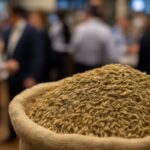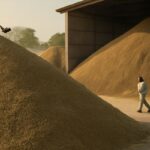
Indian dill seed FOB prices in New Delhi eased modestly this week, with both organic and conventional sortex offers drifting lower but without signs of a sharp sell‑off. Export demand remains steady, while a hotter‑than‑normal summer outlook for North and Northwest India is starting to feature in risk premiums.
Indian dill seed trade is currently shaped by a combination of soft but resilient prices, broadly firm appetite for Indian seed spices, and an increasingly weather‑driven risk narrative. Spices exporters report solid global interest in Indian-origin products, even as buyers remain price‑sensitive and selective on quality. At the same time, seasonal heat is building earlier than usual, and forecasters highlight elevated probabilities of hotter‑than‑normal conditions and extended heatwaves across large parts of India through May, including North and Northwest regions that influence dill seed supply and logistics.
Exclusive Offers on CMBroker

Dill seeds
FOB 1.25 €/kg
(from IN)

Dill seeds
sortex
99,95%
FOB 0.99 €/kg
(from IN)
📈 Prices
FOB New Delhi dill seed offers from India on 28 March 2026 show a mild week‑on‑week decline for both organic and conventional material, continuing the gradual easing seen since late February.
| Product | Origin | Term | Latest price (EUR/kg) | WoW change (EUR/kg) |
|---|---|---|---|---|
| Dill seeds, organic | India (FOB New Delhi) | FOB | ≈1.25 | -0.02 |
| Dill seeds, sortex 99.95%, conventional | India (FOB New Delhi) | FOB | ≈0.99 | -0.02 |
From late February to 28 March 2026, organic dill seed FOB prices in New Delhi have eased by roughly 7–8% in EUR terms, while conventional sortex values are down around 2–3%, indicating stronger support for lower‑priced, non‑organic product. The current structure suggests a still‑healthy but slightly narrowing organic premium.
🌍 Supply & Demand
India remains the dominant global supplier for a broad basket of spices and seed spices, with export volumes and values near record highs into 2024–25, underscoring deep external demand for Indian origin. While cumin, chilli and coriander lead the complex, dill seed flows tend to track the same logistics and sentiment, benefiting from India’s extensive export network.
Recent trade commentary from Indian exporters points to ongoing interest from global buyers in Indian spices, seeds and allied products, with several sourcing platforms and vendors actively marketing Indian origin offerings in March 2026. However, buyers are highly focused on quality assurance, documentation and reliable shipment execution, which is supporting demand for sortexed lots and well‑documented organic cargoes, while exerting pressure on more marginal, non‑standard parcels.
📊 Weather & Fundamentals (India)
Weather is becoming a key watchpoint as the hot season intensifies. Early‑season conditions have already delivered multiple heatwave alerts for western India, with Mumbai experiencing repeated spells above 38°C in March, signalling an aggressive onset of summer heat. Climate discussions among weather watchers point to a high probability of hotter‑than‑usual conditions and extended heatwaves across East, Central and Northwest India from March to May 2026.
For dill seed, which is primarily grown and traded via North and Northwest India and routed through hubs such as New Delhi, persistent above‑normal temperatures could accelerate drying and post‑harvest handling but also raise risks around moisture loss, seed quality and labour availability, particularly if heatwaves become frequent. So far, there are no broad reports of acute weather damage in major seed spice belts, but the risk profile for late‑season operations and new plantings is clearly skewed hotter.
📆 Short-Term Outlook (Next 1–3 Weeks)
- Price bias: Mildly soft to sideways. Recent declines suggest some producer and trader selling, but underlying export demand and broader spice market firmness should limit further downside in the very short term.
- Weather risk: Rising. A hotter‑than‑normal outlook into May for much of India argues for maintaining a modest weather premium for high‑quality seed, especially organic and well‑cleaned lots.
- Logistics: No fresh India‑specific disruptions have been flagged for spices in the last few days, but higher temperatures may gradually impact handling conditions at inland hubs and ports.
🧭 Trading Recommendations
- Importers / Buyers: Use the current softening to secure partial coverage for Q2 shipments at around EUR 1.25/kg (organic) and EUR 0.99/kg (sortex conventional) FOB New Delhi, keeping some flexibility for potential further minor downside.
- Exporters / Processors in India: Consider supporting prices on high‑quality and organic lots; avoid deep discounts while heat and quality‑related risks into summer remain elevated.
- Speculative / Trading positions: Bias towards accumulation on dips rather than chasing the downside, given firm structural demand for Indian seed spices and growing weather‑risk headlines.
📍 3‑Day Regional Price Indication (FOB New Delhi, India)
- Organic dill seeds: 1.23–1.27 EUR/kg, bias: sideways to slightly softer if additional selling emerges.
- Dill seeds, sortex conventional: 0.98–1.01 EUR/kg, bias: largely stable with a mild downward tilt.
- Key driver (next 3 days): Market to track nearby spice complex sentiment and short‑term heat conditions in North and Northwest India, but no immediate trigger for sharp moves is visible.