
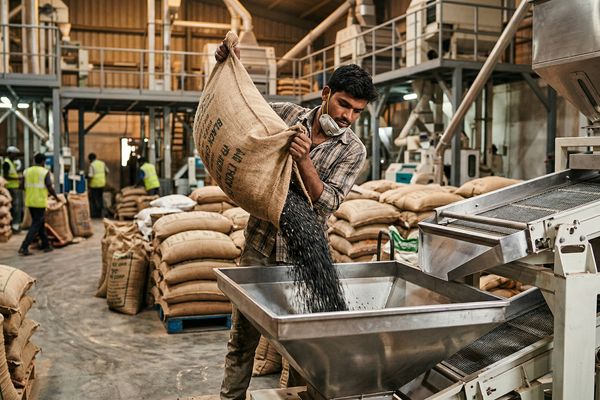
Indian black gram is in a firm, demand‑led uptrend, and this strength is helping to underpin the wider pulse complex, including lentils, as buyers reassess downside risks into April.
With Indian government stocks of black gram near multi‑year lows and importers hesitating at current margins, the urad market is trading with a clear risk premium. This tightness, combined with steady export interest for lentils and broadly stable FOB values in Canada and China, suggests limited near‑term downside for lentil prices despite some recent softening. Traders in both pulses are focusing on Indian procurement behaviour and the pace of Burmese shipments as key drivers into the new quarter.
Exclusive Offers on CMBroker

Lentils dried
Red football
FOB 2.58 €/kg
(from CA)

Lentils dried
Laird, Green
FOB 1.75 €/kg
(from CA)

Lentils dried
Eston Green
FOB 1.65 €/kg
(from CA)
📈 Prices & Spreads
Black gram prices in India have risen for a second consecutive session across key hubs, with FAQ grades up about USD 0.27 per quintal in Chennai and Delhi and SQ material also firmer. Burmese FAQ black gram has added USD 5 per tonne to around USD 850 C&F Chennai for April–May, with SQ at roughly USD 945 C&F, signalling a stronger import parity floor.
In the lentil segment, recent offers show mildly softer FOB levels in Canada over the past week, with red “football” lentils near EUR 2.40/kg and major green types around EUR 1.55–1.65/kg (Ottawa, FOB, converted from CAD). Chinese small green lentils are quoted lower, near EUR 1.05–1.15/kg FOB Beijing, with a slight uptick this week in organic grades, suggesting selective restocking rather than a broad rally.
🌍 Supply & Demand Balance
Domestic arrivals of black gram in Indian producer markets are running below last season, while imported volumes from Burma are continuing but not at levels sufficient to pressure prices. Andhra Pradesh is reporting lower productivity year‑on‑year, and although some fresh‑crop arrivals are emerging, they are not yet large enough to alter the tight balance.
On the demand side, dal mills are actively covering needs, and the papad manufacturing season is adding an additional, seasonal layer of structural demand for black gram mogar. With southern India’s consumption season in full swing and black gram used widely in South and Southeast Asian cuisines and processed foods, underlying pulse demand remains solid. This firm consumption backdrop tends to spill over into lentils, supporting substitution demand where relative prices allow.
📊 Fundamentals & Cross‑Market Links
The Indian government’s central pool reportedly holds only about 80,000 tonnes of black gram, leaving the market thinly covered against any demand surprise. This low buffer stock sharply limits the scope for aggressive state‑led market intervention on the downside and keeps a risk premium embedded in urad prices.
For lentils, the firm tone in a key competing pulse such as black gram reduces the likelihood of heavy discounting in export origins. Canadian and Chinese lentil offers show only marginal week‑on‑week moves in EUR terms, consistent with a market that is cautious but not over‑supplied. Importer selling in black gram has weakened due to poor margins at current spreads, a dynamic that may also dampen aggressive forward selling in lentils until price visibility improves.
🌦 Weather & Regional Outlook
Weather across key Canadian Prairie lentil regions is transitioning toward spring, with near‑term forecasts pointing to seasonally cool but gradually moderating temperatures and some chances of precipitation over the coming week. While it is too early to draw firm conclusions for 2026/27 yields, no acute weather stress is yet evident at seeding time.
In South Asia, current price action in black gram is more closely tied to structural stock tightness and seasonal demand than to immediate weather shocks. Nonetheless, any adverse weather during the coming kharif period in key producing states would quickly translate into further support for both black gram and substitute pulses such as lentils.
📆 Trading Outlook
- Importers & Millers (India/South Asia): Use short‑term dips in lentil and black gram prices to extend coverage into April–May; low government stocks and firm Burmese C&F values argue against waiting for a deep correction.
- Exporters (Canada, China): Maintain offer discipline on lentils; the strength in Indian black gram suggests limited need for aggressive discounting unless a surge in Burmese arrivals materialises.
- Industrial & Food Manufacturers: Consider partial forward booking of lentil needs where substitution with black gram is possible, as tight urad balance may tighten other pulse segments later in Q2.
📉 3‑Day Price Indication (Directional)
| Market / Product | Current Level (indicative) | Currency / Basis | 3‑Day Bias |
|---|---|---|---|
| India Black Gram FAQ (Chennai) | Firm, recent gains of ~EUR 0.25/quintal | EUR/quintal (converted from USD) | Sideways to slightly higher |
| Burmese Black Gram FAQ C&F Chennai | ≈ EUR 780/tonne | EUR/tonne (converted from USD 850) | Sideways, with upside risk |
| Canadian Red Lentils FOB Ottawa | ≈ EUR 2.40/kg | EUR/kg (FOB) | Mostly stable |
| Canadian Green Lentils (Laird/Eston) FOB Ottawa | ≈ EUR 1.55–1.65/kg | EUR/kg (FOB) | Stable with mild downside already priced in |
| Chinese Small Green Lentils FOB Beijing | ≈ EUR 1.05–1.15/kg | EUR/kg (FOB) | Sideways |
Related posts:
 Black Gram Strength Tightens Global Lentil Balance
 Lentil Markets Steady as Indian Green Gram Policy Caps Global Upside
 Lentil Market Steady but Vulnerable to Pulse Policy Shifts and Asian Demand
 Lentil Market Treads Water as Indian Green Gram Sowing Surges
 Rangebound Black Gram Signals Subtle Support for Global Lentil Prices
 Indian Green Gram Overhang Keeps Global Lentil Market Capped
 Lentil Market Tracks Indian Pulse Tensions and Rising Freight Risk
 Mixed Pulse Signals Shape a Two-Speed Global Lentil Market