
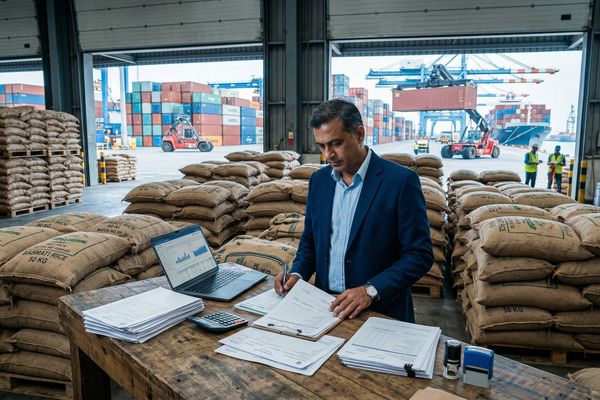
India’s premium Basmati 1121 rice market is slipping into a soft-price, high‑risk phase as the Middle East conflict chokes logistics, lifts freight and erodes export margins.
European and Middle Eastern buyers face an unusual combination of weaker FOB prices, heavy port congestion and longer lead times. Around 400,000–450,000 tonnes of Basmati rice are reportedly stuck at Indian ports, while container rates to the Gulf have roughly doubled and war‑risk surcharges have become standard for Hormuz‑related routes. At the same time, India’s firm paddy prices and minimum export price policy are preventing a deeper collapse in farmgate values, creating a squeeze between relatively elevated costs and buyers’ growing resistance to geopolitical premiums.
Exclusive Offers on CMBroker

Rice
all golden, sella
FOB 0.93 €/kg
(from IN)

Rice
all steam, pr11
FOB 0.43 €/kg
(from IN)

Rice
al ısteam, sharbati
FOB 0.60 €/kg
(from IN)
📈 Prices & Spreads
Export and ex‑mill prices for India’s flagship Basmati 1121 have started to edge lower under the weight of logistics stress and softer demand:
- FOB export price for Basmati 1121 has fallen about 1.6% to roughly USD 1,038–1,044/t (≈ EUR 960–965/t at 1.08 USD/EUR).
- Ex‑mill prices are down 2–10% from February highs, now around USD 895–937/t (≈ EUR 829–868/t).
- Domestic paddy remains relatively firm at USD 43.66–46.85 per quintal, equal to about EUR 40–43/q.
Spot indications from New Delhi confirm a mild softening trend across Indian rice offers. Converted into EUR, recent FOB levels are approximately:
| Origin / Type | Location / Term | Latest Price (EUR/kg FOB) | 1 Week Ago (EUR/kg FOB) | Trend (w/w) |
|---|---|---|---|---|
| IN Basmati, 1121 steam (all steam) | New Delhi, FOB | ≈ 0.77 | ≈ 0.79 | ⬇ slightly softer |
| IN Basmati, white organic | New Delhi, FOB | ≈ 1.63 | ≈ 1.65 | ⬇ slightly softer |
| VN long white 5% | Hanoi, FOB | ≈ 0.40 | ≈ 0.41 | ⬇ marginal easing |
Fine non‑1121 Basmati grades have actually gained about USD 2.13/q over the week, while coarser varieties are firmer, helped by corn arrivals and substitution demand. This creates a two‑speed market: premium 1121 under pressure, lower grades more resilient.
🌍 Supply, Demand & Geopolitics
The dominant driver is the escalating Strait of Hormuz crisis. Iran’s tightening control over the passage, including vetting and de‑facto tolls for vessels, has slashed commercial traffic and pushed up war‑risk insurance and freight costs for container and bulk shipping through the Gulf. Recent reports indicate traffic through Hormuz is down roughly 90–95% from normal levels, reflecting widespread avoidance of the route by mainstream carriers.📌 This environment directly affects Indian Basmati flows to key Gulf markets.
For Indian exporters, the immediate impacts are:
- About 400,000–450,000 tonnes of Basmati stuck at ports, tying up working capital and storage.
- Container freight to the Gulf has doubled from roughly USD 600 to around USD 1,200 per box, plus an additional war‑risk surcharge of USD 50–80/t on Gulf‑bound cargo.
- Export volumes to Iran, a core Basmati buyer, are down about 20%, while Saudi Arabia and Iraq are cautious on new forward bookings.
- Demand from the United States is slightly stronger (≈ +2%), offering limited offset but not enough to absorb Middle Eastern weakness.
Despite Iran carving out commercial passage for India and select partners via controlled lanes, the combination of uncertainty, insurance restrictions and shipowner risk aversion is keeping buyer sentiment fragile. Many importers are shifting to shorter shipment windows and smaller lots until transit and insurance conditions stabilise.
📊 Fundamentals & Policy Backdrop
Domestic fundamentals for Indian Basmati remain broadly constructive. Stocks are low, and paddy prices are underpinned by government interventions:
- A minimum export price (MEP) of USD 950/t for Basmati keeps a floor under export quotations and prevents a disorderly price collapse.
- The RODTEP export incentive scheme continues to support exporter realisations, partly cushioning higher freight and insurance costs.
- Technical analysis shows the price channel has broken downward after testing resistance around INR 4,700/q, with the next key support level at about INR 3,900/q. This points to near‑term downside risk but within a fundamentally supported longer‑term uptrend.
Outside India, supply conditions in parts of Asia remain relatively comfortable. For example, Indonesia is reporting strong rice output on the back of favourable weather, with production in the first quarter of 2026 expected to rise by more than 15% year on year.📌 This helps cap global non‑Basmati price spikes and may slightly temper substitution demand for premium Indian Basmati in price‑sensitive markets.
🌦️ Weather & Crop Outlook
Weather is not the primary short‑term driver for Basmati 1121, but it frames the medium‑term supply picture. Current seasonal conditions in major Asian rice producers are generally adequate, with no acute, widespread drought or flood shock reported over the last few days that would immediately threaten planted area or yields.
For Indian Basmati, the key watchpoints are:
- Pre‑monsoon temperatures and soil moisture in northern India, which influence planting intentions and early crop development.
- Any El Niño/La Niña signals that could skew the upcoming monsoon; at present, no fresh dramatic shift has emerged within the last few days that would alter expectations for the 2026 kharif season.
Given today’s information, logistics and policy, not weather, will remain the main market movers in the coming weeks.
📆 Short‑Term Outlook & Trading Strategy
In the near term, the market faces a tug‑of‑war between logistical disruption and fundamentally tight Indian Basmati balances. The technical break from INR 4,700/q resistance, combined with softer FOB quotes and high freight costs, suggests a consolidation-to‑slightly‑lower phase, especially for 1121.
For European and Middle Eastern importers, the core implication is not scarcity but timing and cost uncertainty. Large stranded volumes at Indian ports imply eventual release of supply once freight and insurance can be arranged, potentially reinforcing downward pressure on FOB values even as delivered prices remain elevated due to logistics premiums.
💡 Trading Recommendations
- European buyers: Use current price softness in Basmati 1121 to secure staggered coverage for Q2–Q3, but build in generous transit times and consider diversifying origins where quality requirements allow.
- Middle Eastern buyers: Avoid over‑committing to long‑haul forward contracts until there is clearer visibility on Hormuz risk premiums; prioritise flexible shipment windows and robust force majeure clauses.
- Indian exporters: Hedge downside price risk near the INR 3,900/q support zone and seek to lock in freight where possible before any further insurance or toll hikes; leverage RODTEP and MEP to protect margins.
- Non‑1121 users: Expect relatively firmer pricing in fine and coarse Basmati grades; consider partial reformulation or blending strategies to manage overall cost.
📍 3‑Day Directional Outlook (EUR Basis)
- India, New Delhi FOB Basmati 1121: Slight downside bias (−0.5% to −1%) as port congestion and risk aversion cap fresh demand.
- India, non‑1121 Basmati & coarse grades: Mostly steady to slightly firm, supported by domestic fundamentals and substitution demand.
- Vietnam long‑grain 5% & Jasmine: Mildly soft/sideways amid comfortable regional supply and limited immediate spillover from the Hormuz crisis.
Related posts:
 India’s Basmati Rice Under Pressure as West Asia Crisis Freezes Cash Flows
 Basmati Rice Snaps Back as Iran War Pause Revives Middle East Demand
 Gulf Crisis Freezes Karnataka Rice Exports and Pressures Indian Prices
 Basmati Strength vs. Wheat Softness: Rice Market Splits on Export Demand
 Rice Market under West Asia Shock: Basmati Pressure vs Domestic Grain Stability
 India Basmati Rice: Stable Exports Under West Asia Stress