
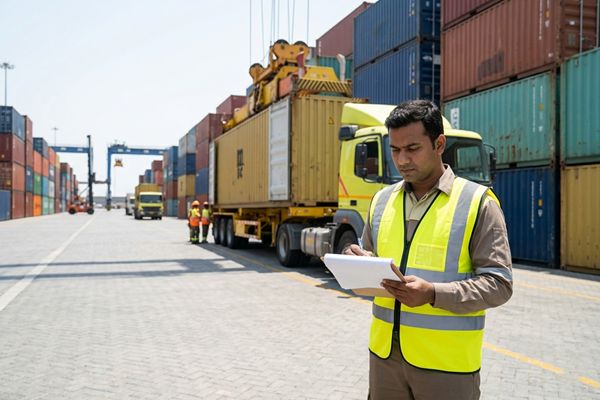
Logistics disruptions triggered by the effective closure of the Strait of Hormuz are forcing container lines and shippers to reroute Gulf-bound cargo via alternative ports and overland corridors. Gulf food-importing economies and key regional partners such as India now face higher freight costs, tighter container availability and increased delivery risk for staples, perishables and agribulk.
Major carriers including Maersk and COSCO have curtailed or suspended direct Gulf services since Iran’s Revolutionary Guard moved to restrict shipping through Hormuz, cutting vessel traffic by around 95% and leaving hundreds of ships delayed or stranded. This has pushed trade flows toward gateway ports such as Jeddah, Sohar, Khor Fakkan and Fujairah, with India’s Nhava Sheva emerging as a critical transshipment and relay node for food and containerised cargo into Oman and the wider region.
Introduction
The current crisis stems from the 2026 Strait of Hormuz confrontation, following US-Israel strikes on Iran and subsequent Iranian moves to block or severely restrict shipping for perceived hostile states. Industry data suggest a dramatic fall in transits through Hormuz, with analysts describing the strait as effectively closed for most commercial traffic and as many as 2,000 ships waiting in or near the wider area.
Container carriers have responded with sweeping service suspensions and reroutings. Maersk has halted bookings on many Gulf corridors “until further notice” and introduced emergency surcharges linked to heightened war-risk insurance and fuel costs. COSCO briefly resumed bookings into select Middle East markets but recent reports show some of its vessels turning back from Hormuz amid continued instability.
🌍 Immediate Market Impact
The sudden loss of a direct Gulf gateway is tightening container and vessel capacity, increasing transit times, and raising freight rates for food, feed and consumer staples shipped from Asia and the Black Sea to Gulf Cooperation Council (GCC) markets and nearby importers such as India. Spot container prices on key Asia–Gulf lanes have more than doubled in recent weeks, driven by longer detours, congestion at alternative hubs, and surging insurance premiums.
For agricultural commodities, the impact is twofold. First, GCC countries import roughly 85% of their food consumption, leaving them acutely exposed to logistics shocks. Second, extended lead times and transshipment risks particularly threaten chilled meat, dairy, fruits, vegetables and frozen products, where any delay erodes shelf life and value. India, a major exporter of rice, sugar, spices and processed foods to the Gulf, faces higher outbound logistics costs and greater delivery uncertainty, even as some Indian ports gain volume from diverted cargo.
📦 Supply Chain Disruptions
Port operations and hinterland logistics across the region are under pressure. Jeddah and alternative Saudi ports have taken on additional calls after Maersk and other carriers suspended direct services to several Gulf terminals, leading to reports of sharply higher container volumes and growing yard density. Khor Fakkan, Fujairah and Sohar are similarly absorbing redirected flows originally bound for Jebel Ali and other upper-Gulf ports.
These shifts are creating new bottlenecks: scarce truck capacity on cross-border land bridges, chassis shortages, and inland terminal congestion as operators scramble to move priority cargo such as food and medicines. In Oman, a security incident at Salalah temporarily disrupted operations, highlighting the fragility of the current workaround network. Meanwhile, the build-up of tankers and container ships stranded near the Gulf has reduced effective global shipping capacity, tightening the vessel market and amplifying freight volatility.
India’s west coast is both exposed and strategically important. Nhava Sheva is being used as a transshipment platform for cargo into Sohar and other alternative ports, supporting Gulf supply continuity but also raising the risk of container imbalances, berth congestion and longer dwell times at Indian terminals if disruption persists.
📊 Commodities Potentially Affected
- Cereals and pulses (wheat, rice, lentils) – GCC and nearby states are highly import-dependent; longer routes and higher freight rates may feed through into CIF prices and, ultimately, consumer inflation.
- Edible oils and oilseeds – Sunflower and soybean oil shipments from the Black Sea and Asia must detour or transship via alternative ports, raising logistics costs and delivery risk.
- Sugar – India and Brazil-origin sugar bound for Gulf refiners and food industry clients faces higher freight costs and potential shipment rescheduling, affecting regional refining margins and re-exports.
- Meat and dairy – Chilled and frozen cargoes are highly sensitive to transit-time extensions and power disruptions at congested ports, increasing spoilage and claims risk.
- Fruits and vegetables – Perishable imports into GCC from India and other suppliers risk price spikes and occasional stockouts in wholesale markets if logistics delays worsen.
- Feed grains – Delays in corn and barley shipments can disrupt livestock and poultry sectors in the Gulf, with knock-on effects on meat and egg prices.
🌎 Regional Trade Implications
The closure has reoriented regional trade corridors. Fujairah and Yanbu have become critical bypass outlets for energy flows, while containerised food and consumer goods are increasingly routed via Jeddah, Sohar and Khor Fakkan. For India, this reshuffle creates both risk and opportunity: west coast ports may attract more relay and transshipment business, but exporters face elevated freight costs and potential scheduling instability on Gulf-facing services.
Traditional Gulf hubs such as Jebel Ali are losing direct calls and throughput as carriers prioritise safer or less congested alternatives. Over time, this could accelerate investment in overland and multimodal infrastructure linking Red Sea and Arabian Sea ports to key consumption centres in Saudi Arabia, the UAE, Qatar, Kuwait and Iraq. Countries able to offer stable ports and efficient land corridors – including Saudi Arabia and Oman, with India as an external staging point – are best placed to capture diverted trade volumes.
🧭 Market Outlook
In the short term (next 30–90 days), traders should anticipate elevated and volatile freight rates on Asia–Gulf and India–Gulf lanes, extended transit times, and episodic port congestion at key diversion hubs. Priority space will likely go to time-sensitive cargoes such as pharmaceuticals, chilled foods and essential staples, leaving lower-value agribulk more exposed to rollover risk.
Over a 6–12 month horizon, the trajectory hinges on the security situation and whether substantial volumes can safely return to Hormuz. A prolonged disruption would entrench new land-bridge and bypass routes, requiring sustained investment in road, rail and inland terminal capacity across the Gulf, as well as additional container equipment positioned at alternative ports. For India and other regional suppliers, structural freight premiums into GCC markets would reshape pricing strategies, contract terms and possibly destination mixes.
CMB Market Insight
The current Hormuz-driven logistics shock underscores the vulnerability of food-import-dependent Gulf economies to chokepoint disruptions and highlights the growing importance of diversified routing via Red Sea, Arabian Sea and overland corridors. While improvised land bridges and transshipment through ports such as Jeddah, Sohar and Khor Fakkan are keeping essential cargo moving, they are doing so at higher cost and risk.
Commodity traders, importers and exporters with exposure to the Gulf and India should stress-test supply chains for prolonged bypass conditions, lock in logistics capacity where possible, and reassess basis and risk premia in forward contracts. In parallel, monitoring regulatory adjustments, corridor “green lane” initiatives, and port infrastructure investments will be critical to understanding how permanent this rerouting becomes for agricultural trade flows in and around the region.