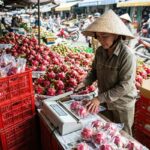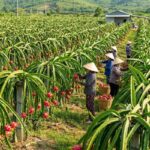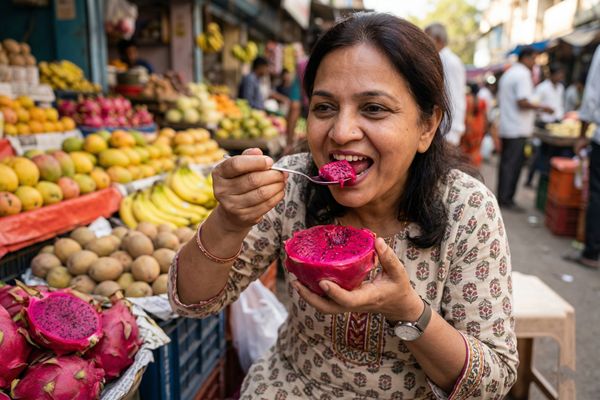
Red dragon (red-flesh dragon fruit) is rapidly expanding in India as farmers switch from traditional crops to a more profitable, lower-risk option, but productivity gaps and weak post-harvest infrastructure still cap export potential. International dried red dragon prices are broadly steady, suggesting a gradually improving but not overheated market.
Dragon fruit is emerging as one of India’s fastest-growing high-value horticultural crops. Farmers in states like Karnataka and Kerala are moving away from coconut, mango, coffee and pepper, attracted by better returns, lower water demand and lower disease pressure. At the same time, domestic demand for red-flesh fruit is rising and global buyers are watching India as a future supplier, even though current yields and cold-chain limits constrain export growth.
Exclusive Offers on CMBroker

Red dragon dried
FOB 7.00 €/kg
(from VN)
📈 Prices & Market Sentiment
Export-oriented offers for Vietnamese dried red dragon (FOB Hanoi) are currently around €7.00/kg, marginally softer from about €7.05/kg earlier in March, indicating a stable-to-slightly-easing price environment in international trade. Spot demand in key destination markets remains solid but not explosive, consistent with a market that is absorbing rising Asian production without sharp price spikes.
Within India, fresh red dragon prices remain attractive for growers relative to legacy crops, supporting continued area expansion. The price premium for red-flesh over white-flesh fruit and the willingness of consumers to pay for visual appeal and perceived health benefits underpin a firm domestic price floor, even as local supply grows.
🌍 Supply & Demand Dynamics
Supply growth in India is being driven by rapid adoption since 2021 as farmers react to strong margins and lower agronomic risk. In Karnataka, for example, individual growers now manage several hectares; one 4.5-hectare farm producing about 220 tonnes annually illustrates the scale that can be achieved under good management. The ability to harvest over a six‑month window smooths income and spreads supply, reducing the risk of sharp intra-seasonal gluts.
On the demand side, the Indian market shows a clear preference for red-flesh dragon fruit, supporting premium pricing versus other tropical fruits. Rising urban incomes and the fruit’s positioning as a “superfruit” foster steady domestic consumption growth. Internationally, Europe and North America remain under-supplied in high-quality red-flesh dragon fruit, but India’s role is still limited by logistics and quality consistency rather than lack of interest.
📊 Fundamentals: Production, Practices & Constraints
Current Indian yields of roughly 15–25 tonnes per hectare lag leading global producers that regularly exceed 30 tonnes per hectare. This yield gap reflects scope for agronomic improvements rather than structural limits. Recommended levers include high-density planting, better canopy management and targeted selection of high-yielding red-flesh varieties, all of which can lift output per hectare and unit margins.
Production systems rely on trellised vines trained on support structures, which adds initial capital cost but improves harvest efficiency. Pollination is a critical yield driver: in Karnataka, growers leverage natural pollination via honey bees, whereas in parts of Kerala, self-pollinating varieties are preferred due to labour and safety issues linked to night-time hand pollination and wildlife risks in regions such as Wayanad. These regional choices influence both yield stability and labour costs.
Post-harvest, the main bottleneck is cold-chain infrastructure. Limited pre-cooling and refrigerated storage mean that fruit destined for distant domestic or export markets can suffer quality degradation, directly reducing pack-out rates and prices. Experts highlight the need for solar-powered on-farm cooling, better logistics and integrated supply chains to reliably meet the quality requirements of premium buyers in Europe and North America.
⛅ Weather & Regional Outlook (India)
Late March weather patterns in peninsular India are transitioning toward hotter, more humid summer conditions, with the India Meteorological Department warning of scattered rain and thunderstorms across several states and light to moderate showers in Kerala. For dragon fruit, this mix of heat and intermittent rain generally supports vegetative growth but raises disease pressure if canopy management and drainage are poor.
In Kerala and adjoining parts of Karnataka, forecast light-to-moderate rainfall, occasional thunderstorms and warm temperatures over the next few days should provide adequate soil moisture without major disruption to field operations, provided orchards are well-drained. Growers should monitor for physical damage from strong winds and maintain support structures and trellises, as storm events can cause localized losses in intensively trellised plantations.
📌 Strategic Drivers & Risks
- Farmer economics: Higher net returns versus coconut, mango, coffee and pepper are the core driver of ongoing area expansion, especially where water is limited and disease pressure on traditional crops is rising.
- Varietal focus: Strong domestic preference for red-flesh fruit supports a strategic shift toward premium red varieties, which also align with export demand.
- Infrastructure gap: Lack of pre-cooling, cold storage and integrated logistics chains is the main brake on export growth and on capturing high-value EU and North American market segments.
- Yield risk: Dependence on natural pollinators in some regions and wildlife constraints in others create variability in yields unless self-pollinating or better-adapted varieties and management systems are adopted.
📆 Trading & Marketing Outlook
- Producers in India: Focus on improving yields via high-density planting and canopy management while investing incrementally in basic on-farm cooling (e.g. solar-powered pre-coolers) to reduce losses and secure better grades.
- Exporters & traders: With FOB dried red dragon prices around €7.0/kg and only minimal recent softening, consider locking in medium-term supply contracts while promoting red-flesh origin stories from India once quality and cold-chain reliability are assured.
- Buyers (EU, North America): Monitor India’s infrastructure upgrades and varietal improvements; pilot procurement from reliable Indian packers could diversify supply away from existing Asian origins without immediate price shocks.
- Policy & investors: Targeted investment in cold-chain, packhouses and pollination-supportive landscapes (e.g. bee-friendly practices) can rapidly unlock yield and export upside from the already expanding planted area.
🔭 3‑Day Price & Directional View (Indicative)
| Market / Product | Current Level (EUR) | 3‑Day Bias | Comments |
|---|---|---|---|
| Vietnam, dried red dragon, FOB Hanoi | ≈ €7.00/kg | Slightly soft / stable | Minor easing from ~€7.05/kg earlier in March; no strong upside catalyst visible near term. |
| India, fresh red-flesh dragon (farm-gate, key states) | Premium to legacy fruits (indicative, regionally varied) | Stable | Strong domestic demand and limited cold-chain keep farm-gate prices firm despite expanding area. |