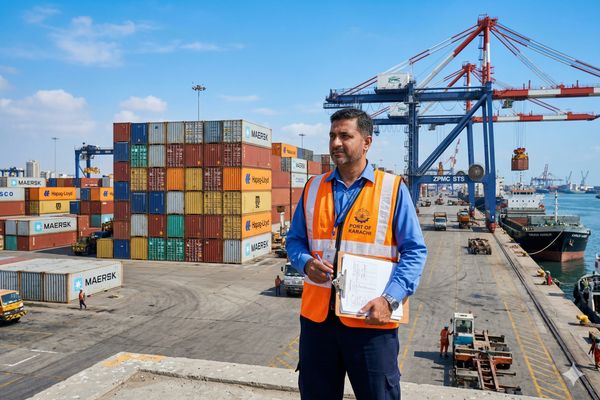
Karachi’s main container terminals are experiencing a sudden surge in transshipment volumes as carriers reroute services away from Gulf hubs affected by the effective closure of the Strait of Hormuz. The redirection of cargo flows is transforming Pakistan’s port landscape and is beginning to ripple into agricultural and food-related supply chains that traditionally moved through Jebel Ali and other Gulf gateways.
Supported by aggressive port-fee discounts and existing global operator presence, Karachi has handled more transshipment containers in just 24 days than in the whole of 2025. For agricultural commodity traders, this shift introduces new routing options but also new operational risks, transit uncertainties and cost dynamics across key import and export corridors serving South Asia, East Africa and parts of Europe.
Headline
Karachi Port Surges as Alternative Hub Amid Hormuz Closure, Redrawing Agri-Commodity Trade Routes
Introduction
The ongoing Strait of Hormuz crisis has effectively halted normal commercial traffic through one of the world’s most critical maritime chokepoints, forcing carriers to reconfigure services that historically relied on Gulf ports such as Jebel Ali and Salalah. Recent operational updates from logistics providers indicate that Gulf ports are largely inaccessible for new cargo flows as lines avoid the restricted corridor and reassess port calls across the region.
Pakistan’s Karachi Port has rapidly emerged as a key alternative, with transshipment container volumes jumping to 8,313 TEUs in less than a month, surpassing the port’s full-year 2025 transshipment total. This acceleration is reinforced by a 60% discount on port fees for qualifying calls, introduced on 18 March, alongside expanded national port handling capacity and active participation by global operators.
🌍 Immediate Market Impact
The diversion of liner services from Gulf hubs to Karachi and other non-Gulf ports is already altering traditional supply chains for grains, oilseeds, pulses, edible oils, sugar and food ingredients that typically moved via Jebel Ali-centric distribution models. With the Strait of Hormuz effectively closed to most commercial shipping, logistics specialists report that new bookings to major Gulf ports are being suspended or rerouted, forcing shippers to nominate alternative discharge points.
Pakistan’s ports are reporting record activity, particularly in containerized flows, as cargoes bound for or originating from South Asia and East Africa are transshipped via Karachi rather than through Gulf consolidation hubs. This shift can lead to longer sailing distances and reconfigured feeder patterns, potentially increasing freight rates and transit times, while also creating opportunities for backhaul optimization on selected agri-commodity routes.
📦 Supply Chain Disruptions
The primary disruption stems from the sudden loss or curtailment of access to Gulf logistics platforms that functioned as regional distribution centers for food and agricultural inputs. With many vessels unable or unwilling to transit Hormuz, new services are being structured through alternative nodes such as Karachi, Red Sea ports and South Asian hubs, which can result in mismatches between vessel capacity, berth availability and hinterland infrastructure.
In Karachi, available terminal capacity—partly freed up by a previous decline in Afghan transit trade—has allowed the port to absorb a sharp increase in transshipment volumes with limited immediate congestion. However, elevated activity across Pakistan’s maritime system, including higher petroleum and LPG inflows, is testing yard space, equipment cycles and inland connectivity. Any sustained increase in volumes without matching upgrades in trucking, rail links and customs processes could translate into dwell-time extensions for containers carrying foodstuffs and inputs.
📊 Commodities Potentially Affected
- Grains (wheat, maize, rice) – Gulf-state grain import programs often rely on containerized and breakbulk flows via Jebel Ali and other regional hubs; rerouting through Karachi or Red Sea ports may lengthen transit and raise freight and insurance costs.
- Oilseeds and vegetable oils – Sunflower, soybean and palm oil shipments to refiners serving Gulf and wider MENA markets may face schedule disruptions as tankers and flexitank containers avoid Hormuz and reconfigure discharge patterns.
- Pulses and specialty crops – Containerized lentils, chickpeas and beans moving from exporters such as Canada, Australia and East Africa into South Asian and Gulf markets may increasingly be transshipped via Karachi, altering lead times and port-handling risk.
- Sugar – Both raw and refined sugar flows into net-importing Gulf economies could be delayed or rerouted, while Pakistan’s own refining and re-export operations may gain new optionality via enhanced connectivity.
- Fertilizers – Urea, DAP and potash shipments that previously transited Hormuz face significant disruption, contributing to higher landed costs and potential delivery gaps for agricultural producers across Asia and Africa.
- Feed ingredients – Soymeal, DDGS and other feedstuffs shipped in containers to poultry and livestock sectors in the Gulf and South Asia may encounter schedule volatility and increased transshipment risk.
🌎 Regional Trade Implications
Karachi’s emergence as a transshipment node is likely to reorient some trade flows within the Indian Ocean basin. For South Asian buyers, including Pakistan and western India, the port’s enhanced role could offer nearer-term access to diverted cargoes, potentially strengthening bargaining power for spot purchases of food and feed commodities if logistics are managed efficiently.
Conversely, import-dependent Gulf states that relied heavily on Jebel Ali-centered consolidation now face higher logistics costs and complexity. They may increasingly source via alternative hubs such as Red Sea ports or South Asian gateways, or pursue more direct long-haul services that bypass the Gulf. In the near term, this may benefit ports in Pakistan and along the Red Sea that can provide stable access routes outside the Hormuz corridor.
🧭 Market Outlook
In the short term, global agricultural markets are likely to see higher freight and insurance premiums on routes that previously relied on Hormuz and Gulf transshipment, adding upward pressure to landed prices, especially for time-sensitive food staples and inputs. Volatility in regional basis levels and delivered costs is probable as traders recalibrate routings and test new corridors via Karachi and other alternative ports.
Over the coming weeks, commodity desks will monitor the durability of Karachi’s incentives, the operational performance of its terminals under sustained pressure, and any signs of normalization or further escalation in the Hormuz crisis. Should the closure persist, investment and policy attention could increasingly shift toward building more resilient Indian Ocean and Red Sea logistics chains, with Pakistan positioned as a more prominent, though still capacity-constrained, node in regional agri-commodity trade.
CMB Market Insight
Karachi’s rapid transshipment surge underscores how quickly regional port hierarchies can be reshaped by geopolitical shocks and targeted policy incentives. For agricultural commodity stakeholders, the key strategic takeaway is the need to diversify routing options and retain flexibility on discharge ports and incoterms, particularly for flows historically concentrated through Gulf hubs.
While the current incentive structure and spare capacity position Karachi as a valuable contingency gateway, its long-term role will depend on consistent policy, accelerated investment in inland connectivity and customs efficiency, and the trajectory of the Hormuz crisis. Traders, importers and exporters should treat the present window as both a risk to be managed—through revised lead times and pricing—and an opportunity to test and institutionalize alternative corridors for critical food and input supply chains.