
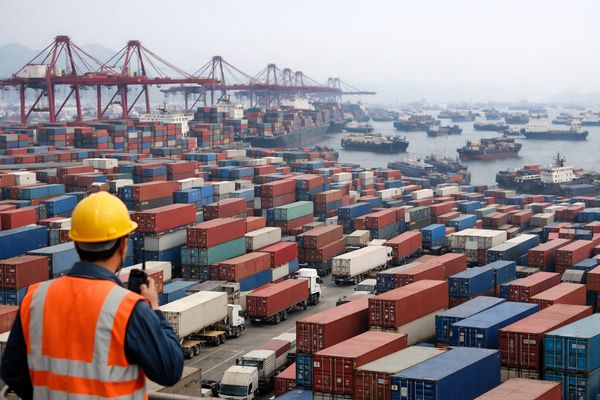
Escalating conflict around the Red Sea and the Strait of Hormuz is once again disrupting key maritime corridors, lifting freight and insurance costs, and extending transit times for containerised agri-food cargoes. For Chinese pumpkin seed exporters already facing weak downstream demand and cautious buying, the renewed security risk in Middle East choke points is adding logistical friction and limiting export momentum.
With Iran effectively constraining traffic through the Strait of Hormuz since late February and Yemen’s Houthi movement re‑entering the conflict and firing missiles at Israel, concerns are mounting that Red Sea and Bab al‑Mandeb shipping could again become unsafe or uneconomical for many carriers. This is pushing some lines to avoid Suez routes and introduce war-related surcharges, a development with direct implications for shipments from China to Europe, the Middle East and North Africa.
Introduction
Since late February 2026, the Strait of Hormuz has been transformed into a high‑risk zone after Iran’s Revolutionary Guard signalled that commercial passages were “not allowed”, effectively halting normal tanker and container flows through the world’s most critical oil chokepoint. This has coincided with the broader 2026 Iran war, which has heightened military activity across the Gulf and redirected some energy and container routes.
At the same time, Yemen’s Houthi forces have claimed their first missile attacks on Israel since the start of the latest war, reviving fears that they could again target commercial shipping in the Bab al‑Mandeb and southern Red Sea, through which a significant share of global seaborne trade normally passes. Major carriers and insurers are responding with higher war risk premiums, blank sailings and rerouting via the Cape of Good Hope, tightening capacity on Asia–Europe and Asia–MENA lanes that are vital for Chinese agricultural exports.
🌍 Immediate Market Impact
Container lines have sharply reduced exposure to the Red Sea–Suez corridor, routing many services around the Cape of Good Hope and adding 10–14 days to transit times on key east–west trades. War‑risk premiums in both the Red Sea and adjacent areas have climbed 50–100%, while additional war risk premia on Red Sea routes have increased further following the latest Houthi strikes on Israel.
For agri‑food shippers, this translates into higher all‑in freight rates, reduced schedule reliability, and tighter reefer capacity, particularly on Asia–Europe and Asia–Middle East legs. Hapag‑Lloyd, for example, has flagged cost increases of USD 40–50 million per week linked to the conflict and is applying extra surcharges on Middle East Gulf and Red Sea related trades. These cost pass‑throughs are eroding margins on relatively low‑value bulk and semi‑processed agricultural products, including Chinese pumpkin seed kernels.
📦 Supply Chain Disruptions
The partial avoidance of Suez and the near‑closure of Hormuz are fragmenting the traditional Asia–Gulf–Europe shipping matrix. Many India–US and broader Asia–westbound services are now routed via the Cape of Good Hope, with some carriers announcing blank sailings and temporary suspensions at key regional transhipment hubs such as Salalah after recent drone attacks.
For Chinese pumpkin seed exporters, the immediate operational issues are longer sailing times to core demand regions in the EU, Middle East and North Africa, less predictable delivery windows, and higher freight plus insurance costs. Export demand for pumpkin seeds is already subdued, with buyers in destination markets largely placing small, hand‑to‑mouth orders while watching freight and price developments. The conflict‑related logistics drag is therefore amplifying an already cautious export environment rather than triggering new buying waves.
📊 Commodities Potentially Affected
- Edible oilseeds and specialty seeds (incl. pumpkin seeds): Longer routes and higher war‑risk surcharges raise CIF costs into Europe and MENA, compressing import margins and discouraging forward coverage.
- Grains and feedstuffs: Wheat, corn and barley flows using the Suez corridor face higher freight and insurance costs, which can lift landed prices in North Africa and the eastern Mediterranean.
- Vegetable oils and oilseed meals: Disruptions to Gulf and Red Sea shipping channels complicate flows from Black Sea, South Asian and Southeast Asian origins to the Middle East and East Africa, adding volatility to basis levels.
- Fertilizers: Gulf‑origin nitrogen fertilizers, a key input for global crop production, are exposed to Hormuz and Red Sea risks, with potential knock‑on effects on production costs and crop economics in Africa and Asia.
- Containerised food ingredients and nuts: War‑risk driven rate hikes of up to 200% on some Middle East Gulf and Red Sea lanes are squeezing containerised shipments of nuts, dried fruits and processed ingredients out of Asia.
🌎 Regional Trade Implications
For China (CN), the conflict does not directly threaten its own ports or primary pumpkin seed production zones, but it significantly reshapes its maritime connectivity with key buyers. Asia–Europe and Asia–MENA routes via Suez, traditional channels for Chinese food exports, are now slower and more expensive. European and Middle Eastern buyers may respond by trimming discretionary purchases, seeking alternative origins for some items, or consolidating shipments to reduce per‑unit freight costs.
Gulf exporters of energy and fertilizers are diverting more flows via Red Sea pipelines and alternative ports, which keeps some trade moving but does not fully offset the loss of Hormuz capacity. For Chinese pumpkin seeds, which are primarily containerised and not bulk‑shipped, the main adjustment is commercial rather than physical: buyers extend tender lead times, reduce shipment sizes and push harder on FOB price negotiations to compensate for freight and insurance escalation.
🧭 Market Outlook
In the short term, the Middle East security situation is likely to maintain a conflict‑related premium in freight, insurance and bunker costs on routes touching the Red Sea and Gulf region. Trade sources already report that export orders for Chinese pumpkin seeds remain mainly small, on‑demand lots, with both sides in a wait‑and‑see mode regarding freight and demand recovery.
FOB pumpkin seed kernel prices in China have shown only modest movement in recent weeks – for example, shine skin AA non‑organic offers around USD 3.30/kg FOB Beijing on 1 April – reflecting a market where supply is comfortable, inventories are held mainly by traders, and only rigid demand is active. Export logistics friction from the Red Sea and Hormuz crises may cap downside but is not yet strong enough to drive a sustained rally without a clearer pickup in downstream consumption or a broader risk‑on phase in specialty seed demand.
CMB Market Insight
The renewed maritime security crisis in the Red Sea and Strait of Hormuz is structurally bullish for freight and risk premia, but its impact on China’s pumpkin seed complex is, for now, more about sentiment and timing than outright supply loss. Longer transits, higher insurance and war‑risk surcharges are eroding importers’ margins and encouraging conservative, short‑term purchasing strategies, particularly into Europe, the Middle East and North Africa.
With Chinese domestic supply stable and warehouse stocks ample, the pumpkin seed market remains fundamentally well supplied, limiting upside in FOB values despite geopolitical stress. Traders should closely monitor further escalation around Bab al‑Mandeb and Hormuz, any widening of carrier surcharges, and signs of renewed downstream demand in snack, bakery and ingredient segments, which will determine whether today’s logistical headwinds eventually translate into firmer prices or simply prolong a sideways market.
Related posts:
 Red Sea and Strait of Hormuz Escalation Rekindles Shipping Risk for Food and Feed Trade
 Middle East Escalation Tightens Energy Chokepoints, Raising Costs for Agri-Food Supply Chains
 Hormuz Crisis Deepens as Iran War Hits Gulf Shipping and Food Import Routes
 Middle East Escalation and Hormuz Closure Tighten Freight and Demand Conditions for China’s Sunflower Seed Complex