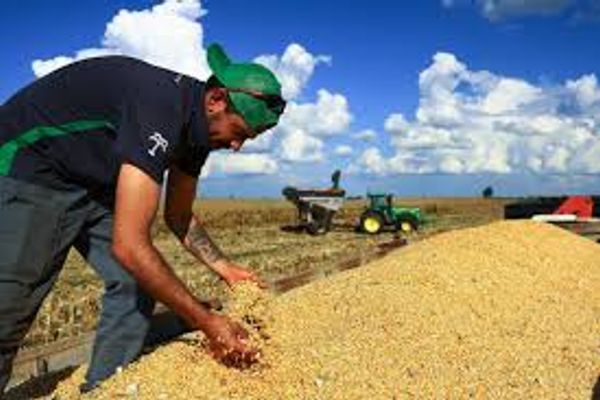
The Dominican Republic is set to remain one of the Caribbean’s most structurally import-dependent corn markets as authorities keep corn duty- and VAT-free, while domestic poultry and livestock expansion drives sustained feed demand. A recent USDA Foreign Agricultural Service (FAS) assessment projects Dominican yellow corn imports at roughly 1.66–1.67 million metric tons in coming marketing years, underscoring the country’s reliance on external suppliers for more than 95% of its consumption. This special report examines how the current policy and regulatory framework will shape trade flows, logistics and price dynamics for regional corn suppliers.
Introduction
In its latest Grain and Feed Annual released from Santo Domingo, USDA FAS forecasts Dominican corn imports at around 1.67 million metric tons for MY 2025/26, with a similar structure expected into MY 2026/27. Domestic production covers only a small share of total demand, leaving feed manufacturers and integrators heavily exposed to international market conditions.
At the same time, the WTO’s most recent tariff profile confirms that while the Dominican Republic maintains relatively high bound agricultural tariffs, applied rates for key staples can be much lower. Corn is currently exempt from both import duties and VAT, and a tariff-rate quota (TRQ) framework with a 40% out-of-quota rate exists on paper but is not applied in practice. This combination of strong demand and open border policy keeps the country firmly anchored into Atlantic corn trade flows.
🌍 Immediate Market Impact
The continuation of a zero-duty and zero-VAT regime, alongside a non-enforced corn TRQ, effectively locks in the Dominican Republic as a price-sensitive but policy-stable destination for exporters from the United States, Brazil and Argentina. USDA’s latest country report highlights that corn imports are forecast to keep rising in line with poultry and egg sector growth.
For global markets, this adds a consistent source of demand at a time when major origins are competing aggressively on FOB basis and freight. With no fiscal barriers, Dominican buyers can switch rapidly between U.S. Gulf, Brazilian and Argentine offers, amplifying price competition and potentially tightening nearby exportable surpluses when Atlantic basis levels are attractive.
📦 Supply Chain Disruptions
The Automatic License System established under national decree simplifies import administration for corn, reducing the risk of bureaucratic delays at ports. This is particularly relevant for bulk cargoes into Haina and Caucedo, where just-in-time feedstock arrivals are critical for large integrators. At the same time, the obligation for corn importers to purchase a small share of domestic sorghum production adds a logistical layer but does not materially constrain flows, given the modest local sorghum base.
USDA FAS notes that domestic corn production remains limited and fragmented, despite land allocation programs and a memorandum of understanding with Guyana aimed at expanding corn and soybean cultivation. Water constraints and the lack of large contiguous farmland mean that any weather or agronomic shock hits a small local base rather than the import program itself. As a result, the principal disruption risk for feed manufacturers continues to lie in ocean freight, berth availability, and origin-side supply issues, not in Dominican policy restriction.
📊 Commodities Potentially Affected
- Yellow corn (feed grade): Core beneficiary of the zero-duty regime; import demand is projected to remain above 1.6 million tons as poultry and hog sectors expand.
- Sorghum: Linked indirectly via the legal requirement obliging corn importers to purchase a share of local sorghum output, supporting prices and off-take for domestic growers.
- Oilseed meals (soybean meal): While not covered by the same measures, stable and growing feed demand for poultry implies parallel demand for protein meals, reinforcing the Dominican Republic’s role as a regional feed-import hub.
- Wheat and other feed grains: With a TRQ framework applied to several agricultural goods, any future tightening of corn policy could spur partial substitution toward other grains, but current practice keeps corn as the dominant energy feedstock.
🌎 Regional Trade Implications
The Dominican Republic’s predictable, duty-free import regime for corn reinforces its position as a competitive destination for U.S. and Brazilian exporters within the CAFTA-DR architecture. While WTO data indicate bound agricultural tariffs up to 40%, applied rates on many staples remain well below these ceilings, sustaining market access for regional partners.
USDA’s country analysis points to an increasingly competitive landscape between U.S. and Brazilian origins, with market share shifting quickly according to FOB values and freight spreads. For South American sellers, especially in Brazil’s Center-West, stable Dominican demand offers an outlet complementary to Asia and North Africa. For U.S. Gulf exporters, the island’s proximity and CAFTA-DR framework provide a natural commercial advantage when basis levels narrow.
🧭 Market Outlook
Over the next 6–12 months, corn import volumes into the Dominican Republic are expected to stay firm, tracking projected feed demand and stable policy settings. Absent any move to activate the 40% out-of-quota tariff or impose new licensing constraints, traders can treat the market as structurally open.
Volatility will be driven less by Dominican decisions and more by origin-side weather, harvest outcomes and freight. Exporters will watch for incremental effects from the government’s land allocation and Guyana cooperation initiatives, but these are unlikely to dent import dependency in the near term. Any change in applied tariffs or activation of the TRQ system would be a material bullish signal for regional corn values, yet no such shift is currently indicated in official or WTO documentation.
CMB Market Insight
For physical traders and feed manufacturers, the Dominican Republic remains a classic demand-led, policy-neutral import market where commercial factors dominate. The maintained exemption of corn from import duties and VAT, combined with a non-binding TRQ framework, ensures that price spreads between U.S., Brazilian and Argentine origins will continue to dictate trade flows.
Strategically, this environment favors agile suppliers able to optimize freight, manage basis risk and respond quickly to Dominican tendering cycles. Barring a sudden policy reversal, the country will stay a consistent buyer of Atlantic corn, providing a reliable outlet for exporters while contributing to baseline demand that underpins regional price formation.