
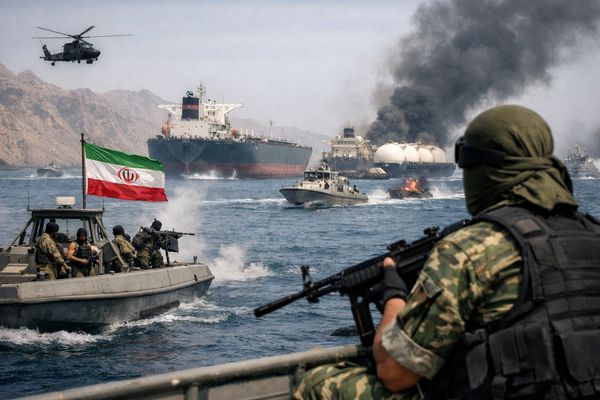
The ongoing US–Israel conflict with Iran and the effective closure of the Strait of Hormuz have triggered one of the largest oil and gas supply disruptions in decades, sharply driving up Brent crude and global LNG benchmarks. While producers such as Chevron and Shell flag lower physical output from the Middle East, their upstream earnings guidance underscores how elevated prices are reshaping margins, trade flows, and risk premia across the energy complex.
A fragile two‑week ceasefire deal tied to the “complete, immediate, and safe opening” of the Strait has not yet fully normalized traffic, leaving a key maritime chokepoint for Gulf crude and Qatari LNG functionally constrained. With roughly one‑fifth of global oil flows and about a fifth of LNG trade historically moving through Hormuz, the crisis is reverberating through fuel, petrochemical, fertilizer, and food supply chains worldwide.
Headline
Iran Conflict and Hormuz Blockade Upend Global Oil and LNG Flows, Supporting Elevated Energy Prices
Introduction
The 2026 Iran war escalated in early March with Iranian restrictions and military threats effectively closing the Strait of Hormuz, a corridor that typically carries around 20 million barrels per day of crude and condensate and close to 20% of global LNG trade. Tanker traffic has collapsed compared with normal levels, and attempts to run the blockade have largely failed amid reports of mines and missile risks.
In parallel, Iranian strikes on Qatar’s Ras Laffan LNG hub have removed an estimated 17% of the country’s export capacity for several years, forcing QatarEnergy to declare force majeure on LNG exports and tightening Europe’s already constrained gas market. Brent spot prices averaged about $103/bbl in March and are projected to peak near $115/bbl in Q2 2026, while regional gas benchmarks in Europe and Asia have surged as seaborne supplies from the Gulf were curtailed.
🌍 Immediate Market Impact
The near‑shutdown of Hormuz has stranded large volumes of crude and LNG from Saudi Arabia, the UAE, Iraq, Kuwait, Iran and Qatar, slashing Middle East seaborne exports by more than half compared with pre‑war levels. Analysts estimate regional oil production shut‑ins of 7–10 million barrels per day, with Brent up roughly 60–65% from pre‑conflict levels.
Producers with diversified portfolios are reporting a split impact: Chevron, for example, guides for a 3.8–3.9 million boe/d output range in Q1 2026 – down from Q4 2025 – but expects upstream earnings to rise by $1.6–2.2 billion quarter‑on‑quarter on higher realized prices. Similar disclosures from ExxonMobil underline how physical volumes from the Middle East are falling even as price gains bolster cash flows.
LNG markets are experiencing extreme dislocation. Qatari cargo cancellations, closed Hormuz lanes and elevated war‑risk insurance have pushed European and Asian import prices sharply above Henry Hub, prompting industrial demand destruction and fuel‑switching where possible.
📦 Supply Chain Disruptions
With Hormuz “all but closed,” port congestion is building at Gulf export terminals as loaded vessels wait for clearance or attempt diversions via limited alternative routes. Insurance costs and freight rates for any ship transiting near the Gulf have spiked, complicating contract execution for term crude and LNG buyers in Europe and Asia.
European utilities and industrial buyers are particularly exposed to the loss of Qatari LNG, with some markets having increased their dependence on Qatar to over 40% of LNG imports ahead of the crisis. The supply shock is feeding through into power generation, chemicals, and nitrogen fertilizer sectors that rely on competitively priced gas feedstock.
Beyond energy, the Hormuz closure is disrupting flows of LPG, condensates, and petrochemical feedstocks, while higher bunker fuel prices are raising operating costs across container and dry‑bulk shipping. This raises landed costs for food, feed, and agri‑inputs that depend on long‑haul seaborne logistics.
📊 Commodities Potentially Affected
- Crude oil: Directly hit by production shut‑ins and export blockages in the Gulf, supporting elevated Brent and Dubai benchmarks and widening spreads to US and Atlantic Basin grades.
- LNG and pipeline gas: Loss of Qatari LNG and constrained Hormuz transit have sharply tightened the Atlantic and Pacific LNG balance, lifting European and Asian hub prices and reshaping inter‑basin flows.
- LPG and NGLs: Reduced co‑production and export capacity from the Gulf raise prices for propane and butane, impacting petrochemicals and some residential and agricultural uses.
- Petrochemical feedstocks: Naphtha and condensate shortages from the Middle East tighten margins for crackers and reformers, with knock‑on effects for plastics, packaging, and synthetic fibers used in food and consumer goods sectors.
- Fertilizers (nitrogen and phosphate): Elevated gas prices and constrained availability in Europe and parts of Asia pressure ammonia and urea production economics, while higher bunker and freight costs raise delivered prices of fertilizer exports from key producers.
🌎 Regional Trade Implications
Asian buyers are redirecting spot and term crude procurement toward West Africa, the US Gulf Coast, and Brazil to offset missing barrels from the Gulf. This is boosting long‑haul crude flows and freight demand on key VLCC routes, while Middle Eastern producers prioritize limited seaborne capacity for core customers.
Europe is again leaning heavily on US LNG, Norwegian pipeline gas and incremental volumes from Atlantic Basin exporters, reinforcing the structural shift away from single‑source dependency. In the US, export terminals are operating near record capacity, and policy debates over LNG permit constraints have effectively ended as the country consolidates its position as a swing supplier.
Conversely, traditional Gulf exporters face revenue losses from shut‑in volumes despite higher prices. Companies with diversified upstream portfolios outside the Middle East, such as Chevron and some European majors, appear relatively better positioned, capturing price upside while managing localized production declines.
🧭 Market Outlook
The two‑week ceasefire framework, contingent on reopening Hormuz, offers a window for de‑escalation but has not yet normalized shipping conditions. Traders are bracing for continued headline‑driven volatility, with prompt crude and LNG prices highly sensitive to any signs of resumed hostilities or confirmed safe‑passage protocols.
In the near term, structurally tighter seaborne supply and elevated war‑risk premia are likely to keep oil and gas prices above pre‑war levels, even if some flows resume. Market participants will closely monitor: the practical reopening of Hormuz lanes; repair timelines at Ras Laffan; updated guidance from Gulf NOCs; and policy responses in Europe and Asia aimed at curbing demand or subsidizing vulnerable sectors.
CMB Market Insight
The Iran conflict and Hormuz crisis mark a structural stress test for global energy trade, underscoring the vulnerability of concentrated maritime chokepoints and the knock‑on effects for broader commodity and food systems. Even a partial reopening of the strait is unlikely to quickly reverse the re‑routing of oil and LNG flows or the repricing of geopolitical risk now embedded in freight and insurance.
For commodity traders and industrial buyers, the episode reinforces three strategic themes: the premium on diversified supply portfolios and flexible shipping options; the growing importance of Atlantic Basin and non‑Gulf producers in marginal pricing; and the need to actively hedge cross‑commodity exposures, as energy shocks propagate into petrochemicals, fertilizers, and ultimately agricultural and food supply chains.
Related posts:
 Iran War, Strait of Hormuz Controls and Red Sea Risks Add New Layer of Tension to Sunflower Trade Into China
 Iran War and Strait of Hormuz Crisis Raise Fertilizer and Food Cost Risks for Poland and Europe
 Poland’s Fuel Price Cap Holds the Line Amid Iran War Oil Shock
 Strait of Hormuz War Fallout Lifts Energy, Freight and Fertilizer Costs, Tightening Margins in Global Potato Chain
 Myanmar Fuel Shock: Strait of Hormuz Closure Slams Economy and Trade
 Iran War and Hormuz Strait Closure Ignite Petrochemical Shockwave for Global Packaging Supply Chains
 Middle East War and Hormuz Blockade Send Fertilizer Costs Soaring, Polish Farm Margins Squeezed