
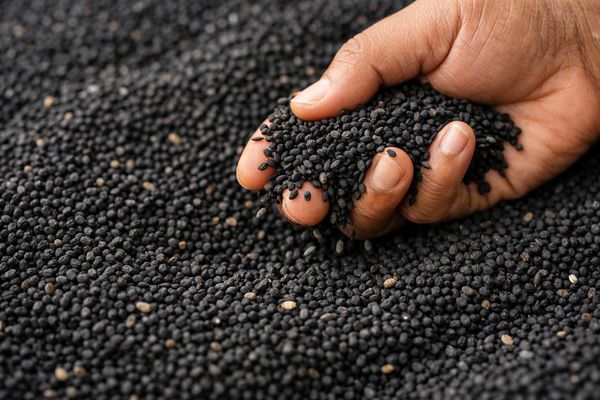
Indian nigella (kalonji) export prices have eased slightly on FOB basis, tracking a modest correction after recent spot gains in Delhi but with overall sentiment still supported by tight domestic supply. Egyptian offers have softened a bit more, increasing competitive pressure, yet buyers continue to prefer Indian origin for premium and well-documented food and nutraceutical use.
Nigella has moved into sharper focus in the Indian spice complex this week, as earlier weather-linked losses and pre‑summer stock‑building keep domestic replacement costs elevated. Delhi spot levels jumped around 9 April, and recent reporting indicates that FOB India offers are now broadly stable to firm in response to this move, despite a marginal dip in export quotes in the last 48 hours. Egypt, Turkey and Ethiopia continue to supplement export channels, but are not fully offsetting the tightening in Indian-origin availability, leaving the global nigella market with a mildly bullish undertone in mid‑April.
Exclusive Offers on CMBroker

Nigella seeds
Machine Clean
99.80%
FOB 2.16 €/kg
(from IN)

Nigella seeds
Kalonji Sortex
99%
FOB 2.06 €/kg
(from IN)

Nigella seeds
Sortex
99.5%
FOB 2.20 €/kg
(from EG)
📈 Prices & Spreads
Latest FOB quotes (New Delhi, 11 April 2026) for Indian origin nigella show a small week‑on‑week decline in EUR terms, with Machine Clean 99.8% around EUR 2.16/kg and Kalonji Sortex 99% near EUR 2.06/kg, both down roughly 2% from early April. Egyptian Sortex 99.5% FOB Cairo is assessed at about EUR 2.20/kg, also marginally softer versus last week. The net result is a narrow but still positive premium for Egypt over India on comparable purity, though the gap has compressed versus late March.
| Origin / Type | Location | Purity | Latest FOB (EUR/kg) | WoW change* |
|---|---|---|---|---|
| India – Machine Clean | New Delhi | 99.8% | 2.16 | ≈ -2% |
| India – Kalonji Sortex | New Delhi | 99.0% | 2.06 | ≈ -2% |
| Egypt – Sortex | Cairo | 99.5% | 2.20 | ≈ -2% |
*Approximate change versus 3 April 2026 internal benchmarks, converted to EUR.
Delhi spot trade earlier in the week showed nigella moving higher on tight arrivals and active domestic buying, and recent commentary still describes FOB India as “stable to firm” even as nominal dollar‑denominated offers edge slightly lower. This suggests exporters are trimming margins to stay competitive against Egypt while protecting volume, rather than signalling a fundamental softening of the market.
🌍 Supply, Demand & Trade Flows
Indian supply remains relatively tight following weather‑related losses in key producing belts and a reduction in sowing compared with earlier expectations, leading to lower than ideal pipeline stocks into April. Earlier crop‑season assessments already flagged that some acreage had shifted from nigella and chia into alternative rabi crops, limiting expansion of available exportable surplus.
On the demand side, nigella continues to benefit from its positioning as a wellness and functional ingredient, with usage extending from traditional bakery and pickles into health‑food, nutraceutical and premium bakery segments, supporting steady to firm offtake in both domestic and export channels. Supplementary supply from Egypt, Turkey and Ethiopia is helping to serve buyers in the Middle East and Europe, but recent analysis stresses that these flows are insufficient to fully offset tightening Indian origin at current prices, leaving end‑users with limited downside price room in the near term.
Egypt, for its part, is actively supporting its agri‑export sector, with authorities issuing thousands of export permits across agricultural products in early April, which indirectly underpins nigella export capacity alongside other oilseeds and spices. However, softening prices in some Egyptian oilseed and spice corridors and reports of reduced import demand for select seeds imply that Egyptian nigella FOB must remain competitive, capping any aggressive upside for Indian offers in the immediate term.
🌦 Weather & Crop Conditions (India, Region: IN)
Weather across major nigella‑growing regions in northern India is currently hot, dry and seasonally typical, with no acute short‑term threat to remaining field operations but also little relief for already tight soil‑moisture conditions. In Rajasthan, daytime highs over the next three days are forecast in the 37–40°C range under hazy sunshine, while Uttar Pradesh and New Delhi are expected to see 35–38°C with strong sun and very limited precipitation.
With the bulk of the 2026 nigella crop already harvested and in the marketing channel, current weather will mainly influence post‑harvest handling and storage rather than yields. Hot, dry conditions favour rapid drying and reduce immediate quality risks, but can also accelerate stock losses if warehousing is sub‑optimal. From a market perspective, the current forecast does not materially ease supply tightness and therefore leaves the underlying bullish tone broadly intact for Indian origin.
📊 Market Drivers & Risk Balance
- Domestic tightness vs. export competitiveness: Indian spot gains and higher replacement costs are clashing with softer Egyptian FOB, leading exporters to fine‑tune Indian offers rather than lift them further in the very near term.
- Spice complex context: Other Indian spices show mixed trends (for example, cumin easing while fenugreek and some oilseeds are firmer), reinforcing selective interest in nigella as buyers diversify coverage within the spice basket.
- Downstream product pricing: Retail kalonji oil in India is on a gently declining price trend, indicating some margin buffer in value‑added products that could sustain raw seed demand even if FOB remains firm.
- Macro & freight backdrop: Broader oilseed strength and steady containerised spice exports from India and Egypt support trade flows, although buyers remain sensitive to any further freight or FX volatility that could quickly translate into EUR‑denominated price swings.
📆 Short-Term Outlook & Trading Ideas
Near‑term, the nigella market looks biased to a stable‑to‑firm price pattern rather than a clear correction. With Delhi spot having recently moved higher and Indian FOB described as fundamentally supported, downside appears limited unless there is a sudden softening in demand from key Middle Eastern and European buyers or a meaningful pick‑up in alternative origin offers.
- Importers / end‑users: Consider covering a portion of Q2–Q3 needs at current EUR 2.05–2.20/kg FOB levels, prioritising Indian Machine Clean and high‑purity grades, while staggering additional purchases in case Egyptian offers soften further.
- Indian exporters: Maintain offer discipline close to current levels, using slight discounts only for prompt or larger parcels; monitor Egypt/Turkey quotations closely to avoid losing volume in price‑sensitive destinations.
- Speculative / trading houses: Short‑term selling against physical coverage carries limited reward given the supported structure; opportunities are more likely on intra‑origin spreads (India vs. Egypt) and quality differentials than on outright price declines.
📍 3-Day Regional Price Indication (FOB, EUR)
| Region / Port (IN focus) | Product | 12–14 Apr 2026 Bias | Indicative Range (EUR/kg) |
|---|---|---|---|
| New Delhi, India | Nigella Machine Clean 99.8% | Stable to slightly firm | 2.15 – 2.20 |
| New Delhi, India | Nigella Kalonji Sortex 99% | Stable | 2.05 – 2.10 |
| Cairo, Egypt | Nigella Sortex 99.5% | Slightly soft | 2.18 – 2.23 |
For India (region: IN), hot and dry but non‑disruptive weather, limited fresh arrivals and firm underlying demand suggest nigella FOB is likely to remain in a narrow band over the next three days, with a mild upward skew more evident in premium grades than in lower‑spec material.
Related posts:
 Aniseed Prices Hold Steady as Egypt Faces Higher Farm Costs and Firm Indian Export Demand
 Nigella Seeds Stay Firm as Indian Supply Tightens and Egypt Competes on FOB
 Nigella seeds spike on Indian weather losses and pre-summer stock building
 Nigella seeds spike in Delhi as stockists step back and demand broadens
 Egypt and India Thyme FOB Prices Hold Firm Amid Input Cost Pressures
 Indian Chilli Market Holds Firm at Peak Arrivals as Export Demand Stays Hot
 Nigella seeds correct lower as Indian stockists turn sellers