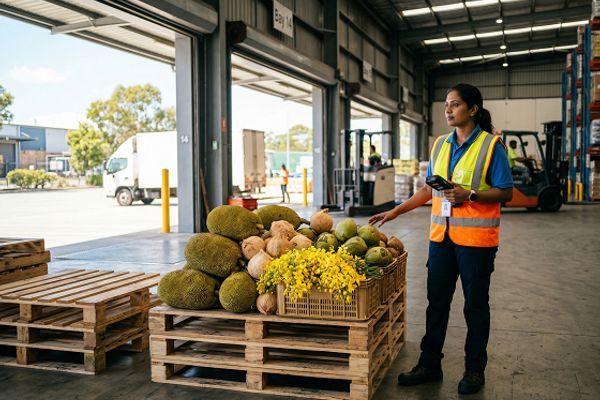
Lulu Group’s large-scale airlift of over 3,000 tons of fresh Indian produce into the UAE and wider GCC for Vishu is injecting a short-lived but intense demand spike into niche fresh-produce and airfreight segments. While volumes are modest by global standards, the operation underscores how diaspora-driven festivals are shaping specialized trade lanes for high-value perishables between India and the Gulf.
By sourcing directly from Kerala farmers and self-help groups and moving consignments on charter-style widebody freighters, Lulu is temporarily tightening regional availability of selected ceremonial items. The campaign also illustrates how retailers are using logistics-intensive models to preserve price stability and on-shelf availability in import-dependent Gulf food markets.
Headline
Lulu’s 3,000‑Ton Vishu Airlift Deepens GCC Reliance on High-Value Indian Fresh Produce Corridor
Introduction
In the run-up to the Kerala harvest festival of Vishu, Lulu Group has airlifted more than 3,000 tons of fresh produce from India into the UAE and other Gulf Cooperation Council (GCC) markets. The shipments, totaling around 3,100–3,200 tons, consist largely of fruits, vegetables, flowers, banana leaves and coconuts used in Vishu rituals and festive meals.
According to recent reports, the consignments were loaded primarily in Kochi and flown by dedicated widebody freighters, including at least one Boeing 747 movement of close to 100 tons into Abu Dhabi, with additional legs into Kuwait and other GCC hubs. Most of the produce is procured directly from Kerala farmers via Lulu’s Fair Exports and allied sourcing programs, linking smallholder supply into a time-critical expatriate demand window across more than 250 hypermarkets in the UAE, Saudi Arabia, Qatar, Kuwait, Oman and Bahrain.
🌍 Immediate Market Impact
The Vishu campaign is concentrating demand for specific Indian-origin perishables into a narrow April delivery window, temporarily tightening supply of Kerala-sourced items such as jackfruit, plantains, coconuts and kani konna flowers. Spot availability for competing buyers in South India may be marginally reduced, especially for festival-grade quality, as Lulu secures dedicated volumes under direct contracts.
For GCC markets, the airlifts provide an additional buffer of high-value produce at a time when retailers are already leaning more on air cargo to manage supply risks and price volatility in imported fresh food. Earlier this year, Lulu also used chartered flights to move about 80,000 kg of fresh food into the UAE, underscoring a broader shift toward agile, retail-led logistics in the region’s food import system. While the Vishu volumes are unlikely to move benchmark global price indices, they may support firm local pricing in Kerala’s specialty produce and in GCC retail shelves for Indian-origin items.
📦 Supply Chain Disruptions
On the logistics side, the operation ties up scarce widebody airfreight capacity on India–GCC routes during a compressed period, adding to upward pressure on short-term cargo rates for temperature-controlled space ex Kochi and other South Indian gateways. Each full 747-equivalent load of roughly 90–100 tons implies multiple rotations to reach the reported 3,000+ ton total.
For seaborne trade, the impact is indirect. By pulling festival-sensitive SKUs into air channels, Lulu reduces dwell time and spoilage risk but leaves regular seafreight flows for more generic fruits and vegetables broadly unchanged. However, exporters relying on ad-hoc belly cargo space may face tighter capacity and higher rates around the Vishu period, with priority likely going to contracted high-margin perishables linked to organized retail networks.
📊 Commodities Potentially Affected
- Fresh tropical fruits (jackfruit, bananas, mangoes) – Concentrated procurement from Kerala and neighboring producing regions for Vishu displays and Sadhya menus supports firm local farmgate prices and may limit availability for alternative export channels in the short term.
- Coconuts and banana leaves – High ceremonial relevance for Vishu Sadhya and associated rituals drives premium demand for quality-controlled lots suitable for airfreight, potentially lifting festival-season pricing in sourcing districts.
- Cut flowers (kani konna and other blooms) – Time-sensitive, low-shelf-life products gain disproportionate benefit from chartered flights, with GCC retail prices reflecting both airfreight costs and limited regional alternatives.
- Prepared festive meals and desserts (Vishu Sadhya, payasam) – Retail pre-order programs and in-store “Payasam Festivals” shift part of the demand from raw ingredients to value-added foodservice-style offerings, altering SKU-level demand for rice, dairy, sugar and nuts within Lulu’s internal procurement mix.
🌎 Regional Trade Implications
The Vishu airlifts reinforce the India–GCC fresh produce corridor as a specialized, festival-driven trade lane anchored by the Indian diaspora. India, and specifically Kerala, strengthens its position as a preferred origin for culturally specific perishables, securing visibility for smallholder farmers in export markets that value authenticity over pure price competition.
For GCC importers, the operation highlights the strategic role of large-format retailers that can underwrite dedicated cargo capacity and direct-from-farm sourcing. Competing suppliers from East Africa or Southeast Asia have limited ability to substitute for Kerala-specific ceremonial items, but they may remain competitive in generic fruit and vegetable categories outside the festival window.
🧭 Market Outlook
The market impact of the Vishu program is expected to be sharp but brief. Elevated airfreight volumes and strong GCC shelf demand for Indian produce should persist through mid-April deliveries, then normalize quickly as festival-driven purchasing drops off. Residual demand for prepared Sadhya and dessert items is likely to continue for a short post-festival period, but with diminishing effect on upstream procurement.
Looking ahead, other Gulf-based retailers may study Lulu’s direct-from-farm and charter-led logistics model as a template for managing demand spikes around Diwali, Onam, Ramadan–Eid and other culturally significant dates. However, persistently high airfreight costs and sensitivity to wastage will constrain scalability; traders will monitor whether similar programs emerge and whether they begin to influence contract structures and seasonal pricing for Indian specialty crops.
CMB Market Insight
Lulu Group’s Vishu airlifts underline how cultural calendars can generate targeted, high-margin demand pulses that ripple back through farm-level pricing, export logistics and GCC retail strategies. While the absolute tonnage remains small relative to mainstream global fruit and vegetable flows, these moves are strategically important in demonstrating a retailer-led, festival-centric model for linking Indian smallholders to diaspora consumption.
For commodity market participants, the key takeaway is not a structural price shift but a growing pattern: organized GCC retail deploying bespoke logistics to secure supply and moderate local price spikes during culturally sensitive periods. As this model evolves, niche Indian-origin commodities with strong cultural attachment may experience recurring seasonal tightness and premium pricing in both origin and destination markets.