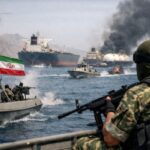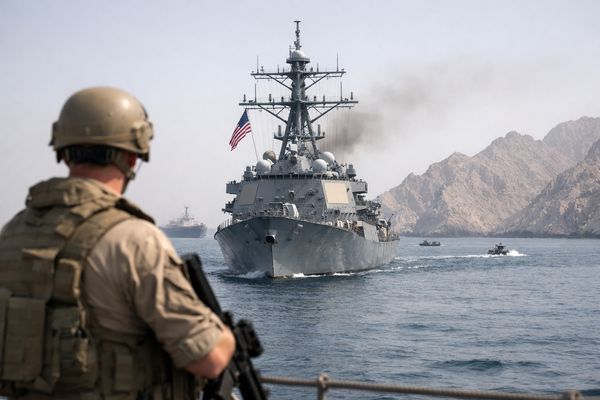
Global commodity markets face a fresh shock after the United States confirmed it will enforce a wide-ranging maritime blockade on Iranian ports and coastal areas, following the collapse of high-stakes ceasefire talks in Islamabad. The move, which stops ships from entering or leaving Iranian ports in both the Persian Gulf and the Gulf of Oman, immediately tightened oil markets and raised freight and risk premiums across key shipping lanes.
Oil prices have already surged and tanker traffic through the Strait of Hormuz has slowed sharply as shipowners reassess security, insurance and route options, with potential spillovers into LNG, grains and fertilizer trade.
Introduction
The U.S. military has announced it will begin blocking maritime traffic linked to Iranian ports starting Monday, after 21 hours of U.S.–Iran talks in Islamabad ended without agreement on extending a fragile ceasefire and reopening the Strait of Hormuz. The blockade covers all Iranian ports and coastal areas on the Persian Gulf and Gulf of Oman, while formally preserving transit rights for vessels sailing to and from non-Iranian ports through the Strait of Hormuz.
Tehran has condemned the move and warned that military vessels approaching the Strait could be treated as a ceasefire violation, increasing the risk of miscalculation in one of the world’s most critical energy chokepoints. With around 20% of global seaborne oil previously moving through the Strait before the current war, the blockade is a material escalation for energy, shipping and broader commodity supply chains.
🌍 Immediate Market Impact
Crude benchmarks jumped sharply after the blockade announcement, with reports of Brent moving back above the mid-$90s and traders pricing in a higher and more prolonged risk premium on Middle East supplies. Spot and forward freight rates for tankers in the Gulf region have spiked as many owners pause transits, reroute, or demand higher compensation for war and political risk.
Although non-Iranian cargoes are, in theory, still allowed to transit the Strait, early shipping data show tankers steering clear of the waterway or delaying passage ahead of the full implementation of the blockade. This is already tightening prompt physical availability for crude and condensate in Asia and Europe, while LNG and product cargoes face longer voyages and higher bunker costs as they seek alternative routes or suppliers.
📦 Supply Chain Disruptions
The immediate disruption is centered on Iranian crude, condensate and petroleum products, which will be effectively cut off from seaborne export channels if the blockade is enforced as described. However, broader knock-on effects are emerging as insurers widen high-risk classifications, raising premiums for any vessel operating near Iranian waters or the Strait of Hormuz.
Port congestion risks are rising at alternative load and discharge hubs around the Gulf as cargoes are diverted to Saudi, Emirati, Qatari and Omani ports. Regional feeder routes for refined products, petrochemicals and dry bulk could face scheduling disruptions, with some operators opting to hold vessels in safer anchorages until the security picture clarifies.
Higher fuel costs and extended voyage times will filter through to containerized food trade and bulk shipments of grains, sugar and rice moving between the Black Sea, Middle East and Asia via the Gulf and Indian Ocean, even if their cargoes are not directly linked to Iran. Traders report early signs of increased bid–offer spreads and tighter credit conditions for cargoes routed through the broader conflict zone.
📊 Commodities Potentially Affected
- Crude oil and condensate – Direct loss of Iranian exports and self-sanctioning by shipowners transiting the Strait underpin higher prices and volatility in benchmark grades.
- LNG and pipeline gas-linked contracts – Disrupted tanker traffic and higher shipping costs through the Gulf could tighten LNG availability into Asia and Europe, lifting hub-linked gas prices and fuel-switching costs for power and industry.
- Refined products (diesel, gasoline, jet fuel) – Rising crude prices and regional refinery logistics constraints are likely to feed into higher middle distillate and gasoline cracks, raising transport costs worldwide.
- Grains and oilseeds – More expensive bunkers and war-risk premiums on routes via the Red Sea–Arabian Sea corridor will increase delivered costs for wheat, corn and soy into North Africa, the Middle East and South Asia. Import tenders may see higher offers and shorter validity periods.
- Sugar and rice – Key exporters in Brazil, India and Thailand rely on Gulf and Indian Ocean routes; disruptions and higher freight rates will raise CIF prices for net importers in MENA and East Africa.
- Fertilizers (urea, ammonia, phosphates, potash) – Iran is a significant regional supplier of nitrogen fertilizers; restricted exports, coupled with higher shipping costs via the Gulf, could tighten availability and support global fertilizer benchmarks ahead of key planting seasons.
- Edible oils and feed ingredients – Higher freight and energy costs will spill into sunflower oil, palm oil, soybean meal and other feed ingredients moving into the Middle East and South Asia, pressuring downstream livestock and food margins.
🌎 Regional Trade Implications
Asia’s major importers—China, India, South Korea and Japan—are most exposed to disruptions in Gulf oil and LNG flows, though India and Pakistan may partially mitigate risks by offering naval escorts or alternative routing services through the Arabian Sea. European refiners and utilities will face renewed competition with Asia for Atlantic Basin barrels and LNG cargoes, supporting wider inter-basin arbitrage and longer-haul trade.
On the export side, Gulf producers outside Iran, particularly Saudi Arabia, the UAE and Qatar, stand to benefit from stronger prices and redirected demand, provided their own shipping operations are not materially constrained by security incidents or insurance limits. Russia, West Africa, the U.S. Gulf Coast and Latin America may also see increased demand for crude, products and some agricultural exports as buyers diversify away from Gulf-centered routes.
For agricultural commodities, Black Sea, EU and U.S. origins could gain incremental market share in MENA and the Horn of Africa if Gulf-linked logistics become more expensive or unreliable, though higher bunker costs will erode some of that advantage. Fertilizer importers in South Asia, North Africa and Brazil may accelerate tendering and diversify sourcing to hedge against further disruptions.
🧭 Market Outlook
In the near term, energy markets are likely to remain highly sensitive to any operational incident in or near the Strait, as well as to clarity on the scope and duration of the U.S. blockade and Iran’s response. Traders will closely monitor tanker traffic data, war-risk insurance adjustments and any sign of secondary sanctions or interdictions on non-Iranian cargoes.
For agricultural and fertilizer markets, the primary transmission channel will be higher fuel and freight costs rather than outright physical shortages, at least initially. Nonetheless, a prolonged blockade or escalation involving direct attacks on commercial shipping could force structural rerouting of trade flows, increase inventory holding costs and encourage greater precautionary buying by import-dependent countries.
CMB Market Insight
The U.S. maritime blockade of Iranian ports marks a pivotal escalation in the Gulf, transforming a regional security crisis into a global freight and energy shock with wide repercussions for commodity trade. While direct supply losses center on Iranian oil, gas and fertilizers, the broader impact is a step-change higher in risk premiums, voyage times and logistics costs across energy, grain and input value chains.
Commodity traders, importers and food industry participants should stress-test exposure to Gulf routing risk, reassess delivered cost assumptions for key origins, and consider diversifying both supply sources and logistics partners. Until there is a credible diplomatic pathway to de-escalation, elevated volatility and structurally higher landed costs for energy-intensive commodities are likely to remain a defining feature of the market environment.