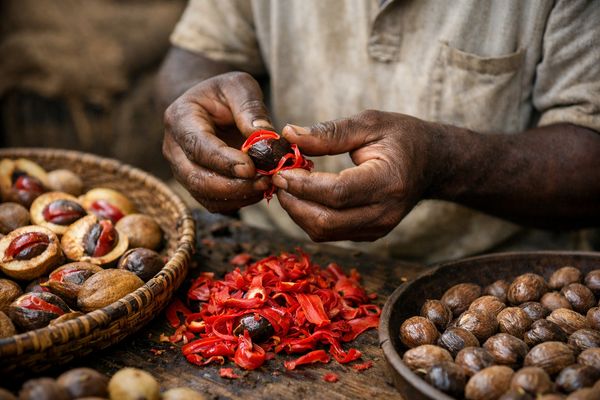
Indian Grade‑A organic mace FOB New Delhi is inching higher, supported by firm domestic benchmarks in Kerala and resilient export demand in the wider spice complex. The move is gradual rather than explosive, but the bias is clearly upward as premium grades remain tight and logistics and fuel costs trend higher.
India’s spice market is currently characterised by strong pricing in several high‑value spices such as black pepper and cumin, with exporters actively seeking premium lots from Kerala and adjoining belts. While mace trade is relatively thin, benchmark domestic data from Cochin still show elevated levels for red mace versus last year, signalling sustained value for high-quality material. Very hot and humid conditions in Kerala add to short‑term stress on trees and post‑harvest handling, although no acute crop shock is visible yet. Overall, the tone for mace is mildly bullish with upside risk if arrivals tighten further.
Exclusive Offers on CMBroker

Mace Brown
Grade-A
FOB 30.25 €/kg
(from IN)
📈 Prices & Recent Moves
The latest offer for organic Grade‑A mace (FOB New Delhi, origin India) stands around EUR 30.25/kg, modestly above the previous week and extending a slow grind higher over the past month. Converting recent Kerala domestic benchmarks of about Rs 1,400/kg for red mace in Cochin into export‑equivalent terms confirms that current FOB offers remain in line with India’s premium domestic market, leaving limited room for deep discounts.
Compared with late January domestic averages, mace in Cochin has held steady to slightly firmer, even as some other spices have seen more pronounced corrections. This stability suggests that buyers of high‑end mace have largely accepted current valuations, with only tactical resistance on small price upticks.
🌍 Supply, Demand & Weather
Supply of mace remains structurally tight because it is a by‑product of nutmeg and concentrated in small pockets of Kerala and neighbouring areas. Recent government market intelligence from Kerala highlights that mace has shown one of the sharper absolute price adjustments among spices in Kalady, underlining its sensitivity to small changes in arrivals.
On the demand side, the broader Indian spice export basket continues to benefit from robust overseas interest, with farm‑direct exporters from Idukki and other high‑range districts actively targeting EU and UK buyers for premium whole spices including nutmeg and mace. Tightness in other high‑value spices like black pepper, where premium Kerala grades are trading at the very top of the domestic range, reinforces a firm tone across the premium spice complex and indirectly supports mace valuations.
Weather in Kerala is currently dominated by very hot and humid conditions, with the India Meteorological Department issuing a heat‑and‑humidity warning after maximum temperatures crossed 40°C in parts of the state. Such conditions can stress nutmeg trees and complicate drying and storage of mace, increasing the risk of quality losses and limiting the willingness of farmers and traders to rush material to market.
📊 Market Fundamentals & Cost Drivers
Recent official weekly data still place Cochin red mace at elevated domestic price levels, unchanged week‑on‑week at around Rs 1,400/kg at the end of January, and comfortably above last year’s comparable period. This indicates that even before the latest round of summer heat, mace was already trading in a historically firm band.
Across the spices complex, several benchmark markets report either steady or mildly rising prices—cumin has softened only marginally, while other seed spices retain a firm undertone amid tighter arrivals and seasonal stocking. This backdrop suggests that buyers are unlikely to see broad cost relief in the near term. Additionally, sharply higher aviation turbine fuel and broader logistics costs in India since the start of April raise FOB and freight components, which can gradually feed into mace export offers over coming weeks.
📆 Short-Term Outlook & Trading Ideas
- Bias: Mildly bullish. With domestic Cochin benchmarks holding firm and Kerala weather remaining hot and humid, upside risk in premium mace persists, even if trade volumes are thin.
- For importers: Consider covering near‑term requirements (4–8 weeks) at current EUR levels rather than waiting for a pullback that is not yet signalled by domestic data.
- For exporters/stockists: Maintain disciplined offer levels; limited availability of clean, organic Grade‑A lots supports asking prices, but be prepared for selective negotiation on larger parcels.
- For industrial users: Where possible, optimise blends with nutmeg or other aromatics to hedge against further mace tightness without compromising flavour standards.
📍 3‑Day Price Indication (Region: IN)
| Location | Product | Term | 13–15 Apr 2026 Direction | Indicative Level (EUR/kg, FOB) |
|---|---|---|---|---|
| New Delhi | Mace Brown, Grade‑A, organic | FOB | Slightly firm | ≈ 30.0 – 30.5 |
With Kerala’s hot and humid spell ongoing and no sign of a sudden surge in arrivals, mace prices in India are likely to remain steady to slightly firmer over the next three days, with any dips quickly met by buying interest.