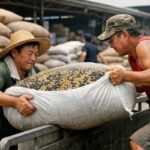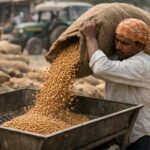
Chinese bean prices are trading in a slightly firmer range, led by tight mung beans and steady demand for kidney and adzuki beans, while export competitiveness remains intact in EUR terms. Mildly improving input-cost signals and seasonally quiet weather keep nearby price risk skewed to the upside but within a narrow band.
China’s bean complex is entering mid‑April with a broadly stable to slightly bullish tone. Mung bean FOB values are underpinned by tight export availability and firm regional demand into Asia, while kidney and adzuki beans show modest week‑on‑week gains in key segments. Broader Chinese wholesale mung prices remain elevated versus historical averages, and global mung markets continue to be supported by limited alternative origins and resilient consumer demand. Weather in Northeast China is seasonally cool and mostly benign, with no acute planting or logistics disruptions reported in the last few days, so price action is driven more by trade flows and currency than by crop stress.
[cmb_offer ids=374,373,369]
📈 Prices & Spreads (FOB China, Beijing, mid‑April)
| Bean type (CN, FOB Beijing) | Spec | Current price (EUR/kg) |
1‑week move |
|---|---|---|---|
| Mung beans | Organic, 99.5% | ≈1.49 | +≈1.3% |
| Mung beans | 3.8 mm up, conv. | ≈1.40 | flat |
| Kidney beans | Large white, conv. | ≈1.90 | −≈1.5% |
| Kidney beans | Dark red, conv. | ≈1.16 | +≈0.8% |
| Kidney beans | Black, conv. | ≈0.96 | +≈1.0% |
| Adzuki beans | Red, conv. | ≈1.22 | −≈0.5% |
Note: USD‑denominated FOB indications from Chinese exporters are converted at ~7.2 CNY/USD and ~1.09 USD/EUR; values are indicative.
Recent external benchmarks show Chinese mung bean wholesale prices in a broad range equivalent to roughly EUR 2.70–3.55/kg at retail/wholesale level, confirming that export‑oriented FOB offers remain discounted versus domestic spot and still competitive versus other Asian origins. Reports from pulse trade platforms indicate Chinese mung bean export prices have held near recent highs with only marginal week‑to‑week moves through late March and early April. Kidney and adzuki beans show a mixed but overall sideways pattern, with white beans slightly softer and dark red and black types modestly firmer, in line with commentary that Chinese bean export prices are trading in a narrow consolidation band.
🌍 Supply, Demand & Trade Flows
China remains a key supplier of mung, white kidney, black and adzuki beans into Asian and European markets, with exporters benefiting from structurally firm overseas demand and limited competition in specific size and quality segments. Global data for dried mung beans point to steady trade volumes, with Myanmar, China and a few other Asian origins dominating export flows. Tightness in Chinese mung supplies noted in late March—driven by prior strong shipments and conservative farmer selling—continues to underpin current offers, even though volumes are seasonally normal rather than exceptionally low.
In contrast, the white bean complex is better supplied. Earlier reports flagged stable white bean exports from China with softening prices, especially for large white kidney types, as buyers diversified origins and some demand shifted to cheaper black and dark‑red varieties. This relative abundance explains the slight easing in large white kidney prices in the latest FOB quotes, while black beans, which had been under modest pressure due to post‑holiday demand softness, now appear more balanced as export interest normalises.
🌦 Weather & Input Cost Outlook (China)
Short‑term weather patterns across Northeast China’s main bean‑growing provinces (Heilongjiang, Jilin, Inner Mongolia) are seasonally cool with scattered precipitation and no major cold‑wave or flooding events flagged for the next few days. Recent Chinese media and forecast coverage describes a mix of rain or snow episodes but within normal early‑spring variability, suggesting minimal disruption to spring field preparations. At this stage, there is no clear weather‑driven bullish catalyst for beans; planting intentions and eventual acreage shifts will matter more in late April and May.
On the cost side, China’s official monitoring of important means of production shows that many agricultural inputs, including key fertilizers and fuels, posted small price declines or only marginal changes in early April versus late March. Slight easing in fertilizer prices, combined with stable energy markets under Beijing’s price‑control regime, reduces immediate cost‑push pressure on bean growers and exporters. This supports the current view of a range‑bound bean market where prices react more to export demand and currency than to sudden shifts in production costs.
📊 Market Fundamentals & Risk Drivers
- Tight but not extreme mung balances: Export availability for high‑quality mung remains constrained by earlier strong shipments and selective farmer selling, but there is no evidence yet of acute shortage. Prices therefore trade firm but shy of panic levels, with most deals concluded in a narrow range around recent weeks’ averages.
- Comfortable kidney and adzuki supplies: Large white kidney beans show slightly softer pricing on comfortable stocks and good export logistics, while dark red and black kidney beans and adzuki hold mostly steady, reflecting balanced domestic and export demand.
- Macro & FX backdrop: Broader Chinese trade data and macro news point to a still‑fragile but improving export environment, with a softer yuan providing some cushion to FOB quotations in EUR and USD. Any renewed volatility in global freight or geopolitical tensions could quickly translate into widened offer–bid spreads.
- Policy & trade risks: While no new bean‑specific policies have been announced in the last few days, recent reports about Chinese export controls in other agricultural inputs such as fertilizers highlight the latent risk of sudden policy moves that could indirectly affect bean production costs or logistics.
📆 3‑Day Price Outlook & Trading Guidance
🔎 Directional Outlook (next 3 trading days, CN FOB)
- Mung beans (organic & conventional): Bias: stable to slightly firmer. Tight exportable supply and solid Asian demand are likely to keep offers firm, with a mild chance of EUR‑denominated upticks if USD strengthens.
- Kidney beans (large white): Bias: sideways. Ample availability and recently softer quotes suggest little room for near‑term gains without a new demand impulse.
- Kidney beans (dark red & black) and Adzuki: Bias: sideways to marginally firmer as buyers take advantage of current discounts versus mung, but no strong rally signal yet.
📌 Trading Recommendations
- Importers / buyers: For mung beans, consider covering short‑term needs promptly and layering in additional coverage on minor dips, given persistent tightness and upside skew. For white kidney beans, avoid chasing prices higher; current offers look fair, and downside risks dominate if global demand softens.
- Exporters / producers: Maintain firm offers for mung beans and be selective on volume commitments, prioritising higher‑margin organic and premium grades. For large white kidney beans, consider moderate price concessions or flexible payment terms to stimulate additional demand and manage inventory.
- Traders: Focus on relative spreads—long mung vs. short large white kidney or black beans—rather than outright directional exposure, as the overall complex is likely to stay range‑bound in the very near term.
🧭 3‑Day Regional Price Indication (Indicative, EUR/kg)
| Region / Port | Product | Today | 3‑day bias |
|---|---|---|---|
| Beijing (CN FOB) | Mung beans, organic | ≈1.49 | Stable / +0.01–0.02 |
| Beijing (CN FOB) | Mung beans, conv. | ≈1.40 | Stable |
| Beijing (CN FOB) | Kidney, large white | ≈1.90 | Stable / −0.01 |
| Beijing (CN FOB) | Kidney, dark red | ≈1.16 | Stable / +0.01 |
| Beijing (CN FOB) | Kidney, black | ≈0.96 | Stable / +0.01 |
| Beijing (CN FOB) | Adzuki, red | ≈1.22 | Stable |
[cmb_chart ids=374,373,369]