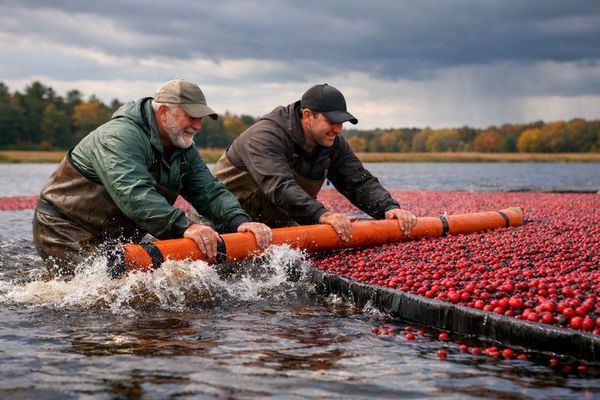
Prices for US-origin dried cranberries in Europe remain flat, with no visible week‑on‑week movement and only marginal softening over recent weeks in whole fruit. For now, buyers benefit from steady FCA Dordrecht indications while US weather volatility and tighter underlying crop balances have not yet translated into higher offer levels.
European demand for dried cranberries is described as firm but unspectacular, with stable pricing in processed cranberry categories despite broader berry price volatility and competition from substitutes. The wider cranberries complex faces cost pressure from tariffs and logistics, yet sweetened dried cranberries into the EU remain supported by duty suspensions and solid import flows. In the US, recent extremes – from record warmth and dryness to severe Midwest storms and blizzards in February–March – raise medium‑term production risk for major growing states but are still too early in the crop cycle to affect today’s dried price indications.
[cmb_offer ids=803,802,802]
📈 Prices & Spreads
Indicative FCA Dordrecht prices for US-origin dried cranberries are approximately:
| Product | Origin | Location / Terms | Latest Price (EUR/kg) | WoW Move (EUR/kg) | MoM Trend |
|---|---|---|---|---|---|
| Cranberries dried – whole, classic | US | NL, Dordrecht, FCA | 4.25 | 0.00 | Sideways to slightly softer vs late March |
| Cranberries dried – sliced, soft | US | NL, Dordrecht, FCA | 3.80 | 0.00 | Sideways to slightly softer vs late March |
These stable indications are consistent with recent European market commentary, which describes dried US cranberries in mid‑range but steady territory, with buyers well covered and no immediate scramble for spot volumes.
🌍 Supply, Demand & Trade Flows
On fundamentals, the latest global outlook suggests only modest growth in sweetened dried cranberry production into the 2025/26 season, implying a broadly balanced market rather than a strong surplus. Earlier in the season, USDA and industry data indicated the 2025 US cranberry crop came in below the previous year, with reductions across key producing states such as Wisconsin, Massachusetts, Oregon and New Jersey, tightening the underlying raw‑berry balance behind today’s dried products.
On the demand side, Europe’s cranberry market continues to grow moderately, with dried cranberries forming part of a broader category increasingly constrained by price competition from other berries. Tariff policies remain an important cost driver: recent analysis points to higher tariffs on cranberries and processing equipment in some regions, yet EU duty suspensions on sweetened dried cranberries support competitive access for US exporters into Europe. This backdrop helps explain why Dordrecht offers have remained level despite firmer production costs and weather‑related uncertainty in North America.
🌦 US Weather & Crop Risk (Region: US)
The US has experienced pronounced weather volatility in recent months. Nationally, the period from April 2025 to March 2026 was the warmest on record for the contiguous US, and January–March 2026 ranked as the driest on record, emphasizing structural moisture risk for perennial crops, including cranberries. In February, a historic blizzard severely affected parts of the Northeast, including Massachusetts, one of the major cranberry states, with heavy snow and coastal impacts.
More recently, a powerful storm system on April 17 triggered a significant tornado outbreak across the Upper Midwest, including Wisconsin and neighboring areas that overlap with the main US cranberry belt. Although current storms occur outside the harvest window, they can still influence bog infrastructure, drainage, and early season management. Combined with longer‑term climate concerns flagged by Wisconsin grower representatives, the risk profile for future cranberry yields remains tilted to the downside even if immediate damage reports are limited.
📊 Market Drivers & Fundamentals
- Tighter US crop backdrop: Recent US harvests have trended slightly lower, with regional declines and climate‑related challenges in major producing states, underpinning a floor under dried cranberry prices despite currently quiet spot demand.
- Trade policy & tariffs: Higher tariffs in some importing regions and equipment costs put upward pressure on production and export economics, while EU duty suspensions for sweetened dried cranberries help keep US product competitive in Europe.
- Demand & competition: Europe’s cranberry market continues to expand but faces substitution by other berries and evolving consumer preferences, limiting the ability of sellers to pass through full cost inflation in the short term.
📆 Short-Term Outlook & Trading Ideas
3–5 day price outlook (FCA Dordrecht, dried cranberries, US origin): With no fresh supply shock, unchanged trade policy and stable buyer interest, dried prices in Europe are expected to remain broadly flat through the coming trading days. Fundamentals argue for a mild upward bias later in Q2 if weather‑related risks in the US cranberry belt intensify or if demand picks up ahead of mid‑year contracting rounds.
- Buyers (food industry, packers): Consider extending coverage modestly at current levels for Q2–Q3 needs, as today’s prices reflect balanced fundamentals and do not yet price in potential US weather or tariff‑driven cost increases.
- Sellers / processors: Maintain offer discipline near current indications; avoid aggressive discounting while monitoring US weather, logistics and tariff developments that could justify firmer forward guidance.
- Traders: Short‑term, treat the market as range‑bound; look for opportunities in inter‑product spreads (whole vs sliced, cranberries vs other dried berries) rather than outright directional bets until clearer signals emerge from the US growing season.
3‑day regional directional view (EUR, indicative):
- NL (FCA Dordrecht, US dried cranberries): 3.80–4.25 EUR/kg; expected flat over the next three trading days, with only very limited upside risk tied to any sudden logistics disruptions.
- Other NW Europe hubs (re-exported US origin): Small mark‑ups vs Dordrecht, also seen stable near current levels, as buyers focus on contract execution rather than new spot coverage.
- US domestic wholesale (dried cranberries): No major near‑term move expected; prices likely steady, reflecting balanced stocks and the early stage of the 2026 growing season.
[cmb_chart ids=803,802,802]