
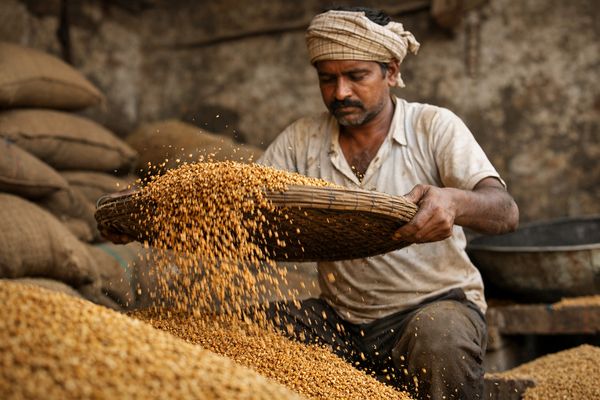
Export prices for fenugreek are slightly softer but broadly stable, with India maintaining a discount to Egypt and no major weather or supply shocks in key origins over the last few days.
Fenugreek trade is entering a quiet, mildly bearish phase. Comfortable seed availability in India, robust export activity, and normal-to-hot but non‑disruptive weather in both India and Egypt are limiting any upside momentum. Buyers are finding competitive offers out of New Delhi, especially for conventional grades, while Egyptian seed retains a modest premium but has eased fractionally. Freight and currency remain secondary to origin price competition. Near term, sideways to slightly weaker pricing is more likely than any sharp rally, barring an unexpected demand spike from food or nutraceutical users.
[cmb_offer ids=207,206,204]
📈 Prices & Spreads
Using an indicative rate of 1.00 USD ≈ 0.94 EUR for reference, current export offers translate into the following ranges:
| Origin | Product | Term | Latest price (EUR/kg) | 1-week change |
|---|---|---|---|---|
| India (New Delhi) | Fenugreek seeds, conv., 99% purity, FOB | FOB | ≈0.60 EUR | ▼ ~1–2% |
| India (New Delhi) | Fenugreek seeds, FAQ machine clean, conv. | FOB | ≈0.60 EUR | ≈ flat |
| India (New Delhi) | Fenugreek seeds, organic, whole | FOB | ≈0.92 EUR | ▼ ~2–3% |
| India (New Delhi) | Fenugreek powder, organic | FOB | ≈1.02 EUR | ▼ ~2–3% |
| Egypt (Cairo) | Fenugreek seeds, conv. | FOB | ≈0.91 EUR | ▼ ~1% |
Recent intelligence indicates that Indian wholesale and export prices for fenugreek in 2026 are still below 2024 levels on average, underlining a generally soft but recovering market. The India–Egypt differential remains in favour of Indian origin, which continues to attract value‑focused buyers.
🌍 Supply, Demand & Trade Flows
India remains the dominant exporter, with official data showing fenugreek export volumes in the 2024–25 marketing year significantly above the previous season, confirming strong structural demand from food, nutraceutical and herbal segments. A high number of active Indian exporters and processors keeps export competition strong and limits the ability of any single origin to push prices higher.
Recent cross‑commodity coverage of India’s seed‑spice complex highlights firm consumption and export pull in spices like cumin and fenugreek, but without speculative overheating, as fenugreek is not actively traded on major futures exchanges. Egypt continues to serve mainly regional and Mediterranean buyers; its premium over India, though small, reflects logistics and quality positioning rather than tight local availability.
🌦 Weather Outlook (IN & EG)
In India, the current fenugreek crop is largely harvested; short‑term weather mainly affects late post‑harvest handling and planting decisions for other seed spices. National agro‑meteorological bulletins point to generally normal conditions moving from late March into early April, with earlier spells of surplus rain already past and no immediate threat to stored fenugreek stocks.
For Egypt, Cairo and key Nile Valley production zones are entering the typical hot, dry April pattern. Recent 3–7‑day forecasts show clear to partly cloudy skies with rising daytime temperatures but no major rainfall events, consistent with normal seasonal conditions for sun‑drying and storage of seeds. Overall, weather in both India and Egypt is neutral for fenugreek prices in the very near term.
📊 Fundamentals & Price Drivers
- Export pipeline: Recent trade data and exporter listings confirm an active shipment pipeline from India, with 2026 exports already counting dozens of fenugreek shipments.
- Macro context: Broader agri‑commodity markets (wheat, rice, other spices) show firm to rising prices in places, but fenugreek remains relatively insulated, with only indirect support from higher multi‑spice procurement budgets.
- Currency & logistics: No fresh India‑specific export policy shocks or acute freight disruptions have emerged in the last few days; euro‑denominated buyers mainly see small FX‑driven noise rather than structural cost changes.
📆 Short-Term Outlook & Trading Ideas
- Bias: Sideways to mildly bearish over the next 1–2 weeks, with Indian FOB offers likely to stay competitive versus Egypt.
- For importers (EU/MENA): Consider layering purchases from India for conventional whole and FAQ material at current levels, while keeping some flexibility in case of further small easing.
- For origin sellers (India, Egypt): Indian shippers may need to defend market share with tight margins; Egyptian exporters should emphasise quality and proximity to Mediterranean buyers to justify the premium.
- Organic segment: Organic whole and powder show slightly larger percentage declines; buyers with strict organic requirements may secure medium‑term cover now.
📍 3-Day Regional Price Indication (Directional)
- India (New Delhi, FOB, conv. seeds): ≈0.60 EUR/kg – expected steady to slightly softer over the next 3 days.
- India (New Delhi, FOB, organic whole & powder): ≈0.92–1.02 EUR/kg – likely steady, with limited downside.
- Egypt (Cairo, FOB, conv. seeds): ≈0.91 EUR/kg – expected stable, maintaining a modest premium to India.
[cmb_chart ids=207,206,204]
Related posts:
 Indian Organic Clove FOB Prices Slip Marginally in Quiet Heatwave Trade
 Indian Fenugreek Prices Soften but Stay Range‑Bound on Comfortable Stocks
 Indian Turmeric Prices Ease Marginally as New Crop Pressure Builds
 Indian Fenugreek Steady to Slightly Firmer as Heat Builds in North India
 Indian Fenugreek FOB Prices Edge Mixed as Heat Builds in Delhi
 Indian Nigella FOB Slips Marginally as Egypt Competes, Demand Stays Firm
 Indian fenugreek prices surge as crop shrinks and carry-over dries up
 Fenugreek prices firm in Delhi as tight spot supply lifts Indian spice complex