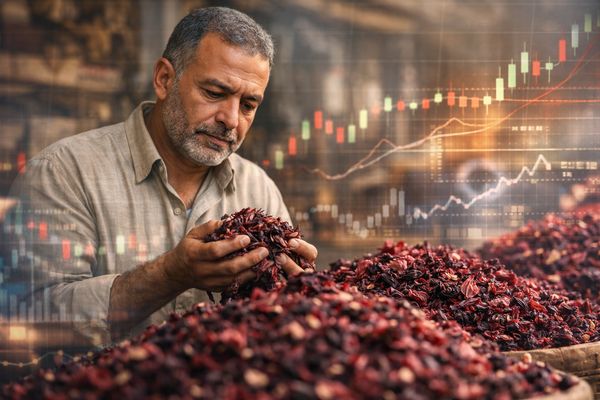
Hibiscus FOB Cairo prices for dried flowers from Egypt are fractionally softer week-on-week but remain broadly firm, with only a marginal 0.8–0.9% dip that reflects small adjustments rather than a change in fundamentals. Stable weather in key producing areas and structurally strong global demand are keeping the market well supported despite Egypt’s sharply higher farm input and logistics costs.
Exporters report calm nearby demand for Egyptian hibiscus, supported by its role in tea, herbal and wellness applications and the country’s established reputation in global herb and spice exports. While there is no sign of panic buying or acute supply disruption, rising fertiliser and energy prices in Egypt are squeezing grower and processor margins and provide an underlying floor to prices. With benign weather around Cairo and steady trade flows, FOB values are expected to stay in a narrow, slightly firm range in the very short term.
[cmb_offer ids=231,228,231]
📈 Prices & Short-Term Trend
Latest indicative FOB Cairo values for conventional dried hibiscus flowers show a very small week-on-week decline in EUR terms, with tbc and slice grades easing by about EUR 0.02/kg compared with the previous update. This mirrors broader hibiscus indications from Egypt, which have been clustering just above EUR 2.30/kg and showing only gradual firming rather than sharp volatility over recent weeks.
Given this context, the current dip looks more like routine price optimisation than a change in market balance. Export demand from Europe and other key destinations remains solid, supported by a wider boom in herbal ingredients and Egypt’s position as a competitive supplier of dried hibiscus and other herbs.
| Product | Origin | Location / Term | Latest Price (EUR/kg) | WoW Δ (EUR/kg) |
|---|---|---|---|---|
| Hibiscus flower dried (tbc) | Egypt | Cairo, FOB | 2.30 | -0.02 |
| Hibiscus flower dried (slices) | Egypt | Cairo, FOB | 2.35 | -0.02 |
🌍 Supply, Costs & Trade Flows
In the near term, physical supply out of Egypt is described as comfortable following previous seasons of strong hibiscus planting, which left the market well covered for current contract needs. Earlier analysis of Egypt’s hibiscus value chain highlighted that robust prices in 2023 attracted additional planting, contributing to ample stocks going into 2024–26.
The bigger story now is cost inflation rather than availability. Egyptian farmers have faced sharp fertiliser and pesticide price surges in recent weeks, partly linked to energy and freight disruptions around key shipping chokepoints, which are raising production and distribution costs across the agricultural sector. Even if farmgate hibiscus prices in local currency remain under pressure from oversupply, these rising inputs and macro instability tend to limit downside in export FOB offers once converted to EUR.
At the export level, Egypt continues to strengthen its broader agri-export platform, with citrus and other fruits registering strong volume growth and demonstrating that logistics channels through ports and the Suez corridor remain functional despite elevated freight costs. This backdrop indirectly supports hibiscus shipments, as container availability and trade relationships stay active, even if freight rates and insurance costs keep overall supply-chain expenses high.
☀️ Weather Outlook – Cairo & Key Growing Zones
Weather over the next three days in and around Cairo is forecast to be seasonally benign, with sunny to hazy conditions, maximum temperatures around 26–28°C and cool nights. These stable, dry conditions are favourable for ongoing drying, storage and handling of hibiscus flowers and reduce near-term weather-related risk for quality or logistics.
With the main weather risks for hibiscus more tied to earlier flowering and harvest windows, the current short-term outlook does not imply any significant shock to available volumes or to quality profiles offered from Cairo. As such, weather is a neutral-to-slightly supportive factor for price stability rather than a fresh bullish driver in the immediate horizon.
📊 Market Fundamentals & Demand Signals
Structurally, global hibiscus demand continues to expand, driven by growth in herbal teas, functional beverages and wellness products, and by increased use in nutraceutical and cosmetic formulations. Recent market research points to a global hibiscus market projected to reach close to EUR 200 million by the end of 2026, implying double‑digit annual growth and underpinning a firm demand baseline.
Egypt remains one of the key origin countries benefitting from this trend due to competitive pricing and entrenched buyer relationships in Europe and the Middle East. However, buyers are also increasingly price‑sensitive, reflecting broader pressures in food and beverage supply chains, which encourages them to stagger purchases and negotiate more tightly when spot prices edge higher. For now, modestly softer weekly FOB levels suggest that sellers are accommodating this behaviour without materially weakening the overall price structure.
📆 Trading Outlook & 3‑Day Price View
Given the combination of marginal week‑on‑week softness, steady export demand and rising input and freight costs, the very short‑term bias for Egyptian hibiscus prices is sideways to slightly firm in EUR terms. Stable weather and functioning export logistics out of Egypt argue against any imminent downside break, while the broader uptrend in global hibiscus demand should keep buyers engaged on dips.
🎯 Trading Pointers (Next 1–2 Weeks)
- Importers / Blenders: Consider covering near‑term needs at current levels, using the slight dip versus last week to lock in volumes before further cost‑push pressure feeds back into offers.
- Exporters in Egypt: Maintain disciplined offer levels; with fertiliser and energy costs rising and EUR‑denominated demand firm, deep discounts risk eroding already‑tight margins.
- Industrial Users: Explore staggered purchasing strategies (smaller, more frequent lots) to manage FX and freight volatility while ensuring coverage for the upcoming high‑consumption periods.
📍 3‑Day Regional Price Indication (FOB, EUR/kg)
| Region / Port | Product | 19–21 April 2026 Direction | Indicative Range (EUR/kg) |
|---|---|---|---|
| Cairo, Egypt (FOB) | Hibiscus dried flowers (tbc) | Sideways to slightly firm | 2.28 – 2.35 |
| Cairo, Egypt (FOB) | Hibiscus dried flowers (slices) | Sideways to slightly firm | 2.33 – 2.40 |
Given the benign weather outlook, steady global demand and elevated production and logistics costs in Egypt, these ranges are expected to hold over the next three days, with only limited room for further downside in EUR terms.
[cmb_chart ids=231,228,231]