
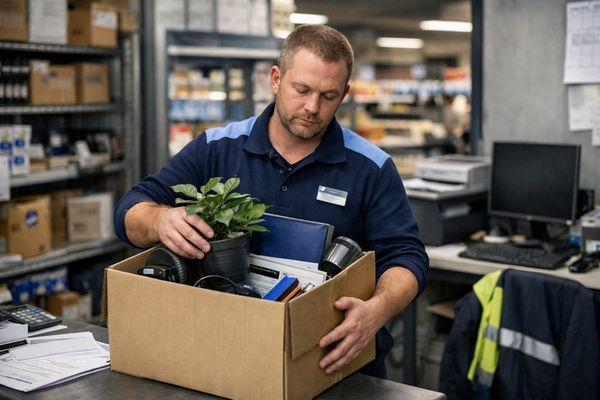
Aldi Süd’s decision to cut 1,250 jobs at its Mülheim headquarters, focusing on its digital and IT arm Aldi DX and parts of international purchasing, underscores an aggressive reset of cost structures in Europe’s discount grocery segment. For agricultural commodity suppliers, the restructuring points to sustained price pressure, tighter SKU management and accelerated outsourcing of IT-enabled supply chain functions.
While no immediate disruption to store operations has been reported, traders and food industry counterparts should prepare for renewed margin-driven negotiations, potential shifts in sourcing strategies and continued emphasis on private-label efficiency across Aldi Süd’s international network.
Introduction
Aldi Süd has announced a substantial staff reduction at its Mülheim an der Ruhr headquarters, planning to eliminate around 1,250 positions by the end of 2027, primarily within its digital unit Aldi DX and international purchasing functions. The cuts, communicated to employees via a virtual town hall on 27 April 2026, are framed as part of a wider cost programme internally labeled “Cost Leadership Reset.”
The move follows years of heavy investment in IT and digital capabilities and comes alongside an expanded outsourcing partnership with Tata Consultancy Services (TCS), which is expected to assume a significant share of Aldi’s technology workload. For global commodity markets, this is less a labour story than a signal that one of Europe’s largest discount grocers is doubling down on margin protection and operational streamlining, with implications for sourcing, assortment and supplier relations.
🌍 Immediate Market Impact
The restructuring is unlikely to cause abrupt physical supply interruptions, but it reinforces Aldi Süd’s commitment to low-price leadership through lean central services, harmonised IT and stricter cost control in procurement and logistics. Reports indicate that rising overheads in IT had outpaced profit growth, prompting management to reassert cost discipline.
For commodity-linked suppliers, this suggests heightened pressure on purchase prices and a renewed focus on scale efficiencies and private-label consolidation. Any concurrent review of Aldi’s product range—already signalled by recent commentary around SKU reductions and outsourcing to protect margins—could tighten shelf space for smaller, higher-cost items and concentrate volumes into core lines, thereby affecting demand patterns across key food categories.
📦 Supply Chain Disruptions
The main operational risk lies not in store closures but in the transition of critical IT systems and processes to external providers, particularly TCS. A deeper TCS partnership, announced in late 2025, aims to simplify and modernise Aldi Süd’s technology landscape and strengthen operational efficiency. Any delays or integration issues could temporarily affect ordering, inventory management, and data visibility along the supply chain.
Aldi DX has been responsible for building a globally unified IT platform (project “AHEAD”) to standardise core business processes from procurement through distribution. With a reduced internal team and more outsourced tasks, there is some execution risk around upgrades, rollouts and interface stability with suppliers’ systems. However, the phased approach to job reductions through voluntary programmes until 2027 points to a managed transition rather than an abrupt operational break.
📊 Commodities Potentially Affected
- Cereals and bakery inputs (wheat, flour, baking mixes) – Core private-label staples in discount formats; ongoing cost focus may intensify tender competition and favour large-scale millers and integrated suppliers.
- Edible oils and fats – High-volume, price-sensitive categories where Aldi’s margin reset could translate into tougher contract terms and greater volatility in promotional volumes.
- Dairy (milk, cheese, yoghurt) – Central purchasing and standardised IT can support larger cross-border sourcing lots, influencing price benchmarks in European dairy contracts.
- Meat and poultry – Consolidated procurement and SKU rationalisation could shift volumes towards fewer slaughterhouses and processors, affecting negotiation power and forward cover strategies.
- Processed foods and canned goods – Streamlined assortments and data-driven category management may reduce secondary SKUs while increasing throughput for main lines, impacting smaller manufacturers most.
- Fresh produce – While locally sourced, produce supply may see tighter performance tracking and more centralised vendor assessment as IT tools are unified across markets.
🌎 Regional Trade Implications
Aldi Süd operates across multiple European markets and beyond; therefore, any further centralisation of purchasing functions—from national units to Salzburg-based international services—can increase cross-market tendering and favour globally competitive exporters. Suppliers able to serve several countries with unified specifications may benefit from larger, longer-term contracts.
Conversely, smaller regional producers that had leveraged country-level buying desks may face higher barriers to entry as decisions migrate to fewer central hubs supported by standardised IT. Over time, this could reinforce import flows of cost-competitive bulk commodities into Europe where domestic supply is structurally higher-cost, while pushing some local producers into niche or regional retail channels.
🧭 Market Outlook
In the short term, financial markets and counterparties will focus on whether Aldi Süd’s restructuring delivers tangible margin improvements without impairing supply reliability. The staged job cuts through 2027 and reliance on voluntary exits reduce the likelihood of sudden operational shocks, but the migration of critical systems to external partners will be closely watched by logistics providers and category managers.
For commodity traders, the key signals will be changes in contract structures, tender sizes and assortment breadth. Any acceleration in SKU reduction and increased use of centralised, multi-country tenders could amplify price competition in core food staples but offer volume growth opportunities for low-cost, high-capacity suppliers. Price volatility in underlying agricultural markets will be filtered through this renewed cost focus, reinforcing the importance of hedging and flexible supply agreements.
CMB Market Insight
Aldi Süd’s digital downsizing is less about retreating from technology and more about recalibrating the cost base behind its discount model. By slimming internal IT and strengthening outsourcing while centralising purchasing, the group is setting up for a more hard-edged approach to procurement and assortment across its footprint.
For agricultural commodity and food ingredient suppliers, the strategic message is clear: anticipate sustained price discipline, rising demand for cross-border scale, and tighter SKU curation. Those able to couple competitive cost structures with reliable service into an increasingly standardised IT and logistics environment will be best positioned to capture and defend volume with one of Europe’s key discount buyers.