
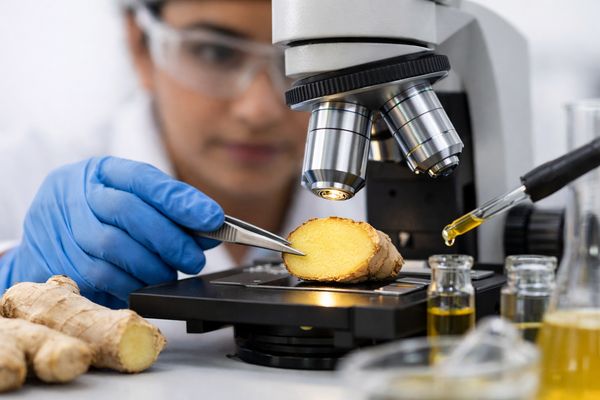
Dry ginger prices in India are moving higher as tightening fresh ginger supplies and expectations of a 25–30% production drop underpin a firm market with an upward bias in the coming weeks.
The dry ginger (sonth) market in India has shifted into a more bullish phase as lower arrivals of fresh ginger begin to constrain processing volumes and support prices. Traders report renewed activity and improved sentiment, with both domestic and export demand absorbing reduced availability. At the same time, early-season estimates of significantly smaller output due to weather and reduced sowing are reinforcing the perception of a structurally tighter market, even as broader mandi data still shows a wide spread in regional prices. Against this backdrop, participants are cautiously building inventories in anticipation of further firmness.
Exclusive Offers on CMBroker

Fenugreek seeds
FOB 0.98 €/kg
(from IN)

Fenugreek seeds
99%
FOB 0.64 €/kg
(from IN)

Fenugreek seeds
FAQ, machine clean
FOB 0.65 €/kg
(from IN)
📈 Prices & Short-Term Trend
Dry ginger prices have firmed to about USD 3.60–3.70 per kg (roughly EUR 3.35–3.45 per kg at current exchange assumptions), up from earlier levels near USD 3.40–3.50 per kg (about EUR 3.15–3.25 per kg). Premium-quality lots are trading noticeably higher, reflecting limited availability of processing-grade raw ginger and stronger interest from bulk buyers.
Recent external benchmarks show domestic wholesale dry ginger in parts of the North-East still closer to roughly EUR 1.05–1.15 per kg and some export-oriented offers around EUR 2.65 per kg, indicating that the current sonth segment referenced here is priced at the upper end of the Indian dry ginger complex.
| Market Segment | Price Range (EUR/kg) | Comment |
|---|---|---|
| Standard dry ginger (sonth), India | 3.35–3.45 | Firm vs. prior 3.15–3.25; upward bias on tight raw material |
| Premium dry ginger | Above 3.45 | Supported by limited arrivals and bulk export demand |
| Indicative wholesale dry ginger (selected mandis) | 1.05–1.15 | Reflects broader mandi averages; quality and form differ |
🌍 Supply & Demand Drivers
The key driver of the current firmness is reduced availability of fresh ginger, the main raw material for sonth. Lower crop output and limited arrivals in producing regions are restricting processing volumes and creating a supply gap. Initial estimates suggest Indian ginger production may fall by around 25–30% this season due to weather-related challenges and reduced sowing, sharply cutting the pool of roots suitable for drying.
On the demand side, buying remains solid across food processing, spice blends and medicinal applications. Seasonal usage patterns and steady export enquiries, particularly from traditional import destinations, are supporting prices despite recent gains. Traders note that arrivals in key wholesale markets are below normal, and procurement has intensified as participants try to secure coverage before potential further price appreciation. This behaviour is consistent with broader industry commentary that dry ginger prices in early 2026 are running around 15–16% above year-ago levels.
📊 Fundamentals & Weather Outlook
Fundamentals currently point to a structurally tighter balance sheet for Indian dry ginger. Low carry-in stocks from the previous marketing year, reduced current-season area, and weather-related yield losses are jointly constraining raw ginger supply. This is directly limiting the volume of quality roots available for drying and feeding into wholesale sonth markets.
Recent weather updates for India indicate seasonally hot to very hot conditions across coastal Karnataka, Kerala and parts of the North-East—all key ginger-growing belts—with no major near-term disruptions but rising concern about pre-monsoon heat and potential moisture stress should monsoon onset be delayed. Such conditions, if prolonged, could further impact the 2026/27 crop and keep medium-term supply tight, even if short-term arrivals see brief improvements.
📌 Trading Outlook & Risk Factors
- Near term (next 2–4 weeks): Prices are likely to remain firm to slightly higher, with any further weakness in fresh ginger arrivals quickly translating into stronger sonth quotations.
- Inventory strategy: Moderate pre-covering appears justified for processors and exporters, but aggressive stockpiling carries downside risk if arrivals temporarily improve or demand turns cautious on high prices.
- Export competitiveness: Indian dry ginger remains at a premium to some competing origins; buyers may increasingly compare offers from China and Nigeria, making quality differentiation and contract flexibility important.
- Key risks: Faster-than-expected recovery in fresh ginger arrivals or policy changes affecting exports could cap upside; conversely, adverse pre-monsoon or early monsoon weather in major producing belts would likely reinforce the current bullish structure.
📆 3-Day Price Indication (Directional)
- India export-oriented dry ginger (FOB/FCA, EUR/kg): Price level expected broadly in the EUR 3.30–3.50 range, with a firm to slightly upward bias.
- Domestic wholesale mandis (average dry ginger, EUR/kg): Wide regional spread equivalent to roughly 0.40–1.20, seen mostly stable with a mild firm tone in tighter centres.
- Overall directional view (3 days): Active market with firm undertone; pullbacks likely shallow and driven mainly by short-lived improvements in arrivals rather than any structural shift.
Related posts:
 Indian Coriander Market Firms on Tight Stocks and Rising Futures
 Turmeric Market Firms on Tight Indian Arrivals and Active Speculation
 Indian Dried Ginger Prices Edge Higher as Supply Normalises and Exports Stay Cautious
 Fenugreek Market Firms as Indian Inventories Tighten and Oil Mill Demand Revives
 Cinnamon Market Firms as Indian Stocks Tighten and Import Costs Stay Supportive
 Indian Dried Ginger FOB Softens Modestly Amid Balanced Supply
 Indian Dry Ginger Prices Ease Slightly but Outlook Turns Weather‑Risky
 Indian Green Cardamom Firms in Delhi as Auction Prices Stabilise