
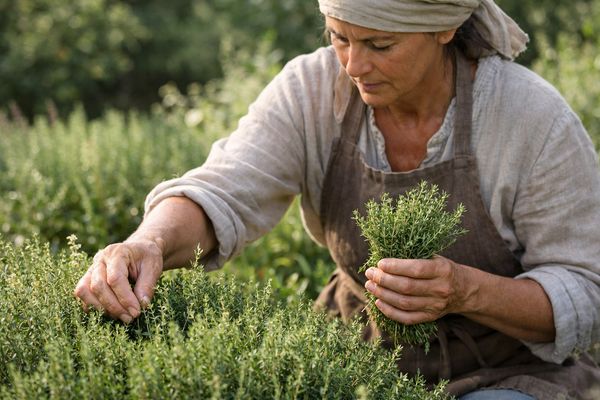
Egyptian conventional thyme FOB prices are edging slightly lower, while Indian organic thyme remains flat at a much higher level. Buyers see modest relief on Egyptian offers, but the global thyme market overall stays tight, especially for certified organic origins.
Thyme trade is currently shaped by strong export momentum in Egypt’s wider agri sector and structurally firm Indian spice prices. Egypt continues to expand its role as a key dried-herb exporter, supported by growing cultivated areas and active specialist exporters in Fayoum and other herb clusters, while India’s spice basket benefits from robust export demand and a weaker rupee. Mild, seasonally warm and dry weather around Cairo and hot, mostly dry conditions in New Delhi provide no immediate production shock, keeping the focus on currency moves, freight and demand. Short-term, buyers can leverage softer Egypt offers, but should not expect significant downside in premium organic thyme.
Exclusive Offers on CMBroker

Thyme dried
crush leaves
FOB 1.25 €/kg
(from EG)

Thyme dried
crush leaves
FOB 5.07 €/kg
(from IN)
📈 Prices & Spreads
FOB Cairo prices for conventional dried thyme leaves from Egypt are on a gentle downward trend in EUR terms, reflecting easing supply tightness and healthy export throughput in the wider herb segment. Recent offers indicate only marginal week‑on‑week moves, but the broader direction since early April has been slightly softer. Simultaneously, Indian organic dried thyme FOB New Delhi is broadly stable, trading at a substantial premium to Egyptian conventional material, supported by firm organic demand and higher certification and compliance costs in India’s spice export sector.
| Origin | Quality | Location / Term | Current Price (EUR/kg, FOB) | 1-week Change (EUR/kg) | Trend |
|---|---|---|---|---|---|
| Egypt (EG) | Conventional, crushed leaves | Cairo, FOB | ≈ 1.15 EUR/kg | −0.01 | Slightly weaker |
| India (IN) | Organic, crushed leaves | New Delhi, FOB | ≈ 4.65 EUR/kg | 0.00 | Stable, firm |
🌍 Supply & Demand Drivers
Egypt remains one of the world’s leading dried-herb exporters, with thyme part of a broad medicinal and aromatic plant portfolio grown in Fayoum and other irrigated regions. Leading exporters highlight continued investment in certified herb acreage and processing, while official data show Egyptian agricultural exports overall reaching about 3.7 million tonnes so far in 2026, underlining strong external demand and robust logistics. This backdrop keeps export channels active even as local availability improves after recent harvests.
For India, thyme is a minor but growing element within a very broad spice export basket managed under central export promotion policies. Recent government reports point to continued expansion of spice exports, including herbs like thyme, supported by large processing capacity and diversified markets. Demand for certified-organic Mediterranean and Middle Eastern herbs remains firm from Europe and North America, keeping Indian organic offers well bid despite higher price levels and leaving little room for downside unless global demand softens.
📊 Fundamentals & Weather
In Egypt, most thyme is grown in herb clusters such as Fayoum under arid conditions with controlled irrigation. The next three days around Cairo are forecast to be seasonally warm to hot and dry, with high temperatures broadly in the lower to mid‑30s °C and no meaningful rainfall expected. Such conditions are favourable for drying and logistics but do not materially tighten supply in the short term, supporting the recent slight easing in FOB prices.
New Delhi and surrounding producing and trading areas in India are entering the hot pre‑monsoon period. Forecasts for the coming days show very hot, mostly dry weather, typical for early May, without disruptive rainfall or storms in the Delhi region. This allows normal movement of dried herbs and spices. With no acute weather stress on Indian thyme or competing spice crops, the main fundamental support for prices comes from steady export demand and a generally firm Indian spice complex rather than physical scarcity.
📆 Trading Outlook
- Short-term (next 2–4 weeks): Expect Egyptian conventional thyme prices to remain slightly soft to sideways in EUR, as export flows are strong but not disruptive and weather is benign. Small additional discounts are possible on larger volume parcels, especially from Fayoum-based exporters expanding capacity.
- Organic segment: Indian organic thyme is likely to stay firm at a high premium, underpinned by robust demand for certified material and relatively tight audited supply chains. Buyers needing organic quality should consider forward coverage before any monsoon-related logistics noise later in the season.
- Buyer strategy: Importers with flexibility on origin can tactically shift part of conventional thyme procurement to Egypt in the near term to capture the price spread, while keeping India mainly for organic or specialised specifications. Monitoring FX moves and freight from East Mediterranean and Indian ports will be key for landed EUR cost optimisation.
📉 3‑Day Regional Price Indication (Directional)
- Egypt – Cairo FOB (conventional thyme, EUR): Bias slightly down to sideways over the next three days, as dry, favourable weather and strong export infrastructure support stable supply and mild seller competition.
- India – New Delhi FOB (organic thyme, EUR): Bias sideways to slightly firm, with hot, stable weather and ongoing export demand likely to keep offers unchanged or marginally higher for small, specialised lots.
Related posts:
 Garlic Prices Hold Flat as India Tightens and Egypt, Vietnam Stay Steady
 Ajwain Prices Hold Steady in Delhi as Heat Builds and Spice Demand Stays Subdued
 Cumin prices soften in India while Egypt and Syria hold steady
 Thyme FOB From Egypt and India: Stable Trend With Mild Upside Risk
 Organic Dried Basil Prices Hold Steady as Heat Builds in India and Egypt