The launch of the US-led Project Freedom naval escort operation in the Strait of Hormuz aims to restore commercial shipping, but early indications suggest only limited traffic is moving and geopolitical risk remains high. For agricultural markets, the operation is critical to future flows of fertilizers, fuel and feedstocks, yet immediate relief on freight, insurance and input prices looks uncertain.
Commodity traders and supply chain managers should treat the initiative as a potential stabiliser over the medium term rather than an instant solution to the disruptions that have persisted since February 2026.
Headline
Project Freedom Begins in Hormuz, But Fertilizer and Fuel Flows Remain Constrained
Introduction
The United States Central Command (CENTCOM) has initiated “Project Freedom,” a naval and air escort mission to guide commercial vessels through the Strait of Hormuz starting 4 May 2026. The operation follows months of severe disruption after Iran largely choked off traffic through the key chokepoint, triggering a broader Strait of Hormuz crisis and a US-led military campaign to reopen the waterway.
CENTCOM says the operation will deploy guided-missile destroyers, extensive air assets and unmanned platforms to restore freedom of navigation for merchant shipping, with an emphasis on vessels from countries not party to hostilities. Early reports indicate that at least two US-flagged commercial ships have transited under escort, but overall traffic remains far below pre-crisis levels. Given the strait’s role in global flows of crude, LNG, refined products and nitrogen and phosphate fertilizers, the stakes for agricultural input costs and trade flows are substantial.
🌍 Immediate Market Impact
Project Freedom has not yet produced a decisive recovery in shipping volumes. Analysts and military officials note that commercial operators remain cautious amid ongoing exchanges of fire and Iranian threats to resist the operation, implying that risk premiums and rerouting patterns will not unwind quickly.
Oil and LNG markets are likely to retain a geopolitical premium while Hormuz transit capacity remains impaired, sustaining elevated bunker and diesel prices that feed directly into farm logistics and processing costs. Fertilizer markets, especially for urea, ammonia and phosphates that move out of Gulf producers through Hormuz, will continue to price in disruption risk until insurers and charterers judge the escort regime to be reliable and scalable.
📦 Supply Chain Disruptions
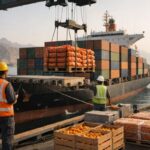
Despite the start of naval escorts, shipping through Hormuz remains dramatically below normal, with months of blockage having created a backlog of stranded vessels and cargoes. The limited number of escorted transits so far suggests that port congestion, vessel queues and complex scheduling will persist at key Gulf export terminals.
Energy and petrochemical exports from producers such as Saudi Arabia, the UAE, Qatar, Kuwait and Iraq—much of which typically moves via Hormuz—have been curtailed or rerouted, tightening regional availability of fuel oil, diesel and LPG. For fertilizers, any sustained constraint on ammonia and urea loadings from Gulf plants could exacerbate already tight supplies in Asia and Africa, especially where buyers had shifted to Middle Eastern origin to replace Black Sea volumes earlier in the global disruption cycle.
Insurance availability and pricing remain critical bottlenecks. While the US has indicated it will backstop some risks for US-flagged vessels, many international shipowners and P&I clubs are still assessing rules of engagement and the likelihood of further clashes before resuming routine calls, limiting the near-term easing of freight and war-risk costs.
📊 Commodities Potentially Affected
- Crude oil: Hormuz normally carries about a quarter of global seaborne crude; constrained flows sustain higher benchmark prices and volatility, raising diesel and gasoline costs that filter into agricultural production and transport.
- LNG: Qatar and other Gulf producers export significant LNG volumes via Hormuz; any disruption tightens global gas markets and raises nitrogen fertilizer production costs where plants rely on spot gas.
- Ammonia and urea: Gulf-based nitrogen producers depend on Hormuz for exports to Asia, Africa and Europe; limited transit can push up seaborne fertilizer prices and import parity costs for major grain and oilseed producers.
- Phosphate fertilizers: Phosphate-based products moving from the wider Middle East may face higher freight and war-risk surcharges, particularly on routes to South Asia and East Africa, raising cost bases for rice, wheat and sugar producers.
- Refined products (diesel, fuel oil, gasoline): Reduced, delayed or rerouted product cargoes increase fuel prices for farm machinery, inland logistics and food processing, particularly in import-dependent economies.
🌎 Regional Trade Implications
Importers in South and Southeast Asia, including India, Pakistan, Bangladesh and Indonesia, remain highly exposed to Gulf-origin fuel and fertilizer flows. Persistent Hormuz disruption pushes these buyers to seek alternative origins—such as North African or US Gulf exporters—for nitrogen and phosphate products, often at higher delivered costs and with longer lead times.
European and East African markets, which rely on Middle Eastern petroleum products and fertilizers, may also face tighter availability and elevated freight rates, particularly if war-risk premiums remain extreme for Red Sea and Gulf routes simultaneously. In contrast, non-Hormuz exporters—North Africa, Russia (where sanctions permit), US, and Trinidad for nitrogen—could capture incremental demand and improved margins, provided they have spare capacity and shipping access.
For agricultural exporters, higher input and fuel costs may compress producer margins and, in some cases, encourage acreage or intensity adjustments in the next planting cycles if fertilizer affordability deteriorates further.
🧭 Market Outlook
In the coming 30–90 days, the key variable for markets is whether commercial shipping adopts Project Freedom at scale or continues to avoid Hormuz. If escorts expand and incidents decline, traders could see a gradual easing of war-risk premiums and freight rates, with corresponding softening in energy-linked input costs.
However, ongoing reports of exchanges of fire and Iranian resistance underscore downside risks. Any attack on escorted tankers or bulk carriers, or damage to Gulf export terminals, would likely trigger another sharp spike in oil, LNG and fertilizer benchmarks, with knock-on effects on grains, oilseeds and sugar through higher production and logistics costs.
Market participants will monitor CENTCOM communications, insurance market decisions, port loading data and reported vessel movements through Hormuz as leading indicators of whether the corridor is truly reopening or remains functionally constrained.
CMB Market Insight
Project Freedom marks a significant policy and security intervention in one of the world’s most important commodity corridors, but for now it is more a risk-management signal than a fully effective logistical solution. Agricultural markets should assume continued tightness and elevated volatility in fertilizer, fuel and freight costs through at least the near term.
Procurement and trading strategies may need to incorporate diversified sourcing of fertilizers, longer lead times, and hedging of both energy and freight exposure. Until a durable navigation regime in Hormuz is established and accepted by both commercial actors and regional powers, the geopolitical risk premium embedded in agricultural input prices is unlikely to disappear.