
🔵 Executive Summary
The Solvent Extractors’ Association of India (SEA) has urged policymakers to exercise caution in specific agricultural segments as India and the United States advance bilateral trade negotiations.
While the proposed agreement is expected to expand access across agriculture and processed foods, SEA President Sanjeev Asthana emphasized that the edible oil, oilseed, and feed ecosystems require careful calibration — particularly concerning biotechnology-linked imports and U.S.-origin DDGS (Distillers Dried Grains with Solubles).
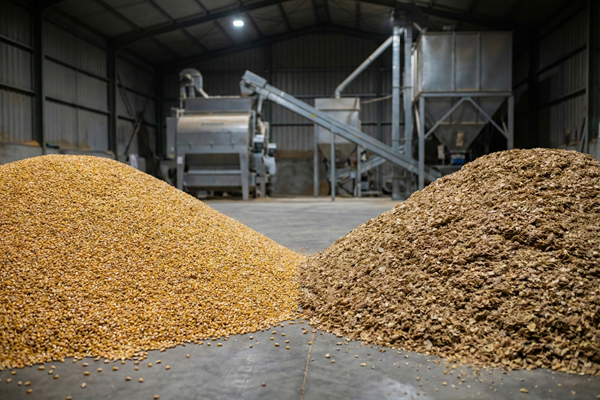
Enhanced DDGS access could disrupt India’s domestic maize and feed markets, potentially affecting farmgate price stability.
🌽 DDGS & Feed Market Concerns
One of the key sensitivities highlighted:
-
Expanded access for U.S.-origin DDGS
Potential implications:
-
Competitive pressure on domestic maize
-
Margin compression in India’s feed industry
-
Price volatility in poultry and livestock input chains
DDGS is widely used as a protein-rich feed component. Increased imports at preferential tariffs could alter demand dynamics for Indian maize.
SEA cautions that regulatory oversight must balance:
-
Trade reciprocity
-
Domestic feed market stability
-
Farmer income protection
🌱 Biotechnology & GM Crop Sensitivities
Discussions around biotechnology and genetically modified (GM) crops remain sensitive, particularly for:
-
Soybean meal
-
Oilseed derivatives
India’s cautious regulatory stance toward GM crops could complicate expanded agricultural market access negotiations.
The oilseed ecosystem, already challenged by import dependence in edible oils, may face further competitive pressures under broader trade liberalization.
📊 Broader Agricultural Policy Context
The Union Budget 2026–27 has allocated approximately USD 19.6 billion (₹1.63 lakh crore) to agriculture.
Key focus areas:
-
Irrigation expansion
-
Allied activities
-
Credit support
-
High-value crops (coconut, cashew, cocoa, sandalwood)
-
Oilseed productivity expansion
These measures aim to:
-
Diversify rural incomes
-
Strengthen value chains
-
Improve domestic oilseed competitiveness
🤖 Structural Reform: Bharat VISTAAR
A major structural initiative announced:
Bharat VISTAAR — an AI-powered agricultural intelligence platform integrating:
-
AgriStack
-
ICAR datasets
Objective:
-
Real-time advisory services
-
Data-driven policymaking
-
Improved productivity targeting
Digital integration is expected to strengthen agricultural decision-making and resource optimization.
⚠️ Export Incentive Concerns
SEA also raised concerns about reduced allocations under export incentive schemes, particularly:
-
RoDTEP (Remission of Duties and Taxes on Exported Products)
Lower incentives could:
-
Weaken export competitiveness
-
Affect processed agri-product margins
-
Reduce global positioning strength
Balancing domestic protection with export competitiveness remains a central policy challenge.
🌍 Additional Trade Advocacy: UK Dialogue
SEA proposed inclusion of specific HSN codes in India–UK tariff discussions for:
-
Sal-based cocoa butter equivalent
-
Sal stearin
-
Mango butter
-
Kokum butter
-
Shea stearin
These products:
-
Are derived from minor forest produce
-
Support tribal livelihoods
-
Serve chocolate and cosmetic industries
Inclusion in concessional tariff frameworks could enhance export opportunities while supporting forest-dependent communities.
🧭 CMB Market Interpretation
The India–US trade discussions reflect a broader recalibration between market access expansion and domestic agricultural stability.
Key Observations:
-
DDGS access poses a structural risk to maize price stability.
-
Biotechnology remains politically and commercially sensitive.
-
Oilseed competitiveness is strategically important given edible oil import dependence.
-
Export incentive rationalization could dampen processed agri-product growth.
-
Forest-produce-based specialty fats offer niche export potential.
Short-Term Outlook:
Negotiations likely to remain cautious in feed and oilseed segments.
Medium-Term Risk:
Increased DDGS imports could pressure maize and feed pricing.
Strategic Consideration:
Balanced liberalization with protective safeguards will define long-term sector stability.
📊 Risk Assessment
| Factor | Risk Level |
|---|---|
| DDGS Import Surge Impact | Moderate–High |
| Maize Price Volatility | Moderate |
| Biotechnology Policy Sensitivity | High |
| Oilseed Competitiveness Pressure | Moderate |
| Export Incentive Reduction Impact | Moderate |
📌 Why This Matters Now
-
India–US trade talks are advancing amid agricultural sensitivities.
-
Feed and oilseed markets remain price-sensitive.
-
Export competitiveness frameworks are under revision.
-
Digital agricultural reforms are accelerating.
Policy calibration in the coming months will determine how trade expansion aligns with domestic price stability.
🏁 Conclusion
As India and the U.S. explore expanded agricultural trade engagement, SEA has underscored the need for careful treatment of sensitive segments such as DDGS, maize, soybean meal, and edible oils.
While bilateral trade offers growth opportunities, safeguarding domestic agricultural stability and oilseed competitiveness remains critical.
The final contours of the agreement will shape feed, oilseed, and export market dynamics in the months ahead.