
🔵 Executive Summary
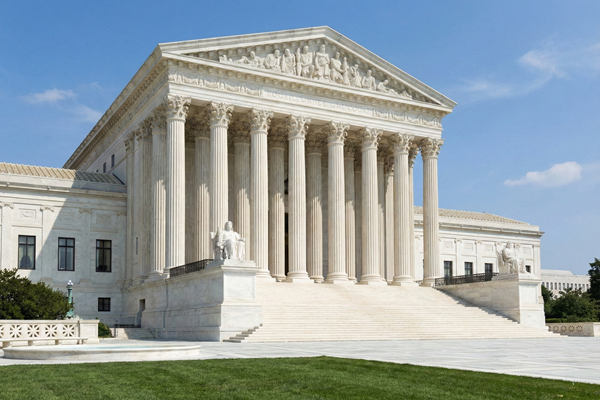
The U.S. Supreme Court has ruled, in a 6–3 decision, that former President Donald Trump acted unlawfully when imposing sweeping emergency tariffs under the International Emergency Economic Powers Act (IEEPA).
The Court determined that IEEPA does not grant a president unilateral authority to impose broad-based tariffs, marking a significant constitutional limitation on executive trade powers.
However, the ruling leaves unresolved the fate of approximately USD 134 billion in duties already collected, creating legal and financial uncertainty for importers and global trade partners.
⚖️ Legal Findings
Chief Justice John Roberts, writing for the majority, stated:
-
IEEPA powers do not authorize unilateral tariff imposition.
-
Clear congressional authorization is required for broad trade measures.
-
Executive authority must operate within constitutional boundaries.
The administration’s argument that tariffs were necessary to protect national economic security and strengthen trade leverage was rejected.
The Court emphasized that while other tariff tools exist under U.S. law, they are:
-
Sector-specific
-
Time-bound
-
Procedurally constrained
This limits future use of sweeping emergency-based trade actions.
🌍 Trade Policy Implications
Trump’s tariff framework had imposed:
-
Duties up to 50% on key trade partners
-
Tariffs reaching 145% on certain Chinese goods
Affected countries included:
-
China
-
Mexico
-
Canada
-
India
-
Brazil
Agricultural products were directly impacted, influencing:
-
Export competitiveness
-
Global commodity pricing
-
Farm sector margins
The ruling significantly narrows the executive branch’s ability to use tariffs as a rapid-response negotiating tool.
💰 Refund Uncertainty: USD 134 Billion Question
A major unresolved issue concerns the USD 134 billion already collected from importers while the tariffs were in effect.
Justice Brett Kavanaugh noted in a concurring opinion that refunding such amounts could be:
-
Operationally complex
-
Financially disruptive
-
Subject to extended litigation
Lower courts are expected to address the refund mechanism, potentially leading to prolonged legal proceedings.
🌽 Agricultural & Commodity Market Impact
For agricultural markets, the ruling introduces:
-
Reduced risk of sudden unilateral tariff escalation
-
Greater reliance on congressional trade frameworks
-
Potential recalibration of U.S. trade leverage strategies
Short-Term Market Reaction:
Policy uncertainty may persist until refund and enforcement clarity emerges.
Medium-Term Impact:
Greater predictability in U.S. trade policy formation.
Strategic Shift:
Executive-led tariff shocks are likely to face higher legal scrutiny moving forward.
🧭 CMB Market Interpretation
The Supreme Court’s decision marks a structural turning point in U.S. trade governance.
Key Observations:
-
Presidential tariff authority under emergency powers is now clearly limited.
-
Legislative approval becomes central to major tariff initiatives.
-
Trade policy may become slower but more predictable.
-
Agricultural exporters gain reduced exposure to abrupt tariff swings.
-
Refund litigation could introduce short-term financial volatility.
The ruling enhances constitutional clarity but may reduce tactical flexibility in trade negotiations.
📊 Risk Assessment
| Factor | Risk Level |
|---|---|
| Policy Uncertainty (Refunds) | Moderate–High |
| Executive Trade Action Volatility | Reduced |
| Congressional Gridlock Risk | Moderate |
| Agricultural Tariff Shock Risk | Lower |
| Legal Dispute Duration | Moderate |
📌 Why This Matters Now
-
USD 134 billion in collected duties remains legally unresolved.
-
Global trade partners may reassess U.S. policy reliability.
-
Agricultural exporters benefit from improved predictability.
-
Future administrations face stricter constraints on unilateral economic measures.
The decision reinforces the constitutional separation of powers in U.S. trade policy.
🏁 Conclusion
The U.S. Supreme Court’s ruling that emergency tariffs imposed under IEEPA were unlawful significantly reshapes executive authority over trade policy.
While it limits the president’s ability to unilaterally impose broad tariffs, it also introduces near-term uncertainty regarding refund mechanisms and pending trade enforcement actions.
For global agricultural and commodity markets, the ruling signals a shift toward greater legal predictability, though the financial and procedural aftermath remains to be resolved.