
🔵 Executive Summary
India and the United States are set to sign an interim trade agreement in March, with implementation expected as early as April 2026. A key breakthrough in the negotiations involves U.S. concessions on pulses — a politically sensitive sector for India.
The revised agreement removes earlier provisions that would have reduced tariffs on certain pulse imports into India, allowing New Delhi to maintain protection for domestic pulse producers.
At the same time, India has agreed to phased tariff reductions on selected agricultural commodities, including DDGS, red sorghum, tree nuts, fruits, and soybean oil, with implementation extending up to 10 years.
📊 Bilateral Agricultural Trade Snapshot
Agriculture remains central to the agreement.
2024 Trade Flows:
US Exports to India:
-
USD 2.25 billion total
-
Tree nuts: USD 1.12 billion (led by almonds)
India Exports to US:
-
USD 6.2 billion total
-
Key categories: seafood, spices, high-value processed products
The trade balance reflects India’s stronger agricultural export position, while the U.S. seeks improved market access in specific segments.
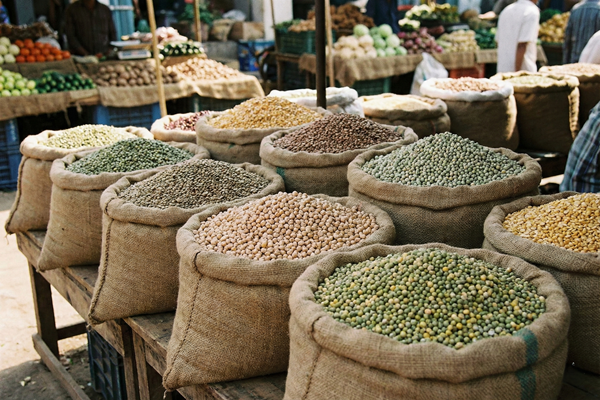
🌾 Pulses: A Strategic Compromise
Pulses remain one of the most politically sensitive agricultural categories in India.
Earlier drafts reportedly included tariff reduction provisions on certain pulse imports. The revised agreement removes these provisions, allowing India to:
-
Maintain existing tariff protections
-
Safeguard domestic pulse growers
-
Avoid import surges in key varieties
For India, pulses are not only a staple food commodity but also central to farm income stability and food security policy.
The concession is widely viewed as a decisive factor in reaching consensus.
🌽 Tariff Reductions in Other Agri Segments
While pulses retain protection, India has agreed to gradual tariff reductions on:
-
DDGS (Distillers Dried Grains with Solubles)
-
Red sorghum
-
Tree nuts
-
Fruits
-
Soybean oil
Implementation timeline:
-
Phased over up to 10 years
-
Designed to balance trade liberalization with domestic adjustment
This staggered approach provides a transition window for domestic industries.
🧭 CMB Market Interpretation
The interim agreement reflects a calibrated trade strategy.
Key Observations:
-
Pulses remain a protected core sector for India.
-
Feed and oilseed-linked products face gradual liberalization.
-
Long implementation timelines reduce short-term disruption risk.
-
Tree nut trade likely to strengthen further.
-
DDGS access may influence feed market dynamics over time.
Short-Term Outlook:
Limited immediate impact on pulse imports.
Medium-Term Consideration:
Gradual tariff easing in feed and oilseed segments could reshape pricing and supply chains.
Strategic Significance:
High for pulses — symbolic protection reinforces domestic policy priorities.
📊 Risk Assessment
| Factor | Risk Level |
|---|---|
| Pulse Import Surge Risk | Low |
| DDGS & Feed Market Impact | Moderate |
| Oilseed Competitiveness Pressure | Moderate |
| Political Sensitivity | High |
| Implementation Complexity | Moderate |
📌 Why This Matters Now
-
Pulses remain politically and economically strategic in India.
-
Interim trade frameworks often set precedents for broader agreements.
-
Feed and oilseed sectors face gradual exposure to increased competition.
-
The deal strengthens overall India–US agricultural cooperation.
The compromise on pulses likely prevented negotiation deadlock and ensured forward momentum.
🏁 Conclusion
The upcoming interim India–US trade agreement preserves tariff protections for pulses while introducing phased liberalization in other agricultural categories.
By safeguarding pulse producers and adopting gradual tariff reductions elsewhere, India has secured a balanced framework that supports expanded trade without destabilizing key domestic sectors.
The long-term impact will depend on implementation details and evolving commodity market conditions.