
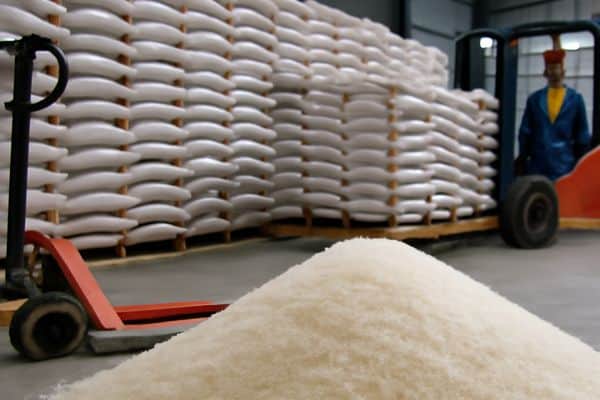
The rice market is experiencing a noteworthy shift following Indonesia’s recent agreement to import at least 1,000 tons of rice from the United States, part of a larger USD 4.5 billion agricultural accord. This development is symbolic as Indonesia staunchly upholds rice self-sufficiency, and the agreed import volume remains minuscule compared to its annual production of nearly 34.7 million tons in 2025. The move is not a response to supply shortages but rather a strategic decision reflecting trade diplomacy: Indonesia reciprocates with easier access for selected US products while securing tariff concessions for its own food exports to the US, championing both agricultural stability and broader economic ties.
The Indonesian administration’s longstanding policies favor import restrictions to protect domestic farmers and stabilize prices. Thus, the new arrangements reinforce that the US rice import is of marginal immediate market impact but signals Indonesia’s evolving willingness to leverage food policy as a negotiation chip in global trade—potentially setting a precedent for similar deals in other agricultural sectors. Analysts will be watching for further bilateral agreements that balance protectionism with mutual access to key commodities, while market participants anticipate resilient domestic supply and stable rice prices in the near term despite this headline-grabbing import gesture.
Exclusive Offers on CMBroker

Rice
all golden, sella
FOB 0.88 €/kg
(from IN)

Rice
all steam, pr11
FOB 0.39 €/kg
(from IN)

Rice
al ısteam, sharbati
FOB 0.53 €/kg
(from IN)
📈 Prices
| Type | Origin | Location | Delivery Terms | Current Price (EUR/kg) | Weekly Change (%) | Market Sentiment |
|---|---|---|---|---|---|---|
| All Golden, Sella | India | New Delhi | FOB | 0.97 | -2.02 | Soft/bearish |
| All Steam, PR11 | India | New Delhi | FOB | 0.47 | -4.08 | Soft |
| Al İsteam, Sharbati | India | New Delhi | FOB | 0.64 | -3.03 | Soft |
🌍 Supply & Demand
- Indonesia’s import of US rice (1,000 tons) is negligible compared to domestic production (34.69 million tons in 2025).
- Physical market impact is minimal; supply security and price stability remain robust due to self-sufficiency policies.
- Wider agricultural import commitments (wheat, soybeans, corn, fruits) support local industries and production continuity.
- Indonesia maintains vigilance against unauthorized rice imports and employs tight standard-grade rice import controls.
📊 Fundamentals
- The new bilateral deal is part of Indonesia importing about USD 4.5 billion in US agricultural products, with rice being only a tiny share.
- Tariff reductions for 172 Indonesian food products into the US (including tropical fruits, spices, coffee/tea, palm oil, cocoa) may boost Indonesia’s export competitiveness and food sector revenues.
- The rice import move is largely seen as strategic and symbolic, not a response to domestic shortages or market tightness.
⛅ Weather Outlook
- Weather in Indonesia’s main rice-growing regions is currently favorable, supporting 2025’s strong production projections.
- No major weather risks identified in India or Vietnam at this time; global rice markets face few immediate weather-driven threats.
🌐 Production & Stock Comparison
| Country | 2025 Rice Production (Mt) | Major Stocks (Mt) |
|---|---|---|
| Indonesia | 34.69 | High domestic stocks |
| India | ~129 | Large government stocks |
| Vietnam | ~44 | Ample |
| US | ~6 | Stable |
📌 Trading Outlook & Recommendations
- The Indonesia-US import deal is more symbolic than market-moving—no significant supply/demand shift anticipated.
- Domestic markets in Indonesia remain well-supplied; protectionist stance continues for standard-grade rice.
- Prices for major Asian export origins (India, Vietnam) are softening; buyers may consider timing purchases amidst weak sentiment.
- Exporters should watch for possible new policy shifts in Indonesia or bilateral agreements with other nations.
- Monitor weather risks and policy updates as potential wildcards for H1 2026.
📆 3-Day Regional Price Forecast
| Market | Current Price (EUR/kg) | Forecast Direction | Remarks |
|---|---|---|---|
| New Delhi (India) – Golden Sella | 0.97 | ⏬ | Continued softening likely |
| New Delhi (India) – PR11 | 0.47 | ⏬ | Bearish tone persists |
| Hanoi (Vietnam) – Long White 5% | 0.49 | ⏬ | Flat-to-lower trend expected |