
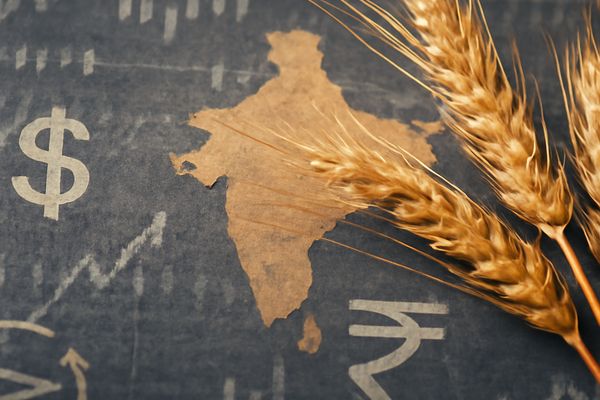
The wheat market is experiencing a period of cautious optimism as a major policy shift in India—the world’s second-largest wheat producer—reshapes global market sentiment. The Indian government has granted an export approval for 2.5 million tonnes of wheat, alongside 500,000 tonnes of wheat flour and related products, despite maintaining its broad prohibition on grain exports.
This discretionary window, informed by substantial public and private stocks, comes at a time when India’s 2026 Rabi wheat acreage is at a record high and overall stock levels have increased year-on-year. Authorities cite the expansion as a strategy to stabilize prices, ensure smooth market functioning during peak arrivals, and reinforce food security, leaving a carefully balanced message for global wheat trade flows. With India’s move expected to ease supply pressure at a time of moderate domestic prices and rising inventories, the global wheat market is attentively parsing the practical impacts of the quota, export modalities, and weather-influenced output in other key regions. Volatility could remain subdued, but all eyes are on execution and competitive pricing in major export hubs.
[cmb_offer ids=738,772,727]
📈 Prices
| Exchange/Location | Origin | Protein Min. | Delivery Terms | Closing Price (€/kg) | Weekly Change | Market Sentiment |
|---|---|---|---|---|---|---|
| CBOT (US) | US | 11.50% | FOB | 0.21 | 0 | Stable, low volatility |
| Euronext (Paris) | FR | 11.00% | FOB | 0.29 | 0 | Firm |
| Odesa | UA | 11.00% – 12.50% | FOB | 0.18–0.20 | 0 | Steady |
🌍 Supply & Demand
- India approved exports of 2.5 million tonnes of wheat—the largest partial export window since restrictions began. An extra 500,000 tonnes of flour and related products are also allowed.
- Wheat stocks in India’s Food Corporation pool are projected at 18.2 million tonnes by April 1, 2026.
- Private sector inventory stands at 7.5 million tonnes, up 3.2 million tonnes YoY—pointing to robust domestic supply.
- Rabi wheat acreage rose to 33.42 million hectares, compared to 32.80 million hectares last year (+1.9%).
- Production outlook is strong, supported by favorable crop conditions and higher minimum support prices (MSP).
- Other major exporters (EU, US, Russia, Ukraine) report average yields but face more pricing competition—India’s partial export could alleviate global supply tightness.
📊 Fundamentals
- Comfortable stocks underpin India’s decision, ensuring food security even after quota exports.
- Move designed to prevent distress sales, stabilize prices, and increase market liquidity.
- Global wheat market is watching Indian quota execution, competitiveness, and government-to-government shipments for food security.
| Country/Region | 2026 Projected Stocks (Mt) | Acreage (Mha) | Notes |
|---|---|---|---|
| India | 18.2 (public), 7.5 (private) | 33.42 | Strong output, comfortable reserves |
| EU | n/a | Approx. 23* | Average yields, steady exports |
| US | Approx. 15* | 17* | Tight stocks; weather risk |
*Indicative figures. See offer listings for up-to-date commercial pricing.
🌦️ Weather Outlook
- Indian Rabi wheat regions report favorable conditions, supporting robust output expectations.
- US Plains: Variable rainfall—adequate in some Kansas, Oklahoma areas but dryness concerns persist.
- Black Sea region: Ukraine/Russia conditions are mixed but no signs of major stress as of now.
- EU: Steady conditions in France and Germany, with some wetness benefiting crops but minor flooding risks in localized areas.
Weather risks are muted for now, but mid-season shifts (heat/drought) could influence European and US output.
📌 Key Insights & Market Drivers
- India’s partial export quota intended to support farm incomes and smooth price tensions during peak arrival season.
- Strong domestic crop prospects mean export window likely won’t threaten local food security.
- Global buyers might turn to India if prices remain soft and shipping terms are favorable.
- Market awaits details on government-to-government deals, which could accelerate exports if partner nations require supply.
- International spot prices remain steady amid supply optimism—buying interest could rise if Indian wheat proves competitive.
📆 Trading Outlook & Recommendations
- Exporters: Stay informed on Indian shipment modalities; explore price arbitrage opportunities in Asian and African markets.
- Importers: Assess competitiveness of Indian origin versus Black Sea/French wheat; monitor policy updates.
- Traders: Expect low volatility in the short term. Watch for weather headlines, quota fulfillment pace, and global freight trends.
- Hedgers: With ample stocks, short-term downside is limited. Use options to capture potential late-season price swings if weather shifts unfavorably.
🔮 3-Day Regional Price Forecast
| Exchange/Location | Price Now (€/kg) | Forecast Range (€/kg) | Sentiment |
|---|---|---|---|
| CBOT (US) | 0.21 | 0.20 – 0.22 | Stable |
| Euronext (Paris) | 0.29 | 0.29 – 0.30 | Neutral/Firm |
| Odesa (UA) | 0.18 – 0.20 | 0.18 – 0.21 | Slight uptick possible |
[cmb_chart ids=738,772,727]