
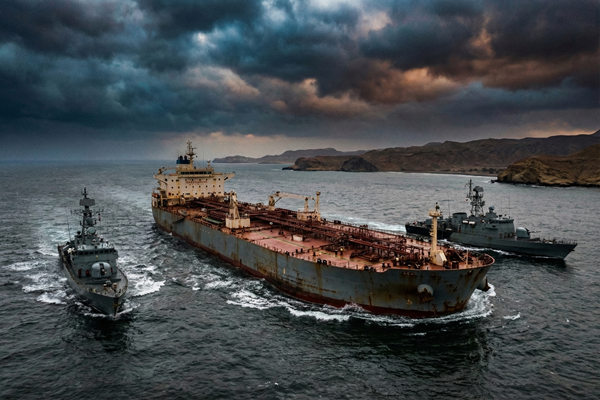


Insurance costs for vessels operating in and around the Strait of Hormuz have surged dramatically, increasing twelvefold as tensions escalate in the Middle East, according to a report by the Financial Times.
The spike comes despite assurances from U.S. President Donald Trump that Washington will guarantee safe maritime trade routes and uninterrupted energy supplies from the region.
War Risk Insurance Rates Skyrocket
Industry sources told the Financial Times that war risk insurance premiums for ships transiting the Strait of Hormuz and surrounding waters have climbed to 3% of a vessel’s value, compared with just 0.25% before the recent U.S. and Israeli military operations against Iran.
The sharp rise reflects growing concerns among shipowners and insurers about potential attacks on vessels navigating the strategically vital corridor.
The Strait of Hormuz is one of the world’s most important energy chokepoints, handling roughly one-fifth of global oil shipments.
US Announces Insurance Guarantees
In an effort to stabilize shipping and energy markets, President Trump recently announced that the U.S. International Development Finance Corporation (DFC) would provide insurance and financial guarantees for commercial shipping through the Persian Gulf, particularly for energy-related cargo.
Writing on Truth Social, Trump said the program would support:
“All commercial maritime transportation through the Persian Gulf, especially those related to energy resources.”
However, insurers and brokers say the details of the initiative remain unclear.
Insurers Await Clarity
Several insurance brokers said they were surprised by the announcement and have yet to receive operational guidance on how the program will function.
David Smith, a broker at McGill, said the industry currently has limited information.
“We’ve heard absolutely nothing other than this announcement on Truth Social,” Smith said, noting that insurers remain uncertain about how broadly the guarantees will apply.
Doubts Over Impact of US Support
Some analysts question whether the DFC — whose primary mandate is to promote private investment in developing countries — has the capacity to significantly influence marine insurance markets.
Ed Finley-Richardson, founder of Contango Research, said shipowners already carry insurance coverage.
“We already have insurance,” he said. “The DFC announcement may have helped contain the rise in oil prices, but it is unlikely to make a difference for us.”
The main concern for shipping companies remains the physical risk of attacks on vessels operating in the Gulf.
Rising Security Threats in the Strait
Security risks in the region have intensified rapidly in recent days.
According to reports, at least seven tankers have been attacked in the Strait of Hormuz and nearby waters since Sunday.
Several vessels have also reported receiving radio warnings advising ships to stay away from the strait, highlighting the growing dangers facing commercial shipping.
Global Trade at Risk
The surge in insurance costs could have wide-reaching implications for global energy markets and maritime trade.
Higher war-risk premiums are likely to:
-
Increase freight costs for oil and gas shipments
-
Push global energy prices higher
-
Raise operating costs for shipping companies
If the security situation worsens, analysts warn that additional shipping routes could be disrupted, further tightening global energy supply chains.
Related posts:
 India Turns to US LPG as Strait of Hormuz Blockade Disrupts Middle East Supplies
 China Urges Iran to Keep Strait of Hormuz Open Amid Escalating Middle East Conflict
 Trump’s Plan to Escort Tankers Through Strait of Hormuz Eases Oil Price Surge
 China Urges Iran to Keep Strait of Hormuz Open Amid Escalating Middle East Conflict
 Iran Threatens to Target Ships in Strait of Hormuz, Escalating Global Energy Fears
 West Asia Conflict Threatens Indian Tea Exports via Strait of Hormuz Risk
 Strait of Hormuz Crisis: Oil Surges as Iran Escalation Threatens Global Energy Supply
 Strait of Hormuz Crisis Sends Oil Prices Surging 8% as Middle East Escalation Threatens Global Supply