
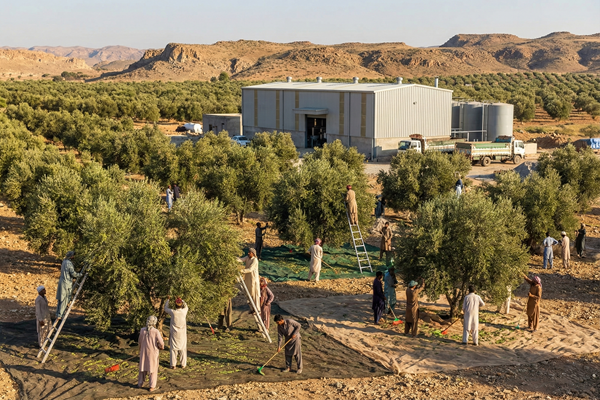


Pakistan is positioning China as a strategic export destination for its emerging olive oil industry as the country continues expanding cultivation areas, processing capacity, and international market presence.
Initially launched as a government-driven initiative to reduce dependence on imported edible oils, Pakistan’s olive sector is gradually evolving into a more structured industry with growing private investment and branding efforts.
Officials and producers say deeper cooperation with China under the China–Pakistan Economic Corridor (CPEC) could accelerate the sector’s growth through technology transfer, investment, and improved access to international markets.
Olive Cultivation Expanding Rapidly
According to Muhammad Tariq, director of the PakOlive project, Pakistan has already established 51 olive extraction units across the country.
Olive cultivation reached approximately 55,000 acres in 2025 and is expected to expand to around 60,000 acres in 2026.
Annual olive oil production currently stands at about 150 tonnes, with Pakistan beginning to reduce its reliance on imports while gradually launching small export shipments.
Industry Ecosystem Begins to Take Shape
Alongside expanding plantations, a broader industry ecosystem is emerging, including:
-
Olive orchards
-
Processing and extraction facilities
-
Domestic olive oil brands
-
Retail distribution networks
Producers say international recognition has played an important role in boosting consumer awareness.
Companies such as Loralai Olives report growing interest in locally produced olive oil after gaining global recognition, encouraging producers to focus more strongly on quality standards, transparency, and research-based production practices.
China Seen as Major Opportunity
Industry stakeholders believe that closer cooperation with China could help Pakistan scale up its olive sector.
China is already one of the world’s largest importers of olive oil, and rising demand for premium and health-focused food products is creating new market opportunities.
Potential collaboration areas include:
-
Processing technology
-
Packaging and branding
-
Logistics infrastructure
-
Market access for exports
Such partnerships could significantly strengthen Pakistan’s olive oil value chain.
Rural Development Potential
The expansion of olive farming is also expected to support rural development, particularly in Balochistan, where a significant share of production is concentrated.
Olive cultivation and processing are generating employment across several stages of the supply chain, including:
-
Orchard management
-
Harvesting operations
-
Oil extraction and milling
-
Transportation and logistics
Experts say the sector is also helping transform underutilized land into productive agricultural orchards.
Outlook
Industry observers believe Pakistan’s olive sector still faces challenges in scaling up production, maintaining consistent policies, and meeting international quality standards.
However, with expanding plantations, new processing facilities, and potential partnerships with China, the country’s olive industry is gradually positioning itself as a new player in the global olive oil market.