
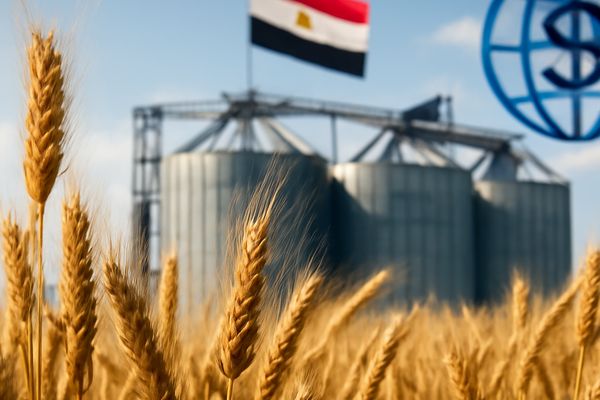


Egypt, a pivotal global wheat importer, is taking major steps to transform its position in the market by raising its domestic wheat production. The country’s government, led by Minister of Agriculture and Land Reclamation Alaa Farouk, is spearheading efforts to strengthen food security and reduce dependence on volatile international wheat supplies. Ambitious plans to expand wheat cultivation area, drive adoption of modern farming techniques, and upgrade irrigation infrastructure signal a significant shift in Egypt’s agricultural priorities. The goal: increase annual wheat production from about 3.9 million tonnes in 2025 to a new target range of 4.7–5 million tonnes. Achieving this will not only require more expansive planting—estimated to reach 3.7 million acres—but also improvements in seed quality, resource management, and sustainable farming practices.
These strategic changes are set against a backdrop of global market uncertainty, with Egypt’s move likely influencing regional demand dynamics, potentially easing some import needs and shifting supply pressures among major exporters. As Egypt’s domestic output rises, implications for international wheat flows, price stability, and food security will be closely watched by market players worldwide.
Exclusive Offers on CMBroker

Wheat
protein min. 11,00%
98%
FOB 0.29 €/kg
(from FR)

Wheat
protein min. 11,50%, CBOT
98%
FOB 0.21 €/kg
(from US)

Wheat
protein min. 11,00%
98%
FOB 0.18 €/kg
(from UA)

📈 Prices
| Origin | Location | Protein | Purity | Delivery Terms | Price (EUR/kg) | Weekly Change | Sentiment |
|---|---|---|---|---|---|---|---|
| France | Paris | min. 11.00% | 98% | FOB | 0.29 | 0.00 | Stable |
| USA (CBOT) | Washington D.C. | min. 11.50% | 98% | FOB | 0.21 | 0.00 | Stable |
| Ukraine | Odesa | min. 11.00% | 98% | FOB | 0.18 | 0.00 | Stable |
🌍 Supply & Demand
- Egypt’s production boost: 2026 target raised to 4.7–5 million tonnes, up from 3.9 million tonnes.
- Expanded cultivation: Planted area to reach 3.7 million acres, underpinning supply resilience.
- Modernization: Development of model farms, advanced seed varieties, and smarter irrigation to lift yields.
- Food security: Domestic supply set to buffer against import reliance and global volatility, with direct impacts expected on traditional exporters to Egypt.
📊 Fundamentals
- Government support: Strong policy backing for farmers through improved techniques and infrastructure investments.
- Yield improvements: Enhanced seeds and farming practices promise higher productivity per acre.
- Sustainability: Focus on water efficiency crucial, given Egypt’s limited resources.
- Imports still vital: While domestic output climbs, Egypt remains a top global buyer—any shortfalls or climate risks could renew upward pressure on imports.
⛅ Weather Outlook
- Current conditions: Seasonal forecasts indicate generally favorable weather for planting and early crop development in Egypt, though water availability remains a key concern.
- Potential impacts: Continued focus on irrigation efficiency is critical to maximizing yields and mitigating drought risks.
🌐 Global Production & Stocks
- Major exporters: US, Russia, France, and Ukraine remain key suppliers, with Egypt’s growing self-reliance altering trade flows.
- Global stocks: Increasing Egyptian production could modestly soften international demand, provided weather and policy remain favorable.
- Importers: Other import-dependent countries may see changes in procurement strategies as Egypt’s market share shifts.
💡 Trading Outlook & Recommendations
- Monitor Egyptian policy: Track developments in production targets and infrastructure support, given their outsized impact on demand.
- Watch export opportunities: Short-term stability in prices as Egypt ramps up output, but potential volatility if yields fall short.
- Weather and water risks: Maintain caution around drought-prone areas or irrigation shortfalls, as supply shocks could ripple globally.
- Speculative positioning: Relatively muted, with stable price sentiment, yet sensitive to news on yields and planting progress.
📆 3-Day Price Forecast (EUR/kg)
| Exchange/Location | Current Price | Forecast (Day 1) | Forecast (Day 2) | Forecast (Day 3) | Trend |
|---|---|---|---|---|---|
| Paris (FR, FOB) | 0.29 | 0.29 | 0.29 | 0.29 | Stable |
| CBOT (US, FOB) | 0.21 | 0.21 | 0.21 | 0.21 | Stable |
| Odesa (UA, FOB) | 0.18 | 0.18 | 0.18 | 0.18 | Stable |
Related posts:
 Corn Market Landscape: Stability, Softness & Weather Risks Shape Outlook
 China’s Grain Ambitions and Rice Market Outlook: Stability Amidst Global Volatility
 Southeast Asia May Drive New Wheat Demand Surge: Key Market Signals & Price Outlook
 Wheat Market Rises, Black Sea Dynamics, and MENA Demand Shape Outlook
 India’s Record Harvest & Procurement Shifts Shape Global Rice Outlook
 Wheat Prices Dip as Weather Relief, Export Hesitancy, and Fund Covering Shape Sentiment
 Corn Market: Brazil’s Harvest Delays, Ukrainian Export Race & US Weakness Shape Trends